


In the intricate web of electrical systems within a household, ensuring a stable voltage supply is crucial for the proper functioning and longevity of various appliances. One common question that often arises is whether a household voltage regulator can be effectively used for lighting systems. As a trusted supplier of household voltage regulators, I am well - versed in the technical aspects and practical applications of these devices, and I'm eager to shed light on this topic.

Understanding the Basics of Voltage Regulation
Before delving into the suitability of voltage regulators for lighting systems, it's essential to understand what a voltage regulator does. A voltage regulator is an electrical device designed to automatically maintain a constant voltage level. In a household setting, the power supply from the grid can fluctuate due to various factors such as peak demand periods, grid maintenance, or issues with local power generation. These voltage fluctuations can range from minor variations to significant surges or sags, which can have detrimental effects on electrical appliances.
Voltage regulators work by continuously monitoring the incoming voltage and adjusting it to a pre - set level. They use different technologies, such as transformers, electronic circuits, or a combination of both, to achieve this regulation. For example, some voltage regulators use a step - down or step - up transformer to change the voltage level as needed, while others rely on solid - state electronic components to provide a more precise and rapid response to voltage changes.
The Impact of Voltage Fluctuations on Lighting Systems
Lighting systems are one of the most commonly used electrical components in a household. They can be powered by different types of bulbs, including incandescent, fluorescent, LED, and halogen. Each type of bulb has its own sensitivity to voltage fluctuations.
- Incandescent Bulbs: These traditional bulbs are relatively simple in design. They work by passing an electric current through a filament, which heats up and emits light. However, they are highly sensitive to voltage changes. A small increase in voltage can cause the filament to overheat, leading to a shorter lifespan and increased energy consumption. Conversely, a decrease in voltage can result in dimmer light output and a less efficient operation.
- Fluorescent Bulbs: Fluorescent lighting uses a gas - filled tube and an electronic ballast to produce light. Voltage fluctuations can affect the ballast's performance, leading to flickering, reduced light output, or even premature failure of the bulb. In some cases, extreme voltage variations can cause the ballast to overheat and pose a fire hazard.
- LED Bulbs: LED (Light - Emitting Diode) bulbs are becoming increasingly popular due to their energy efficiency and long lifespan. While they are generally more tolerant of voltage fluctuations compared to incandescent and fluorescent bulbs, significant voltage changes can still affect their performance. Overvoltage can cause the LEDs to overheat and degrade faster, while undervoltage can result in reduced brightness and color shifting.
- Halogen Bulbs: Halogen bulbs are similar to incandescent bulbs but use a halogen gas to increase efficiency and lifespan. Like incandescent bulbs, they are sensitive to voltage variations. Overvoltage can cause the filament to evaporate more quickly, leading to a shorter lifespan, while undervoltage can result in a dull and yellowish light output.
Benefits of Using a Voltage Regulator for Lighting Systems
Given the potential negative impacts of voltage fluctuations on lighting systems, using a household voltage regulator can offer several benefits.
- Extended Bulb Lifespan: By maintaining a stable voltage supply, a voltage regulator can significantly extend the lifespan of bulbs. This reduces the frequency of bulb replacements, saving both money and time. For example, in a commercial or large - scale residential setting with a large number of bulbs, the cost savings from reduced bulb replacements can be substantial over time.
- Consistent Light Output: A stable voltage ensures that the lighting system provides a consistent and uniform light output. This is particularly important in areas where accurate lighting levels are required, such as in kitchens, offices, or reading areas. With a voltage regulator, there will be no more flickering or dimming lights, creating a more comfortable and visually appealing environment.
- Energy Efficiency: When bulbs operate at their optimal voltage, they consume less energy. A voltage regulator helps to ensure that the bulbs are always operating within their recommended voltage range, resulting in energy savings. This not only reduces electricity bills but also contributes to a more sustainable environment.
- Protection Against Surges and Sags: Voltage regulators can protect lighting systems from sudden voltage surges and sags. These extreme voltage events can be caused by lightning strikes, power grid failures, or the operation of large electrical appliances. A voltage regulator can quickly detect and mitigate these voltage spikes, preventing damage to the bulbs and other components of the lighting system.
Types of Voltage Regulators Suitable for Lighting Systems
As a household voltage regulator supplier, I offer a variety of voltage regulators that are suitable for lighting systems.
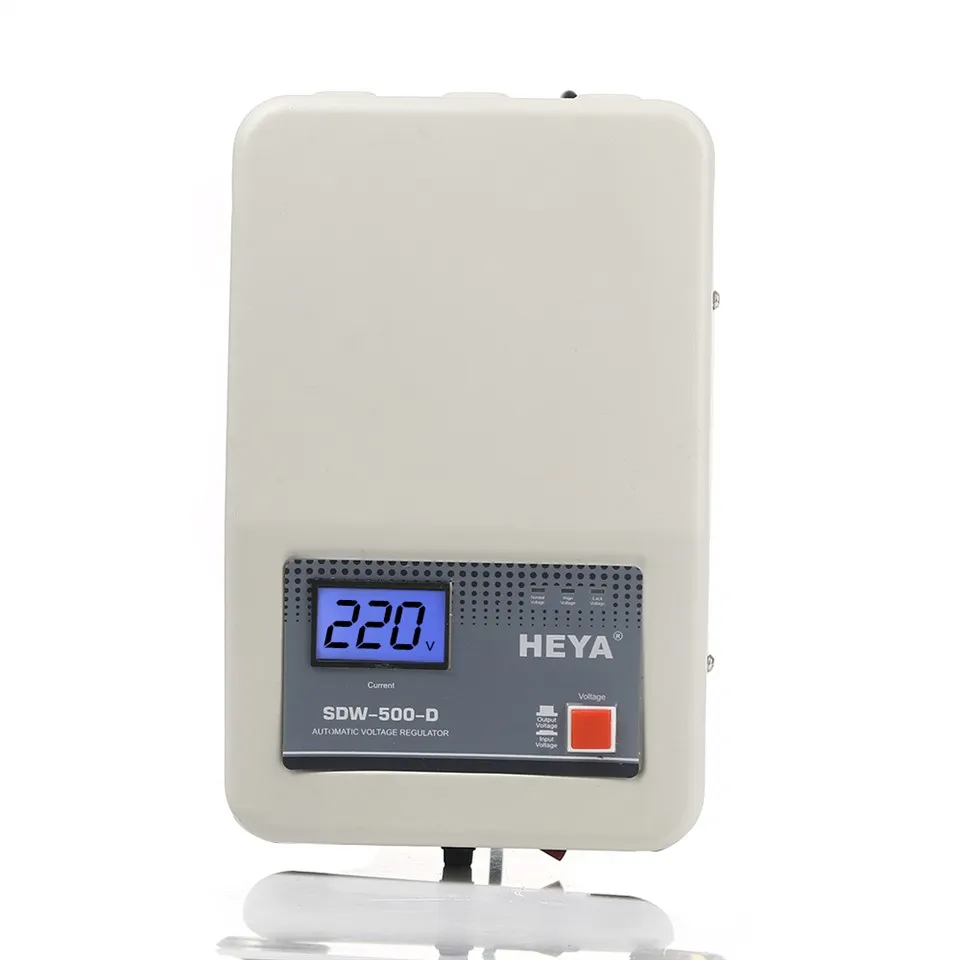
- Wall Mounted Voltage Stabilizer: This type of voltage regulator is designed to be mounted on the wall, making it a convenient option for residential and commercial applications. It provides a stable voltage output for lighting systems and other electrical appliances in the vicinity. Wall - mounted voltage stabilizers are available in different capacities, allowing you to choose the one that best suits your specific lighting load requirements.
- Voltage Regulator for Pc: While primarily designed for computers, these voltage regulators can also be used for lighting systems, especially in small - scale applications. They offer a high level of precision in voltage regulation and can protect both the computer and the lighting system from voltage fluctuations.
- Variable Ac Regulator: A variable AC regulator allows you to adjust the output voltage according to your specific needs. This can be useful in situations where different lighting fixtures require different voltage levels. For example, you can use a variable AC regulator to fine - tune the voltage for a set of dimmable LED lights.
Considerations When Using a Voltage Regulator for Lighting Systems
While voltage regulators offer many benefits for lighting systems, there are some considerations to keep in mind.
- Load Capacity: It's important to choose a voltage regulator with a sufficient load capacity to handle the total power consumption of your lighting system. If the load capacity is too low, the voltage regulator may overheat and fail, or it may not be able to provide a stable voltage output. You should calculate the total wattage of all the bulbs in your lighting system and choose a voltage regulator with a capacity that exceeds this value.
- Compatibility: Different types of lighting systems may have different requirements in terms of voltage regulation. For example, some LED lighting systems may require a more precise and fast - responding voltage regulator compared to incandescent bulbs. Make sure to choose a voltage regulator that is compatible with the specific type of lighting system you have.
- Installation and Maintenance: Proper installation and maintenance of the voltage regulator are crucial for its optimal performance. It should be installed in a well - ventilated area away from heat sources and moisture. Regular inspection and testing of the voltage regulator can help to detect any potential issues early and ensure its long - term reliability.
Conclusion
In conclusion, a household voltage regulator can be effectively used for lighting systems. It offers numerous benefits, including extended bulb lifespan, consistent light output, energy efficiency, and protection against voltage fluctuations. As a household voltage regulator supplier, I understand the importance of providing high - quality voltage regulators that meet the specific needs of lighting systems.
If you are interested in improving the performance and longevity of your lighting system, I encourage you to consider using a voltage regulator. Whether you need a Wall Mounted Voltage Stabilizer, a Voltage Regulator for Pc, or a Variable Ac Regulator, I have the right solution for you. Contact me today to discuss your requirements and start enjoying the benefits of a stable voltage supply for your lighting system.
References
- Grob, Bernard. "Basic Electronics." McGraw - Hill, 2007.
- Chapman, Stephen J. "Electric Machinery Fundamentals." McGraw - Hill, 2012.
- National Electrical Code (NEC), various editions.