



Hey there! As a supplier of household voltage regulators, I often get asked a bunch of questions from customers. One question that pops up quite a bit is, "Can a household voltage regulator work in a humid environment?" Well, let's dig into this topic and find out.
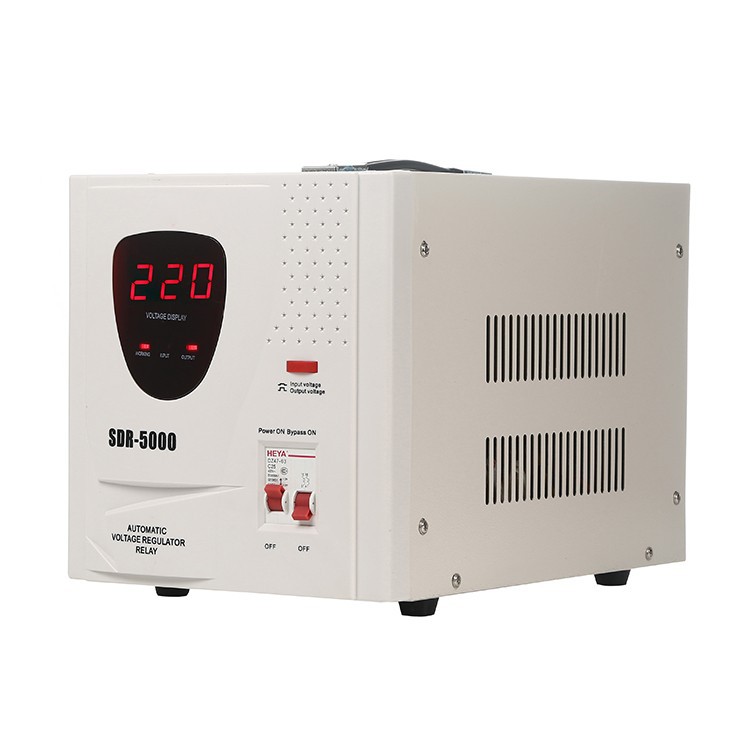
First off, let's understand what a household voltage regulator does. It's a device that helps maintain a stable voltage for your home appliances. You know how sometimes the voltage in our homes can fluctuate? These fluctuations can be harmful to our expensive electronics and appliances. That's where a voltage regulator steps in. It ensures that the voltage supplied to your devices stays within a safe and stable range. For example, if you're interested in a high - power option, check out our Voltage Regulator 3000 Watt. It's great for larger appliances that need a consistent power supply.
Now, let's talk about humidity. Humidity refers to the amount of water vapor in the air. In a humid environment, there's a lot of moisture floating around. And moisture can be a real pain when it comes to electrical devices. When moisture gets into the internal components of a voltage regulator, it can cause all sorts of problems.
One of the main issues is corrosion. Metal parts inside the voltage regulator can start to rust when exposed to moisture for a long time. Corrosion can damage the electrical connections and reduce the efficiency of the regulator. For example, the wires might start to break down, and the contacts might not work as well as they should. This can lead to inconsistent voltage regulation and even cause the regulator to fail completely.
Another problem is short - circuits. Water is a conductor of electricity. If enough moisture accumulates on the circuit boards or other electrical parts of the voltage regulator, it can create a path for electricity to flow where it shouldn't. This can cause a short - circuit, which is not only bad for the regulator but can also be a safety hazard. You definitely don't want your voltage regulator to short - circuit and potentially start a fire in your home.
However, not all hope is lost. Some voltage regulators are designed to be more resistant to humidity. These regulators often have special coatings or enclosures that help keep moisture out. For instance, our Home Appliances Voltage Regulator is built with materials and designs that offer some level of protection against humidity. They might have sealed cases or moisture - resistant components that can withstand a certain amount of moisture in the air.
But even with these protective measures, there are limits. If the humidity is extremely high, like in a tropical rainforest or a basement with a serious water leakage problem, even the most humidity - resistant voltage regulators can struggle. In such cases, it's important to take additional steps to protect the regulator.
One option is to use a dehumidifier in the area where the voltage regulator is installed. A dehumidifier can help reduce the amount of moisture in the air, creating a more favorable environment for the regulator. You can set it to maintain a certain humidity level, usually around 40 - 50%, which is ideal for most electrical devices.

Another thing you can do is to install the voltage regulator in a dry location. If possible, avoid placing it in areas prone to high humidity, such as bathrooms, laundry rooms, or near swimming pools. Instead, choose a well - ventilated and dry spot, like a closet or a utility room.
When it comes to the Ac Single Phase Voltage Regulator, it also has to deal with the challenges of humidity. Single - phase voltage regulators are commonly used in homes to regulate the voltage of single - phase electrical systems. Just like other voltage regulators, they can be affected by humidity. But again, proper installation and some preventive measures can go a long way in ensuring its proper functioning.
In conclusion, while a household voltage regulator can face significant challenges in a humid environment, it's not impossible for it to work. With the right design, installation, and preventive measures, you can make sure your voltage regulator continues to provide stable voltage to your home appliances even in a somewhat humid setting.
If you're in the market for a reliable voltage regulator, whether it's for a normal environment or a place with a bit of humidity, we've got you covered. We offer a wide range of high - quality voltage regulators that are designed to meet your needs. Don't hesitate to reach out to us if you have any questions or if you're interested in making a purchase. We're always happy to help you find the perfect voltage regulator for your home.
References:
- Electrical Engineering Textbooks on Device Durability in Humid Conditions
- Manufacturer's Guides on Voltage Regulator Maintenance and Environment Compatibility