



In the dynamic landscape of electric vehicles (EVs), the role of industrial voltage regulators is nothing short of crucial. As a leading supplier of Industrial Voltage Regulator, I've witnessed firsthand the transformative impact these devices have on the performance and efficiency of EVs. In this blog post, I'll delve into the inner workings of industrial voltage regulators in electric vehicles, exploring their functions, benefits, and the latest technological advancements.
Understanding the Basics of Voltage Regulation in EVs
Electric vehicles rely on a complex electrical system to power their motors, electronics, and various components. At the heart of this system lies the battery, which stores and supplies electrical energy. However, the voltage output of a battery can vary depending on factors such as state of charge, temperature, and load conditions. This variability can pose challenges for the proper operation of EV components, which are designed to operate within a specific voltage range.
This is where industrial voltage regulators come in. These devices are designed to maintain a stable output voltage, regardless of changes in the input voltage or load conditions. By regulating the voltage, voltage regulators ensure that the electrical components in an EV receive a consistent and reliable power supply, which is essential for optimal performance and longevity.
How Industrial Voltage Regulators Work
Industrial voltage regulators use a variety of techniques to regulate the output voltage. One of the most common methods is the use of a feedback control system. In a feedback control system, the output voltage of the regulator is continuously monitored and compared to a reference voltage. If the output voltage deviates from the reference voltage, the regulator adjusts its internal circuitry to correct the deviation and maintain a stable output voltage.
There are several types of industrial voltage regulators, each with its own advantages and disadvantages. Some of the most common types include linear regulators, switching regulators, and hybrid regulators.
Linear Regulators
Linear regulators are the simplest and most straightforward type of voltage regulator. They work by using a pass transistor to control the flow of current from the input to the output. The pass transistor acts as a variable resistor, adjusting its resistance to maintain a constant output voltage.
Linear regulators are known for their low noise and high output voltage accuracy. However, they are also relatively inefficient, as they dissipate a significant amount of power as heat. This makes them less suitable for high-power applications, such as electric vehicles.
Switching Regulators
Switching regulators are more complex than linear regulators, but they are also more efficient. They work by rapidly switching the input voltage on and off using a high-frequency switch. The switched voltage is then filtered to produce a stable output voltage.
Switching regulators are able to achieve high efficiency by reducing the power dissipation in the pass transistor. This makes them ideal for high-power applications, such as electric vehicles. However, they can also generate more noise than linear regulators, which can be a concern for some applications.
Hybrid Regulators
Hybrid regulators combine the benefits of linear and switching regulators. They use a switching regulator to provide high efficiency and a linear regulator to provide low noise and high output voltage accuracy.
Hybrid regulators are able to achieve a good balance between efficiency and performance, making them a popular choice for many applications, including electric vehicles.
Benefits of Industrial Voltage Regulators in Electric Vehicles
The use of industrial voltage regulators in electric vehicles offers several benefits, including:
Improved Performance
By maintaining a stable output voltage, voltage regulators ensure that the electrical components in an EV receive a consistent and reliable power supply. This helps to improve the performance and efficiency of the vehicle, as well as reduce the risk of component failure.
Extended Battery Life
Voltage regulators help to protect the battery in an EV by preventing overcharging and over-discharging. By maintaining a stable output voltage, voltage regulators ensure that the battery is charged and discharged within its safe operating range, which helps to extend its lifespan.
Enhanced Safety
Voltage regulators help to improve the safety of electric vehicles by preventing electrical malfunctions and short circuits. By regulating the output voltage, voltage regulators ensure that the electrical components in an EV are not exposed to excessive voltage or current, which can cause damage or even pose a safety hazard.
Latest Technological Advancements in Industrial Voltage Regulators
The field of industrial voltage regulators is constantly evolving, with new technologies and innovations being developed all the time. Some of the latest technological advancements in industrial voltage regulators include:
Digital Control
Digital control technology is becoming increasingly popular in industrial voltage regulators. Digital control allows for more precise and flexible regulation of the output voltage, as well as the ability to monitor and diagnose the performance of the regulator in real-time.
High-Frequency Operation
High-frequency operation is another trend in industrial voltage regulators. By operating at higher frequencies, voltage regulators can achieve higher efficiency and smaller size. This makes them ideal for applications where space and efficiency are critical, such as electric vehicles.
Integration with Other Components
Industrial voltage regulators are increasingly being integrated with other components, such as batteries, chargers, and power electronics. This integration allows for a more compact and efficient design, as well as improved performance and reliability.

Conclusion
Industrial voltage regulators play a crucial role in the performance and efficiency of electric vehicles. By maintaining a stable output voltage, voltage regulators ensure that the electrical components in an EV receive a consistent and reliable power supply, which is essential for optimal performance and longevity. As the demand for electric vehicles continues to grow, the importance of industrial voltage regulators will only increase.
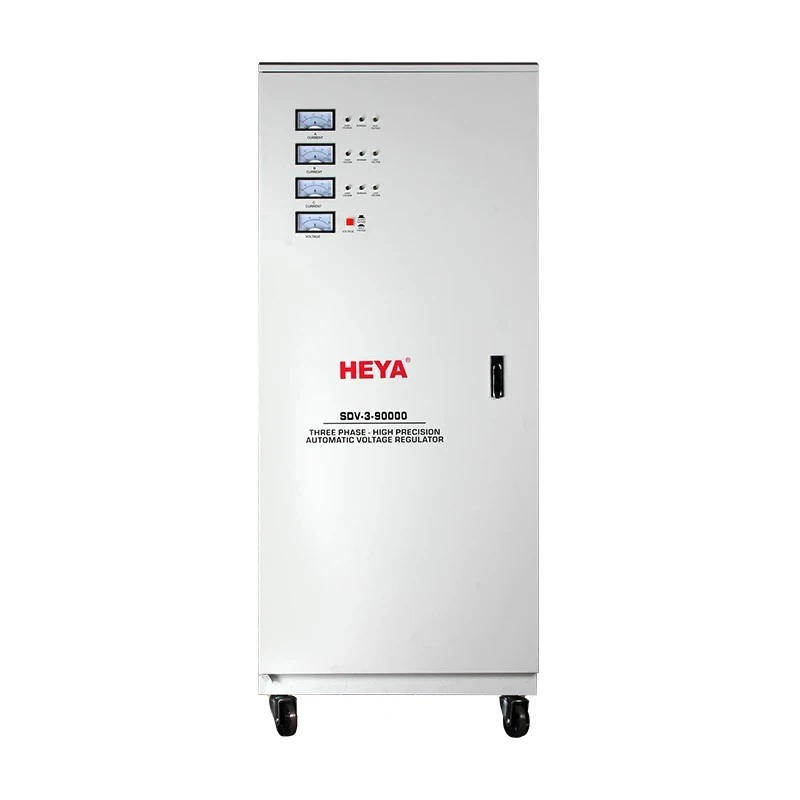
If you're interested in learning more about our Industrial Voltage Regulator, TNS Three Phase Voltage Regulator, or Electric Power Stabilizer, or if you have any questions or need assistance with your voltage regulation needs, please don't hesitate to contact us. Our team of experts is always available to help you find the right solution for your specific application.
References
- Erickson, R. W., & Maksimovic, D. (2001). Fundamentals of power electronics. Springer Science & Business Media.
- Mohan, N., Undeland, T. M., & Robbins, W. P. (2012). Power electronics: converters, applications, and design. John Wiley & Sons.
- Rashid, M. H. (2011). Power electronics: circuits, devices, and applications. Pearson Education.