


How does an AC motor voltage regulator work?
As a dedicated supplier of Ac Motor Voltage Regulator, I am often asked about the inner - workings of these essential devices. In this blog, I'll provide a comprehensive overview of how an AC motor voltage regulator operates, exploring its components, functions, and the overall process.
Understanding the Basics of AC Motors and Voltage Regulation
AC motors are widely used in various industrial, commercial, and residential applications due to their efficiency and reliability. However, the performance of an AC motor is highly dependent on the stability of the input voltage. Fluctuations in voltage can lead to issues such as reduced motor efficiency, overheating, and even premature motor failure. This is where an AC motor voltage regulator comes into play. Its primary function is to maintain a constant output voltage regardless of the variations in the input voltage.
Components of an AC Motor Voltage Regulator
An AC motor voltage regulator typically consists of several key components, each playing a crucial role in the voltage regulation process.
- Voltage Sensing Circuit: This is the first line of defense in the voltage regulation system. The voltage sensing circuit continuously monitors the input voltage. It compares the actual input voltage with a pre - set reference voltage. If there is a deviation between the two, it sends a signal to the control circuit.
- Control Circuit: The control circuit is the brain of the voltage regulator. Based on the signal received from the voltage sensing circuit, it determines the appropriate action to take to correct the voltage. It can adjust the output of the regulator by controlling other components such as the power switching devices.
- Power Switching Devices: These devices, such as thyristors or transistors, are responsible for adjusting the amount of power that is delivered to the AC motor. The control circuit sends signals to these devices to either increase or decrease the power flow, thereby regulating the output voltage.
- Transformer: The transformer is an important component in many AC motor voltage regulators. It can step up or step down the voltage as required. In some cases, it also provides electrical isolation between the input and output, which is crucial for safety reasons.
The Working Process of an AC Motor Voltage Regulator
Let's take a detailed look at how these components work together to regulate the voltage for an AC motor.
- Voltage Sensing: The voltage sensing circuit starts by measuring the input voltage. This measurement is then compared with a reference voltage. For example, if the reference voltage is set at 220V and the input voltage is measured at 230V, there is a 10V deviation.
- Signal Transmission: Once the deviation is detected, the voltage sensing circuit sends a signal to the control circuit. The signal contains information about the magnitude and direction of the deviation. In our example, the signal would indicate that the input voltage is 10V higher than the reference voltage.
- Control Decision: The control circuit analyzes the signal and decides on the appropriate action. In this case, since the input voltage is higher, the control circuit will send a signal to the power switching devices to reduce the power flow.
- Power Adjustment: The power switching devices receive the signal from the control circuit and adjust their operation accordingly. They may reduce the conduction angle of thyristors or change the switching frequency of transistors to decrease the amount of power delivered to the motor.
- Transformer Action: If the voltage adjustment requires a significant change, the transformer may also come into play. It can step down the voltage to bring it closer to the desired level.
- Output Monitoring: The voltage sensing circuit continues to monitor the output voltage. Once the output voltage reaches the pre - set reference voltage (in our example, 220V), the control circuit will maintain the current settings of the power switching devices to keep the voltage stable.
Types of AC Motor Voltage Regulators
There are different types of AC motor voltage regulators available in the market, each with its own working principle and advantages.
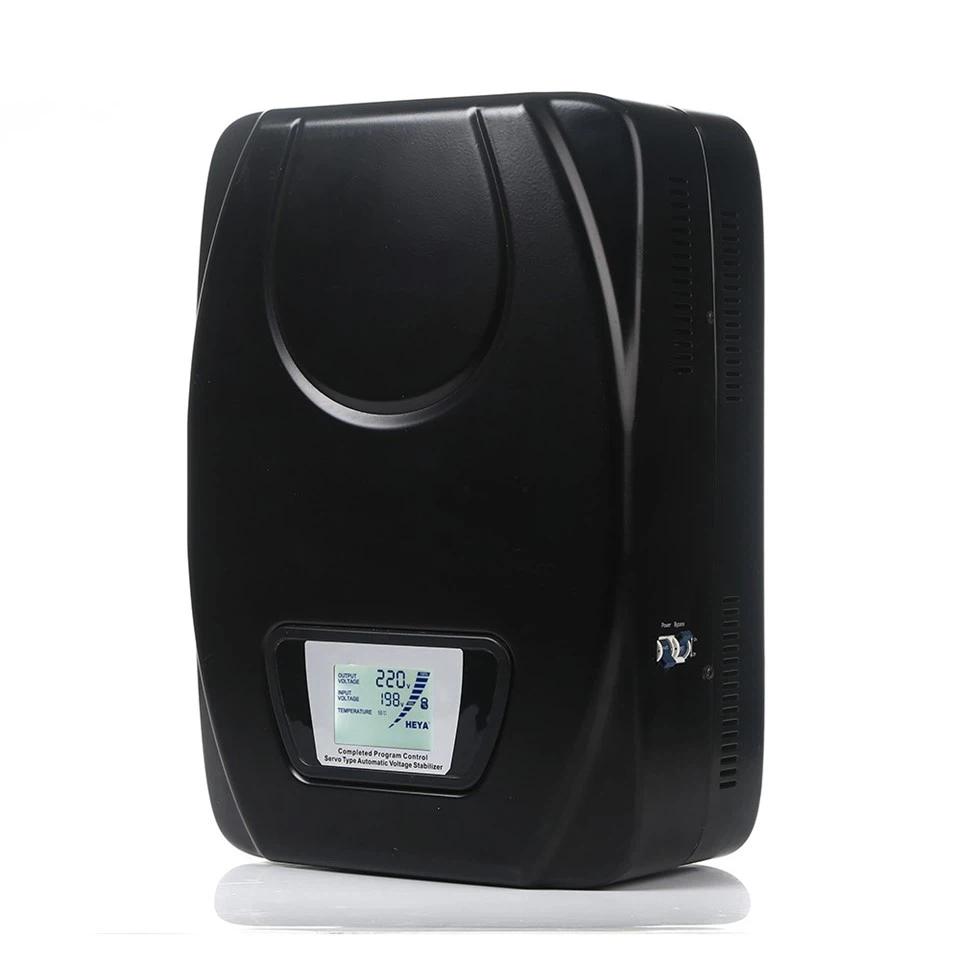
- Servo - controlled Voltage Regulators: These regulators use a servo motor to adjust the position of a variable transformer. The servo motor is controlled by the control circuit based on the voltage sensing. Servo - controlled regulators are known for their high precision and ability to handle large voltage fluctuations. You can learn more about our Digital Display Servo Voltage Regulator which offers advanced features and accurate voltage regulation.
- Electronic Voltage Regulators: Electronic voltage regulators use semiconductor devices such as transistors and thyristors to regulate the voltage. They are compact, efficient, and have a fast response time. They are suitable for applications where space is limited and quick voltage adjustments are required.
- Automatic Voltage Regulators (AVRs): AVRs are commonly used in generators to maintain a constant output voltage. They work by sensing the output voltage of the generator and adjusting the field current to control the voltage.
Benefits of Using an AC Motor Voltage Regulator
Using an AC motor voltage regulator offers several benefits for both the motor and the overall system.

- Improved Motor Efficiency: By maintaining a constant voltage, the motor can operate at its optimal efficiency. This reduces energy consumption and saves on electricity costs.
- Extended Motor Life: Voltage fluctuations can cause excessive heat and stress on the motor windings, leading to premature failure. A voltage regulator protects the motor from these issues, thereby extending its lifespan.
- Enhanced System Performance: In industrial applications, a stable voltage supply ensures the smooth operation of the entire system. It reduces the risk of equipment malfunction and downtime.
Conclusion
As a supplier of Motor Voltage Regulator, I understand the importance of a reliable voltage regulator for AC motors. The working principle of an AC motor voltage regulator is a complex yet well - orchestrated process that involves multiple components working together to maintain a stable voltage. Whether you are in the industrial, commercial, or residential sector, choosing the right voltage regulator can significantly improve the performance and longevity of your AC motors.
If you are interested in our AC motor voltage regulators or have any questions about voltage regulation for your specific application, we invite you to contact us for a detailed discussion. Our team of experts is ready to assist you in selecting the most suitable product and providing technical support.
References
- Chapman, S. J. (2012). Electric Machinery Fundamentals. McGraw - Hill.
- Fitzgerald, A. E., Kingsley, C., & Umans, S. D. (2003). Electric Machinery. McGraw - Hill.