



Hey there! As a supplier of electronic voltage regulators, I've seen firsthand how these nifty devices can have a huge impact on the overall system performance. In this blog, I'm gonna break down the ins and outs of how an electronic voltage regulator affects the whole system.
What's an Electronic Voltage Regulator?
First things first, let's talk about what an electronic voltage regulator actually is. Simply put, it's a device that maintains a constant voltage level in an electrical circuit. You know how sometimes the voltage in your electrical supply can fluctuate? That's where the voltage regulator steps in. It keeps the voltage stable, no matter what changes are happening in the input voltage or the load connected to the circuit.
There are different types of voltage regulators, like linear regulators and switching regulators. Linear regulators are pretty straightforward. They work by dissipating the excess voltage as heat. They're simple and can provide a very clean output voltage, but they're not the most efficient, especially when there's a big difference between the input and output voltages.
On the other hand, switching regulators are more complex but way more efficient. They work by rapidly switching the input voltage on and off and then filtering it to get the desired output voltage. This way, they waste less energy as heat and can handle larger voltage differences.
Impact on System Reliability
One of the biggest ways an electronic voltage regulator affects the overall system performance is by improving its reliability. Electrical devices are designed to work within a specific voltage range. If the voltage supplied to them is too high or too low, it can cause all sorts of problems.

For example, if the voltage is too high, it can overheat the components in the device, leading to premature failure. On the other hand, if the voltage is too low, the device might not function properly or might even shut down unexpectedly. A voltage regulator ensures that the voltage supplied to the device stays within the safe and optimal range, reducing the risk of damage and improving the overall reliability of the system.
Let's say you have a computer. The Voltage Regulator for Pc in your computer's power supply is crucial for keeping the voltage stable to all the components, like the CPU and the graphics card. Without a proper voltage regulator, these components could be damaged by voltage spikes or dips, leading to system crashes or even permanent hardware failure.
Effect on System Efficiency
Another important aspect is the impact on system efficiency. As I mentioned earlier, switching regulators are more efficient than linear regulators. When you use an efficient voltage regulator in your system, it means less energy is wasted as heat. This not only saves electricity but also reduces the need for cooling systems, which can further save energy and reduce costs.
For industrial systems, where large amounts of power are involved, the efficiency of the voltage regulator can have a significant impact on the overall operating costs. A more efficient voltage regulator can lead to substantial savings over time.
Influence on System Performance
The stability of the voltage supplied by the regulator also has a direct impact on the performance of the system. In sensitive electronic equipment, like audio and video systems, even small voltage fluctuations can cause noticeable problems. For example, in an audio system, voltage fluctuations can result in noise or distortion in the sound output.
A high - quality voltage regulator can provide a very stable voltage, ensuring that the system performs at its best. It can improve the clarity of audio, the sharpness of video, and the overall responsiveness of electronic devices.
Role in Protecting Against Surges and Spikes
Voltage surges and spikes are sudden increases in voltage that can occur due to various reasons, such as lightning strikes, power grid issues, or the switching on and off of large electrical devices. These surges and spikes can be extremely damaging to electronic equipment.
An electronic voltage regulator can act as a protector against these surges and spikes. It can quickly detect the abnormal increase in voltage and take steps to limit it. Some voltage regulators are equipped with surge protection circuits that can divert the excess voltage to the ground, preventing it from reaching the connected devices.
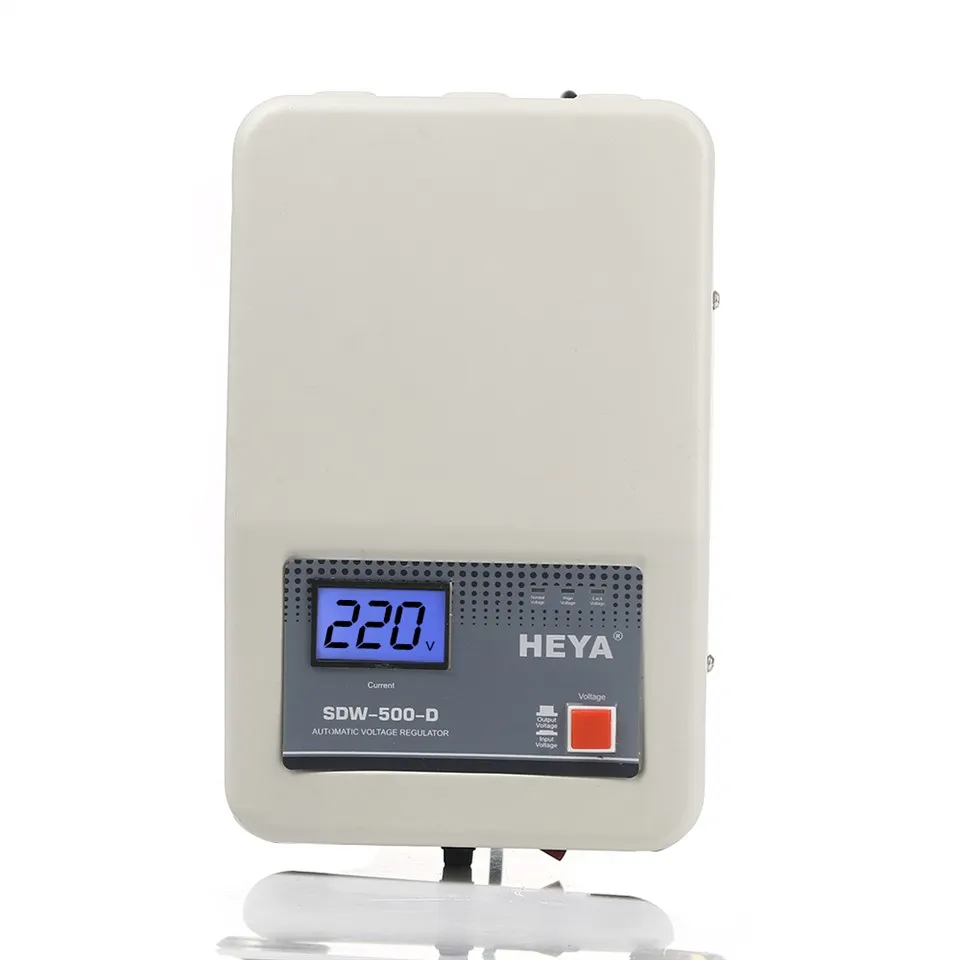
For home appliances and small electronic devices, a Wall Mounted Voltage Stabilizer can be a great solution to protect against voltage fluctuations and surges. It can be easily installed on the wall and provides a stable voltage supply to all the connected devices.
Compatibility with Different Loads
An important factor to consider is how well the voltage regulator can handle different types of loads. Different electronic devices have different power requirements and load characteristics. Some devices might have a high inrush current when they are first turned on, while others might have a variable load during operation.
A good voltage regulator should be able to adapt to these different load conditions and maintain a stable output voltage. It should be able to handle sudden changes in the load without causing significant voltage drops or spikes. This ensures that the system can operate smoothly, regardless of the type of devices connected to it.
Importance of Quality and Proper Sizing
When it comes to choosing an electronic voltage regulator, quality and proper sizing are crucial. A low - quality voltage regulator might not be able to provide a stable voltage or might fail prematurely. On the other hand, if you choose a voltage regulator that is too small for your system, it won't be able to handle the load properly, leading to voltage instability.
You need to consider the power requirements of your system, the input voltage range, and the type of load when selecting a voltage regulator. It's also important to choose a reliable brand and a product that has been tested and certified to meet industry standards.
Conclusion
In conclusion, an electronic voltage regulator plays a vital role in the overall system performance. It improves system reliability, efficiency, and performance, and protects the system against voltage surges and spikes. Whether you're using it in a small home appliance or a large industrial system, choosing the right voltage regulator is essential.
If you're in the market for an electronic voltage regulator, we're here to help. We offer a wide range of high - quality Electronic Voltage Stabilizer and voltage regulators to meet your specific needs. Contact us to start a discussion about your requirements and let's work together to find the best solution for your system.
References
- "Power Electronics: Converters, Applications, and Design" by Ned Mohan, Tore M. Undeland, and William P. Robbins.
- "Electric Circuits" by James W. Nilsson and Susan A. Riedel.