



In recent years, wind power has emerged as a significant player in the global energy landscape, offering a clean and renewable alternative to traditional fossil fuels. However, the inherent variability of wind energy poses unique challenges to the stability of electrical power systems. This is where industrial voltage stabilizers come into play, ensuring a consistent and reliable power supply from wind turbines. As an industrial voltage stabilizer supplier, I am well - versed in the intricacies of how these devices work in conjunction with wind power systems.
The Nature of Wind Power and Voltage Fluctuations
Wind power generation is highly dependent on the wind speed. When the wind blows strongly, wind turbines can produce a large amount of electricity. Conversely, during periods of low wind, the power output drops significantly. This variability in power output leads to fluctuations in the voltage of the electrical grid connected to the wind farm.
Voltage fluctuations can have a detrimental impact on electrical equipment. High voltage can cause overheating, insulation breakdown, and premature failure of devices. On the other hand, low voltage can result in reduced performance, flickering lights, and in some cases, the inability of equipment to operate at all. To mitigate these issues, an industrial voltage stabilizer is essential.
How an Industrial Voltage Stabilizer Works
An industrial voltage stabilizer is a device designed to automatically maintain a constant voltage level, regardless of the input voltage variations. There are several types of voltage stabilizers, including servo - controlled stabilizers, static voltage stabilizers, and ferro - resonant stabilizers. Each type operates on different principles but shares the common goal of providing a stable output voltage.
Servo - Controlled Voltage Stabilizers
Servo - controlled voltage stabilizers are one of the most commonly used types in industrial applications. They consist of a servo motor, a variable autotransformer, and a control circuit. The control circuit continuously monitors the output voltage. When the input voltage changes, the control circuit detects the deviation and sends a signal to the servo motor. The servo motor then adjusts the position of the wiper on the variable autotransformer, changing the turns ratio and thus regulating the output voltage.
In a wind power system, the servo - controlled voltage stabilizer can quickly respond to the rapid voltage fluctuations caused by changes in wind speed. For example, when the wind suddenly picks up and the power output of the wind turbines increases, causing a rise in the grid voltage, the stabilizer will detect this change and adjust the output voltage to the desired level.
Static Voltage Stabilizers
Static voltage stabilizers, also known as solid - state voltage stabilizers, use power electronic devices such as thyristors and IGBTs (Insulated Gate Bipolar Transistors) to regulate the voltage. They offer faster response times compared to servo - controlled stabilizers and are more suitable for applications where high - speed voltage regulation is required.
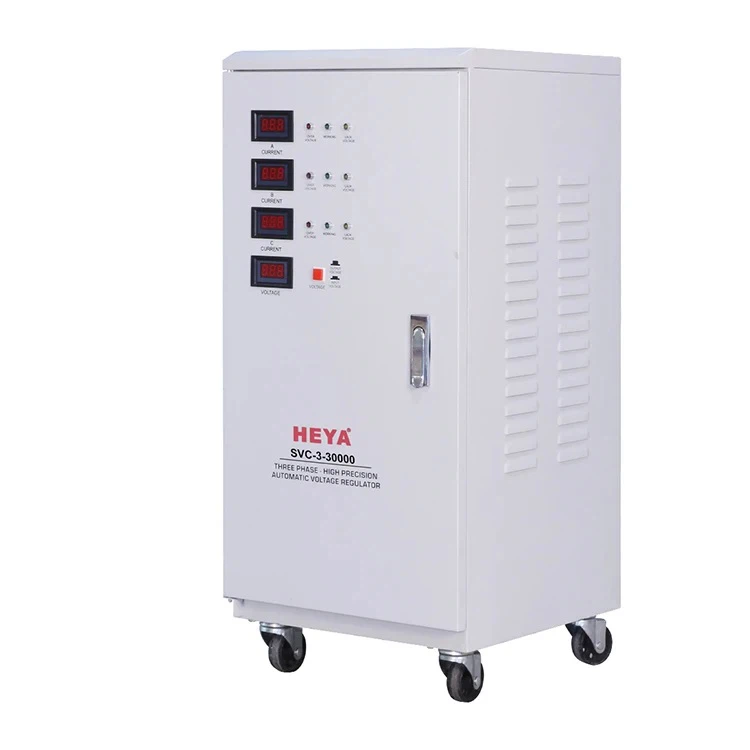

In a wind power system, static voltage stabilizers can be used to compensate for the high - frequency voltage fluctuations. The control circuit of a static voltage stabilizer uses advanced algorithms to analyze the input voltage and generate the appropriate control signals for the power electronic switches. By rapidly switching the power electronic devices on and off, the stabilizer can adjust the output voltage in a matter of milliseconds.
Ferro - Resonant Voltage Stabilizers
Ferro - resonant voltage stabilizers are based on the principle of ferro - resonance. They consist of a specially designed transformer with a saturable core and a capacitor. The combination of the inductor (transformer) and the capacitor creates a resonant circuit. When the input voltage changes, the magnetic saturation of the core changes, which in turn affects the resonant frequency and the output voltage.
Ferro - resonant voltage stabilizers are known for their simplicity, reliability, and ability to provide a high degree of voltage regulation. In a wind power system, they can be used in areas where the voltage fluctuations are relatively small and where a simple and robust solution is required.
Integration of Industrial Voltage Stabilizers in Wind Power Systems
The integration of an industrial voltage stabilizer in a wind power system involves several important considerations. First, the capacity of the voltage stabilizer must be carefully selected based on the power rating of the wind turbines and the expected voltage fluctuations. A stabilizer with insufficient capacity may not be able to handle the large voltage variations, while an oversized stabilizer can be costly and inefficient.
Second, the location of the voltage stabilizer is crucial. It can be installed at the output of the wind turbines, at the substation, or at the point of use of the electrical equipment. Installing the stabilizer at the output of the wind turbines can help to regulate the voltage before it enters the grid, reducing the impact of voltage fluctuations on the entire power system. However, this requires a high - capacity stabilizer. Installing the stabilizer at the point of use can provide more targeted voltage regulation for specific equipment.
Another important aspect is the control and monitoring of the voltage stabilizer. Modern industrial voltage stabilizers are often equipped with advanced control systems that allow for remote monitoring and control. This enables operators to monitor the performance of the stabilizer, adjust the settings, and receive alerts in case of any faults or abnormal conditions.
Benefits of Using an Industrial Voltage Stabilizer in Wind Power Systems
The use of an industrial voltage stabilizer in a wind power system offers several benefits. Firstly, it improves the reliability of the power supply. By maintaining a stable voltage level, the stabilizer reduces the risk of equipment damage and downtime, ensuring the continuous operation of the wind power system.
Secondly, it enhances the quality of the electrical power. A stable voltage supply results in better performance of electrical equipment, reducing energy consumption and improving the overall efficiency of the system. For example, motors and other electrical loads operate more efficiently at a constant voltage, reducing wear and tear and extending their lifespan.
Thirdly, an industrial voltage stabilizer can help to comply with the grid connection requirements. Many grid operators have strict voltage regulation standards that wind power plants must meet. By using a voltage stabilizer, wind power operators can ensure that their power output meets these standards, facilitating the integration of wind energy into the grid.
Conclusion
As a supplier of industrial voltage stabilizers, I understand the importance of providing reliable and efficient solutions for wind power systems. An industrial voltage stabilizer plays a crucial role in ensuring the stability and quality of the power supply from wind turbines. Whether it is a servo - controlled stabilizer, a static voltage stabilizer, or a ferro - resonant stabilizer, each type has its own advantages and is suitable for different applications.
If you are involved in a wind power project or are looking to improve the performance of your existing wind power system, an industrial voltage stabilizer is a must - have component. We offer a wide range of Industrial Voltage Regulator, including TNS Three Phase Voltage Regulator and Industrial 3 Phase Voltage Stabilizer. Our team of experts can help you select the right stabilizer for your specific needs and provide professional installation and after - sales service. Contact us today to discuss your requirements and explore how our industrial voltage stabilizers can enhance the performance of your wind power system.
References
- Anderson, P. M., & Fouad, A. A. (2008). Power System Control and Stability. IEEE Press.
- Chapman, S. J. (2012). Electric Machinery Fundamentals. McGraw - Hill Education.
- Singh, B., & Al-Haddad, K. (2007). Power Quality Enhancement Using Custom Power Devices. John Wiley & Sons.