


As a supplier of Single Phase AC Regulators, I've witnessed firsthand the critical role these devices play in maintaining stable electrical power. One factor that significantly impacts their performance is ambient temperature. In this blog, I'll delve into how ambient temperature affects a single phase AC regulator and why it's essential to understand this relationship for optimal operation.
Basic Working Principle of Single Phase AC Regulators
Before discussing the impact of ambient temperature, let's briefly review how a single phase AC regulator works. A single phase AC regulator is designed to control the output voltage of an alternating current (AC) power supply. It adjusts the voltage to a desired level, compensating for fluctuations in the input voltage. This is crucial for protecting electrical equipment from damage due to over - or under - voltage conditions.
There are different types of single phase AC regulators, such as High Precision Ac Voltage Regulator, Servo Motor Stabilizer, and Digital Display Servo Voltage Regulator. Each type has its unique way of regulating the voltage, but they all share the common goal of providing a stable output.
Impact of Ambient Temperature on Electrical Components
The ambient temperature can have a profound effect on the electrical components within a single phase AC regulator. Let's look at some of the key components and how they are affected:
Resistors
Resistors are fundamental components in an AC regulator. Their resistance value is temperature - dependent. According to the temperature coefficient of resistance (TCR), most resistors increase their resistance as the temperature rises. For carbon composition resistors, the TCR can be relatively high. In a single phase AC regulator, an increase in resistor resistance can lead to a change in the voltage division within the circuit. This can cause the output voltage to deviate from the set value, resulting in inaccurate voltage regulation.
Capacitors
Capacitors also play a vital role in AC regulators. They are used for filtering, coupling, and energy storage. The capacitance of a capacitor changes with temperature. For electrolytic capacitors, the capacitance may decrease as the temperature rises. This can affect the filtering performance of the regulator, leading to an increase in ripple voltage in the output. In extreme cases, a significant change in capacitance can cause the regulator to malfunction.
Semiconductor Devices
Semiconductor devices such as diodes, transistors, and thyristors are widely used in single phase AC regulators. These devices are highly sensitive to temperature. As the ambient temperature increases, the leakage current of diodes and transistors increases. This can lead to additional power dissipation within the device, which further raises the temperature. In thyristors, an increase in temperature can lower the firing voltage, causing the device to turn on earlier than expected. This can disrupt the normal operation of the regulator and lead to erratic output voltage.
Thermal Management and Its Importance
Given the significant impact of ambient temperature on the components of a single phase AC regulator, proper thermal management is crucial. Here are some common thermal management techniques:
Heat Sinks
Heat sinks are used to dissipate heat from high - power components such as transistors and thyristors. They work by increasing the surface area available for heat transfer. A well - designed heat sink can effectively lower the temperature of these components, ensuring their reliable operation. For example, an aluminum heat sink with fins can provide a large surface area for convection cooling.
Cooling Fans
In some cases, cooling fans are used to enhance the heat dissipation process. Fans can increase the airflow around the components, removing the heat more efficiently. However, the performance of cooling fans can also be affected by temperature. High ambient temperatures can reduce the efficiency of the fan motor, leading to a decrease in airflow.
Enclosure Design
The design of the regulator enclosure also plays an important role in thermal management. An enclosure with proper ventilation holes can allow hot air to escape and fresh air to enter. This natural convection can help maintain a lower temperature inside the enclosure. Additionally, the material of the enclosure can affect its thermal conductivity. For example, a metal enclosure can conduct heat better than a plastic one.
Performance Degradation at Extreme Temperatures
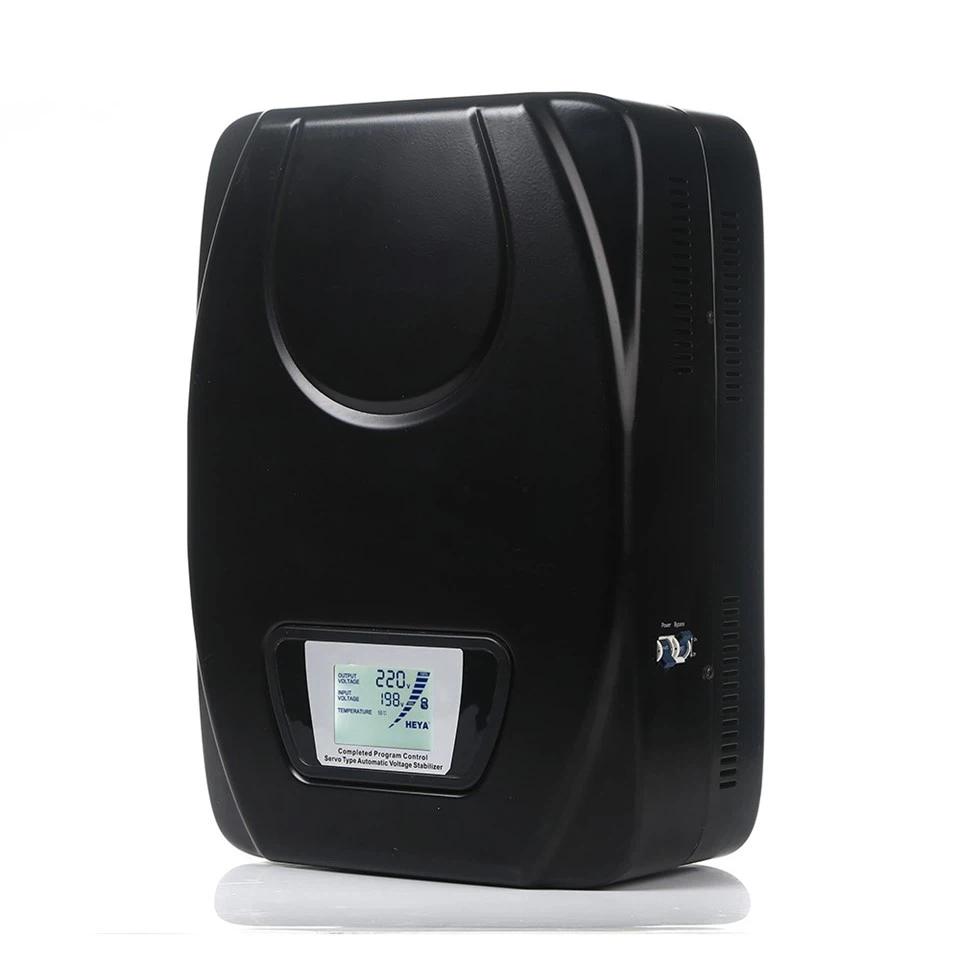
At extreme ambient temperatures, the performance of a single phase AC regulator can degrade significantly.

High - Temperature Conditions
In high - temperature environments (e.g., above 50°C), the power dissipation of the components increases rapidly. This can lead to thermal runaway, where the temperature of the components continues to rise until they fail. The output voltage of the regulator may become unstable, and the accuracy of voltage regulation can be severely affected. In addition, the lifespan of the components can be shortened due to the high - temperature stress.
Low - Temperature Conditions
Low - temperature environments (e.g., below - 20°C) can also pose challenges. The viscosity of lubricants in moving parts (such as in servo motor stabilizers) can increase, making the motor operation sluggish. The performance of electrolytic capacitors can degrade, and the conductivity of some materials can decrease. This can lead to a slow response time of the regulator and a decrease in output voltage.
Selecting the Right Single Phase AC Regulator for Different Temperatures
When choosing a single phase AC regulator, it's important to consider the ambient temperature conditions in which it will operate. Here are some factors to consider:
Temperature Rating
The temperature rating of the regulator indicates the range of ambient temperatures in which it can operate reliably. Make sure to choose a regulator with a temperature rating that matches the expected operating conditions. For example, if the regulator will be used in a hot industrial environment, select a model with a high - temperature rating.
Thermal Design
Examine the thermal design of the regulator. A regulator with a well - designed heat sink, cooling fan, and enclosure is more likely to perform well in high - temperature environments. Look for features such as large - surface - area heat sinks and efficient ventilation.
Conclusion
In conclusion, the ambient temperature has a significant impact on the performance of a single phase AC regulator. From affecting the electrical properties of components to causing performance degradation at extreme temperatures, temperature is a critical factor that cannot be ignored. As a supplier of single phase AC regulators, we understand the importance of providing products that can withstand different temperature conditions. We offer a wide range of High Precision Ac Voltage Regulator, Servo Motor Stabilizer, and Digital Display Servo Voltage Regulator that are designed with proper thermal management in mind.
If you are in the market for a single phase AC regulator and need to ensure reliable operation in various temperature environments, please contact us for more information. We are ready to discuss your specific requirements and provide you with the best solution.
References
- Dorf, R. C., & Svoboda, J. A. (2008). Introduction to Electric Circuits. Wiley.
- Sedra, A. S., & Smith, K. C. (2010). Microelectronic Circuits. Oxford University Press.
- Horowitz, P., & Hill, W. (1989). The Art of Electronics. Cambridge University Press.