


The durability of a Variac Variable Regulator is a critical factor that determines its performance and longevity in various applications. As a leading supplier of these regulators, I've witnessed firsthand how the mechanical construction of a Variac Variable Regulator can significantly impact its durability. In this blog, we'll delve into the key aspects of mechanical construction and their influence on the regulator's long - term performance.
1. Core and Coil Design
The core and coil are the heart of a Variac Variable Regulator. The core is typically made of laminated silicon steel. This material is chosen because of its low hysteresis loss, which means less energy is wasted as heat during the magnetic cycle. A well - designed core minimizes eddy currents, which can cause overheating and reduce the efficiency and durability of the regulator.
The coils are wound around the core. The quality of the wire used in the coils is crucial. High - grade copper wire with proper insulation is essential. Inferior wire can lead to increased resistance, which in turn generates more heat. Over time, excessive heat can damage the insulation, leading to short - circuits and ultimately the failure of the regulator. Additionally, the winding technique matters. Precise and uniform winding ensures consistent electrical characteristics and reduces the risk of mechanical stress on the wire.
For instance, if the coils are wound too tightly, it can cause the wire to break under normal operation or during vibration. On the other hand, loose winding can lead to movement of the wire, which may cause abrasion and insulation damage. A Variac Variable Regulator with a well - engineered core and coil design can withstand years of continuous operation without significant degradation.
2. Brush and Contact Mechanism
The brush and contact mechanism is responsible for adjusting the output voltage of the Variac. The brushes are in constant contact with the coil, and their quality and design are vital for durability. High - quality carbon brushes are commonly used due to their good electrical conductivity and self - lubricating properties.
The contact surface between the brush and the coil must be smooth and clean. Any dirt, debris, or oxidation on the contact surface can increase the contact resistance. This results in higher power dissipation at the contact point, leading to overheating and accelerated wear of the brush and the coil. To prevent this, some Variac regulators are equipped with protective enclosures to keep out dust and moisture.
The mechanical pressure exerted by the brushes on the coil is also a critical factor. If the pressure is too low, the contact may be intermittent, causing voltage fluctuations. If the pressure is too high, it can cause excessive wear on the brush and the coil surface. A well - designed brush and contact mechanism ensures stable electrical contact and long - term durability. For more information on contact - type regulators, you can visit our Contact Voltage Regulator page.
3. Enclosure and Cooling
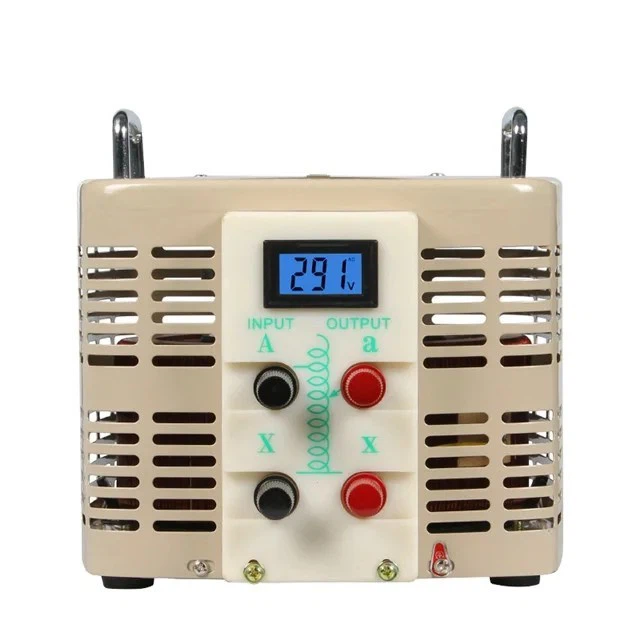
The enclosure of a Variac Variable Regulator serves multiple purposes. It protects the internal components from physical damage, dust, and moisture. A robust enclosure made of high - quality materials such as steel or aluminum can withstand impacts and environmental conditions.
Proper cooling is essential for maintaining the durability of the regulator. Overheating is one of the main causes of component failure in electrical equipment. Many Variac regulators are designed with ventilation holes or fins to dissipate heat. Some larger models may even have fans for forced air cooling.
The placement of the ventilation holes is crucial. They should be located in areas where hot air can escape easily and fresh air can enter. If the ventilation is blocked or inefficient, the temperature inside the enclosure can rise rapidly, causing damage to the core, coils, and other components. A well - designed enclosure not only protects the regulator but also facilitates efficient cooling, thereby enhancing its durability.
4. Mounting and Structural Integrity
The way a Variac Variable Regulator is mounted can affect its durability. A stable and secure mounting ensures that the regulator does not experience excessive vibration or movement during operation. Vibration can cause loose connections, mechanical stress on components, and even damage to the core and coils.
The structural integrity of the regulator's internal framework is also important. All components should be firmly attached to the framework to prevent any movement. A well - constructed framework can withstand mechanical shocks and vibrations, ensuring that the regulator operates reliably over its lifespan.

5. Impact on Different Applications
The mechanical construction of a Variac Variable Regulator has different implications depending on the application. In industrial settings, where the regulator may be exposed to harsh environments, high - vibration machinery, and continuous operation, a robust mechanical design is essential. A Variac with a sturdy enclosure, efficient cooling, and a well - engineered brush and contact mechanism can withstand these conditions and provide reliable voltage regulation for years.
In laboratory applications, precision and stability are often the primary concerns. However, durability is still important. A regulator with a well - designed core and coil can maintain its electrical characteristics over time, providing accurate voltage control for experiments. The brush and contact mechanism should also be reliable to ensure consistent performance. You can explore our Single Phase Variac Voltage Regulator for more options suitable for various applications.
6. Maintenance and Durability
Regular maintenance can significantly extend the durability of a Variac Variable Regulator. Simple tasks such as cleaning the brushes and contact surfaces, checking the tightness of connections, and inspecting the enclosure for damage can prevent many potential problems.
However, the mechanical construction also affects the ease of maintenance. A regulator with accessible components and a well - designed layout is easier to maintain. For example, if the brushes can be easily replaced without disassembling a large part of the regulator, it reduces the downtime and cost of maintenance.
7. Conclusion and Call to Action
In conclusion, the mechanical construction of a Variac Variable Regulator plays a crucial role in its durability. From the core and coil design to the brush and contact mechanism, enclosure, and mounting, every aspect affects how well the regulator can withstand the test of time.
As a supplier, we are committed to providing high - quality Variac Variable Regulators with excellent mechanical construction. Our products are designed to meet the diverse needs of different applications, whether it's industrial, laboratory, or other settings. If you are in the market for a reliable and durable Variac Variable Regulator, or if you have any questions about our products, we encourage you to reach out to us for a detailed discussion. We can help you select the right regulator for your specific requirements. For more information on adjustable voltage solutions, visit our Adjustable Voltage Stabilizer page.
References
- Electrical Engineering Handbook, edited by Richard C. Dorf.
- Handbook of Power Electronics, by Ned Mohan, Tore M. Undeland, and William P. Robbins.
- Research papers on the performance and durability of variable voltage regulators from IEEE Transactions on Power Electronics.