


As a supplier of computer power regulators, I've seen firsthand how power conversion efficiency can have a huge impact on energy consumption. In this blog post, I'll break down what power conversion efficiency is, how it affects energy use in computers, and why it matters for both consumers and businesses.
Let's start with the basics. Power conversion efficiency is a measure of how effectively a power regulator can convert the input power into the output power that your computer needs. It's usually expressed as a percentage. For example, if a power regulator has an efficiency of 80%, it means that 80% of the input power is converted into usable output power, while the remaining 20% is lost as heat.
Now, you might be thinking, "So what? A little bit of heat loss can't make that big of a difference, right?" Well, you'd be surprised. Over time, even a small difference in power conversion efficiency can add up to significant energy savings or waste.
Let's take a look at an example. Say you have two computers, each with a power supply that draws 500 watts of input power. One power supply has an efficiency of 80%, while the other has an efficiency of 90%. The first power supply will only deliver 400 watts of usable power to the computer (80% of 500 watts), while the second will deliver 450 watts (90% of 500 watts). That means the first power supply is wasting 100 watts of energy as heat, while the second is only wasting 50 watts.
If these computers are running 24 hours a day, 7 days a week, the difference in energy consumption becomes even more apparent. The first computer will use approximately 8,760 kilowatt - hours (kWh) of electricity per year (100 watts x 24 hours x 365 days), while the second will use only 4,380 kWh. At an average electricity cost of $0.12 per kWh, that's a difference of over $500 per year in energy costs!
So, how does power conversion efficiency impact the overall energy consumption of a computer? Well, it affects every aspect of the computer's operation. From the CPU and GPU, which are the most power - hungry components, to the hard drives, memory, and other peripherals, all rely on the power supply to provide them with the necessary energy. A more efficient power regulator means that less energy is wasted in the conversion process, which translates to lower energy consumption across the board.
For consumers, the benefits of high - efficiency power regulators are clear. Not only do they save money on their electricity bills, but they also contribute to a more sustainable environment by reducing overall energy consumption. In addition, high - efficiency power regulators tend to run cooler, which can extend the lifespan of the power supply and other computer components.

Businesses, on the other hand, have even more to gain from using high - efficiency power regulators. In a large data center or office environment, where hundreds or even thousands of computers are running simultaneously, the energy savings can be substantial. By reducing energy consumption, businesses can lower their operating costs and improve their bottom line. Additionally, many businesses are now looking to reduce their carbon footprint and meet sustainability goals, and using high - efficiency power regulators is an easy way to do so.
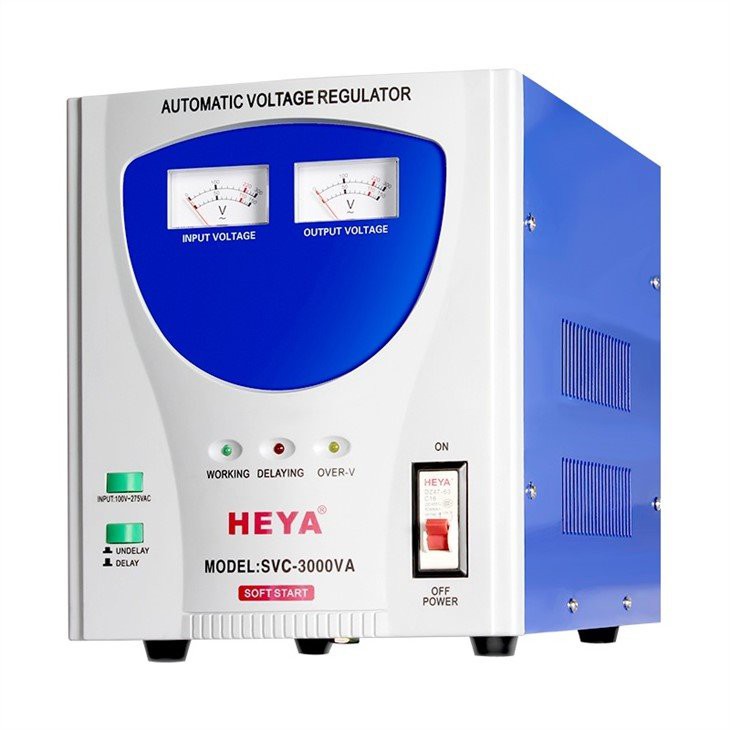
Now, let's talk about the different types of power regulators we offer as a supplier. We have a wide range of products, including Wall Mounted Voltage Stabilizer, Socket Voltage Regulator, and Ac AVR. Each of these products is designed to provide stable and efficient power to your computer, regardless of the input voltage fluctuations.
Our wall - mounted voltage stabilizers are perfect for home users or small offices. They can be easily installed on the wall and provide a reliable source of regulated power. The socket voltage regulators, on the other hand, are great for individual computers or small devices. They can be plugged directly into a wall socket and offer protection against voltage spikes and drops. And our Ac AVRs are ideal for larger systems and industrial applications, where a high level of power stability and efficiency is required.
When choosing a power regulator, it's important to consider not only the power conversion efficiency but also other factors such as the output voltage range, the maximum power capacity, and the level of protection it offers. Our team of experts is always available to help you choose the right product for your specific needs.
In conclusion, the power conversion efficiency of a computer power regulator has a significant impact on energy consumption. Whether you're a consumer looking to save money on your electricity bills or a business aiming to reduce operating costs and meet sustainability goals, choosing a high - efficiency power regulator is a smart investment.
If you're interested in learning more about our products or would like to discuss your power regulation needs, we'd love to hear from you. Feel free to reach out to us to start a conversation about purchasing the right power regulator for your computer or business.
References
- "Power Supply Efficiency: What It Is and Why It Matters." Tom's Hardware.
- "Energy Efficiency in Data Centers." U.S. Department of Energy.