


Achieving speed control with a motor voltage regulator is a crucial aspect in various industrial and commercial applications. As a leading supplier of motor voltage regulators, I have witnessed firsthand the significance of precise speed control in optimizing motor performance. In this blog, I will delve into the details of how to achieve speed control using a motor voltage regulator, exploring the principles, methods, and practical considerations.
Understanding the Basics of Motor Speed and Voltage
Before we dive into the speed control mechanisms, it's essential to understand the relationship between motor speed and voltage. In most cases, the speed of a motor is directly proportional to the applied voltage. According to the fundamental laws of electromagnetism, an increase in voltage leads to a higher magnetic field strength, which in turn causes the motor to rotate faster. Conversely, a decrease in voltage results in a slower rotation speed.
However, this relationship is not always linear, especially in the case of AC motors. AC motors operate based on the principle of alternating current, and their speed is also affected by the frequency of the power supply. In a synchronous motor, for example, the speed is determined by the frequency of the AC supply and the number of poles in the motor. Therefore, when using a motor voltage regulator to control the speed of an AC motor, both voltage and frequency need to be considered.
Types of Motor Voltage Regulators
There are several types of motor voltage regulators available in the market, each with its own unique features and applications. Here are some of the most common types:
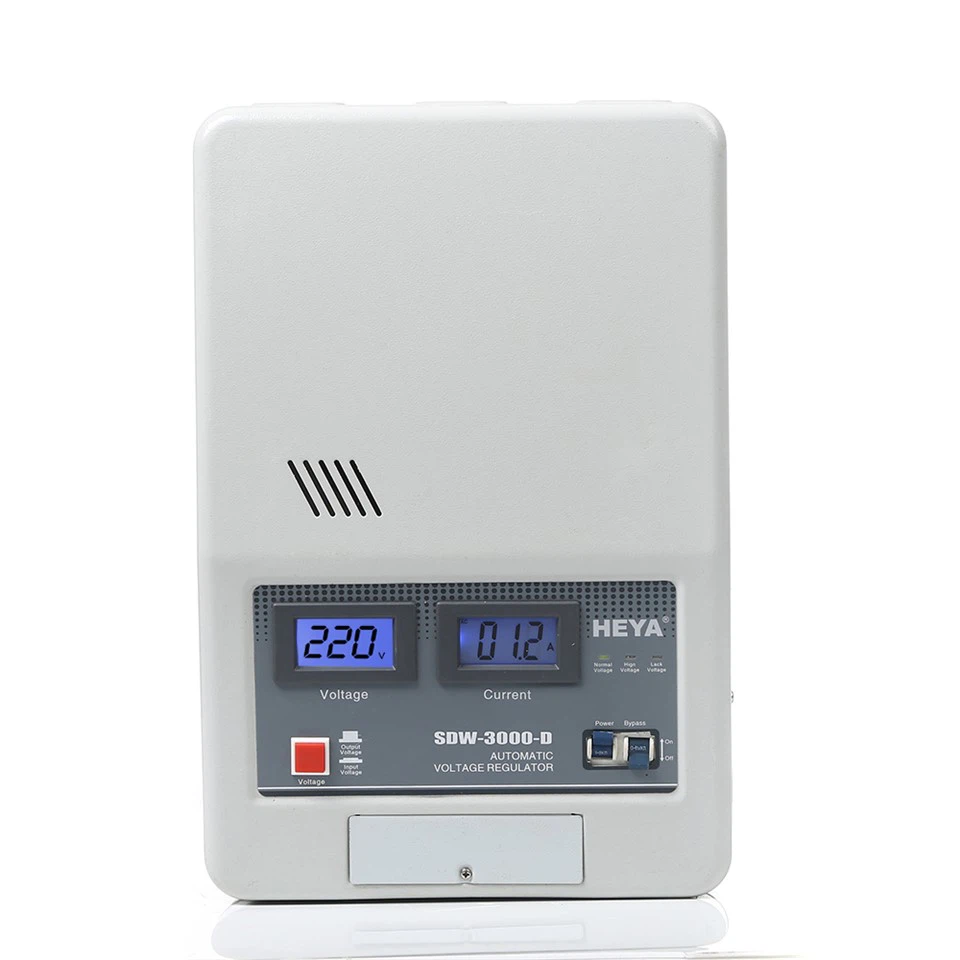
- Svc Automatic Voltage Regulator: This type of regulator is designed to automatically maintain a constant output voltage regardless of the input voltage fluctuations. It uses a servo motor to adjust the tap position of a transformer, thereby regulating the output voltage. The Svc Automatic Voltage Regulator is widely used in industrial and commercial applications where a stable power supply is required.
- Servo Motor Voltage Regulator: A servo motor voltage regulator uses a servo motor to control the voltage output. It can provide precise voltage regulation and is often used in applications where high accuracy is required, such as in precision machinery and automation systems. You can learn more about the Servo Motor Voltage Regulator on our website.
- Servo Motor Type AVR: This is a special type of voltage regulator that combines the features of a servo motor and an automatic voltage regulator. It can provide both voltage regulation and speed control, making it suitable for a wide range of applications. For more information on the Servo Motor Type AVR, please visit our website.
Methods of Achieving Speed Control with a Motor Voltage Regulator
There are several methods that can be used to achieve speed control with a motor voltage regulator. Here are some of the most common ones:
Variable Voltage Control
This is the simplest and most straightforward method of speed control. By varying the output voltage of the motor voltage regulator, the speed of the motor can be adjusted. This method is suitable for both DC motors and AC motors. However, it should be noted that in the case of AC motors, variable voltage control alone may not be sufficient to achieve precise speed control, especially at low speeds.
Pulse Width Modulation (PWM)
PWM is a technique that is widely used in motor speed control. It involves rapidly switching the voltage on and off at a high frequency, and the average voltage applied to the motor is controlled by adjusting the width of the pulses. This method can provide precise speed control and is often used in applications where high efficiency and accuracy are required.

Frequency Control
As mentioned earlier, the speed of an AC motor is also affected by the frequency of the power supply. Therefore, by adjusting the frequency of the output voltage of the motor voltage regulator, the speed of the AC motor can be controlled. This method is known as frequency control and is commonly used in variable frequency drives (VFDs).
Practical Considerations for Achieving Speed Control
When using a motor voltage regulator to achieve speed control, there are several practical considerations that need to be taken into account:
- Motor Compatibility: Not all motors are suitable for speed control using a motor voltage regulator. Before selecting a regulator, it's important to ensure that it is compatible with the motor in terms of voltage, current, and power rating.
- Load Characteristics: The load characteristics of the motor also need to be considered. Different loads may require different speed control strategies. For example, a constant torque load may require a different approach than a variable torque load.
- Safety and Protection: Speed control systems should be designed with safety and protection in mind. Overvoltage, overcurrent, and overheating protection devices should be installed to prevent damage to the motor and the regulator.
- Monitoring and Feedback: To ensure accurate speed control, it's important to monitor the motor speed and provide feedback to the regulator. This can be achieved using sensors such as encoders or tachometers.
Conclusion
Achieving speed control with a motor voltage regulator is a complex but essential task in many industrial and commercial applications. By understanding the principles of motor speed and voltage, selecting the appropriate type of regulator, and using the right speed control methods, precise speed control can be achieved. As a supplier of motor voltage regulators, we are committed to providing high-quality products and technical support to help our customers achieve their speed control goals.
If you are interested in purchasing motor voltage regulators or have any questions about speed control, please feel free to contact us for a detailed discussion. Our team of experts is ready to assist you in finding the best solution for your specific needs.
References
- Chapman, S. J. (2012). Electric Machinery Fundamentals. McGraw-Hill Education.
- Fitzgerald, A. E., Kingsley Jr, C., & Umans, S. D. (2003). Electric Machinery. McGraw-Hill Education.
- Krause, P. C., Wasynczuk, O., Sudhoff, S. D., & Pekarek, S. D. (2013). Analysis of Electric Machinery and Drive Systems. Wiley-IEEE Press.