



As a supplier of Single Phase AC Regulators, I understand the critical importance of reliability in these devices. A reliable single phase AC regulator ensures stable power supply, protects electrical equipment from voltage fluctuations, and enhances the overall efficiency of electrical systems. In this blog, I will share some practical ways to improve the reliability of a single phase AC regulator based on my experience in the industry.
1. High - Quality Component Selection
The foundation of a reliable single phase AC regulator lies in the quality of its components. When sourcing components, it is essential to choose those from reputable manufacturers. For example, the transformers used in the regulator should have high - quality core materials and proper winding techniques. A well - made transformer can handle the electrical load efficiently and reduce the risk of overheating and failure.
Capacitors are another crucial component. High - quality capacitors with low equivalent series resistance (ESR) can provide stable filtering and energy storage functions. They help to smooth out the voltage waveform and improve the power factor of the regulator. Resistors should also be of high precision and power rating to ensure accurate voltage division and current limiting.
Moreover, the selection of semiconductor devices such as thyristors or MOSFETs is vital. These devices are responsible for controlling the output voltage of the regulator. Choosing devices with high breakdown voltage, low on - state resistance, and fast switching speed can enhance the performance and reliability of the regulator. For instance, a thyristor with a high surge current rating can withstand short - term over - current situations without damage.
2. Robust Circuit Design
A well - designed circuit is the key to a reliable single phase AC regulator. The circuit should be designed to handle various operating conditions, including different input voltages, load currents, and ambient temperatures.
First, the regulator should have proper over - voltage and under - voltage protection circuits. These circuits can detect abnormal voltage levels and take appropriate actions, such as shutting down the regulator or adjusting the output voltage to a safe range. For example, an over - voltage protection circuit can use a voltage comparator to monitor the output voltage. When the voltage exceeds a preset threshold, the comparator triggers a protection mechanism to limit the voltage.
Second, the circuit should be designed to minimize electromagnetic interference (EMI). EMI can cause malfunctions in the regulator and other nearby electrical equipment. Using proper shielding techniques, filtering components, and layout optimization can reduce EMI. For example, placing ferrite beads on the power lines can suppress high - frequency noise.
In addition, the circuit should have a redundant design in critical parts. For example, if a particular component fails, there should be a backup component or a bypass circuit to ensure the continuous operation of the regulator. This can significantly improve the reliability of the regulator, especially in applications where downtime is not acceptable.
3. Effective Heat Dissipation
Heat is one of the main factors that can affect the reliability of a single phase AC regulator. Excessive heat can cause components to degrade, reduce their lifespan, and even lead to complete failure. Therefore, effective heat dissipation is essential.
The regulator should be equipped with proper heat sinks. Heat sinks are designed to increase the surface area for heat transfer, allowing the heat generated by the components to be dissipated more efficiently. The size and material of the heat sink should be selected based on the power dissipation of the regulator. For example, aluminum heat sinks are commonly used due to their good thermal conductivity and relatively low cost.
In addition to heat sinks, fans can also be used to enhance heat dissipation. Fans can force air to flow over the heat sinks, increasing the heat transfer rate. The fans should be selected based on the airflow requirements and the noise level. For applications where noise is a concern, low - noise fans can be used.
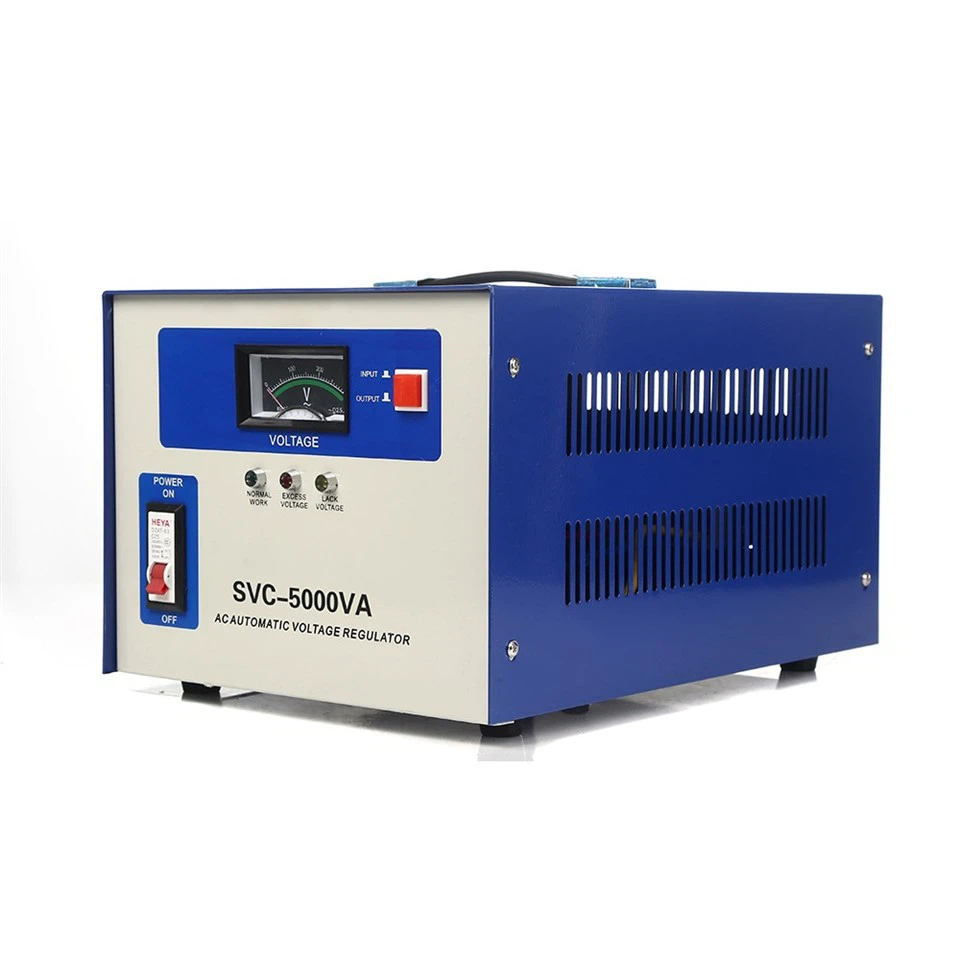

It is also important to ensure proper ventilation around the regulator. The regulator should be installed in a well - ventilated area, and there should be enough space around it to allow air to circulate freely. Blocking the ventilation openings can cause heat to accumulate, leading to overheating of the components.
4. Rigorous Testing and Quality Control
Before the single phase AC regulator is shipped to the customers, it should undergo rigorous testing and quality control procedures. These procedures can help to identify and eliminate potential defects and ensure that the regulator meets the specified performance and reliability requirements.
First, the regulator should be tested under different operating conditions, including different input voltages, load currents, and ambient temperatures. This can simulate real - world scenarios and ensure that the regulator can operate stably in various environments. For example, the regulator can be tested at the minimum and maximum input voltages and at different load levels to check its output voltage regulation accuracy.
Second, the regulator should be subjected to long - term aging tests. Aging tests can accelerate the aging process of the components and help to identify early - stage failures. By running the regulator continuously for a certain period of time, any potential issues with the components or the circuit can be detected.
In addition, quality control checks should be carried out at every stage of the manufacturing process. From the incoming inspection of the components to the final assembly and testing of the regulator, strict quality control measures should be in place. This can ensure that only high - quality products are delivered to the customers.
5. Regular Maintenance and Monitoring
Even after the single phase AC regulator is installed and in operation, regular maintenance and monitoring are necessary to ensure its long - term reliability.
Regular maintenance includes cleaning the regulator, checking the connections, and replacing any worn - out components. Dust and dirt can accumulate on the components and the heat sinks, reducing their performance. Cleaning the regulator periodically can help to maintain its proper operation. Checking the connections can ensure that there are no loose or corroded connections, which can cause electrical problems.
Monitoring the regulator's performance is also important. This can be done by using monitoring devices such as voltage meters, current meters, and temperature sensors. By regularly checking the output voltage, current, and temperature of the regulator, any abnormal changes can be detected early, and appropriate actions can be taken to prevent failures.
In conclusion, improving the reliability of a single phase AC regulator requires a comprehensive approach, including high - quality component selection, robust circuit design, effective heat dissipation, rigorous testing and quality control, and regular maintenance and monitoring. As a supplier of Single Phase Ac Regulator, we are committed to providing our customers with reliable products. We also offer Servo Motor Stabilizer and High Precision Ac Voltage Regulator to meet different customer needs.
If you are interested in our products or have any questions about improving the reliability of single phase AC regulators, please feel free to contact us for procurement and further discussions.
References
- Grover, P. K. (2007). Electrical Machines and Transformers. New Age International.
- Chapman, S. J. (2012). Electric Machinery Fundamentals. McGraw - Hill.
- Dorf, R. C., & Svoboda, J. A. (2010). Introduction to Electric Circuits. Wiley.