


Hey there! As a supplier of Industrial Voltage Regulators, I've seen firsthand how crucial these devices are in ensuring a stable power grid. In this blog, I'll share some tips on how to optimize the operation of industrial voltage regulators in a power grid.
Understanding Industrial Voltage Regulators
Before we dive into optimization, let's quickly understand what industrial voltage regulators are. These devices are designed to maintain a constant voltage level in an electrical system. They play a vital role in protecting sensitive equipment from voltage fluctuations, which can cause damage or reduce the lifespan of machinery.
There are different types of industrial voltage regulators, such as the Industrial Voltage Stabilizer and the TNS Three Phase Voltage Regulator. Each type has its own features and applications, but they all serve the same basic purpose: to keep the voltage stable.
Importance of Optimization
Optimizing the operation of industrial voltage regulators is essential for several reasons. First, it helps to improve the efficiency of the power grid. When the voltage is stable, electrical equipment operates more efficiently, which can lead to energy savings. Second, it enhances the reliability of the power supply. By preventing voltage fluctuations, we can reduce the risk of equipment failure and downtime. Finally, it can extend the lifespan of electrical equipment, saving businesses money on replacement costs.
Tips for Optimization
Regular Maintenance
One of the most important things you can do to optimize the operation of industrial voltage regulators is to perform regular maintenance. This includes checking the regulator's components for wear and tear, cleaning the device, and tightening any loose connections. Regular maintenance can help to identify and address potential problems before they become serious issues.
For example, over time, the contacts in a voltage regulator can become dirty or corroded, which can affect its performance. By cleaning these contacts regularly, you can ensure that the regulator is functioning properly. Additionally, checking the wiring for any signs of damage or fraying can prevent electrical shorts and other safety hazards.
Proper Sizing
Another key factor in optimizing the operation of industrial voltage regulators is proper sizing. It's important to choose a regulator that is the right size for your specific application. If the regulator is too small, it may not be able to handle the load, which can lead to overheating and premature failure. On the other hand, if the regulator is too large, it may be inefficient and waste energy.
When sizing a voltage regulator, you need to consider several factors, such as the load requirements of your electrical equipment, the input voltage range, and the output voltage stability. You can consult with a professional electrician or a voltage regulator supplier to determine the appropriate size for your needs.

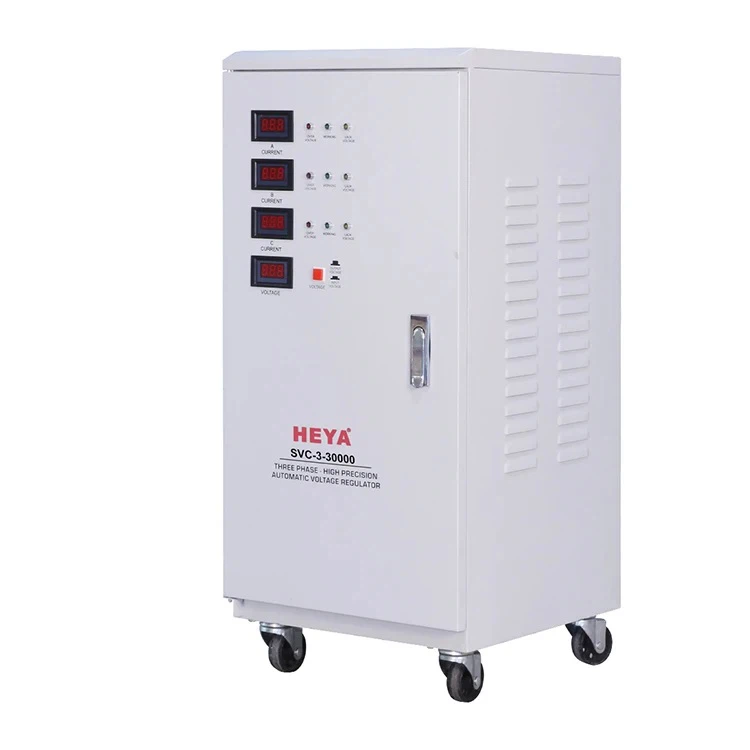
Monitoring and Control
Monitoring and controlling the operation of industrial voltage regulators is also crucial for optimization. By using monitoring systems, you can track the performance of the regulator in real-time and identify any issues as they arise. This allows you to take corrective action quickly, minimizing the impact on the power grid and your electrical equipment.
There are different types of monitoring systems available, ranging from simple analog meters to advanced digital controllers. These systems can provide information such as voltage, current, temperature, and power factor. Some monitoring systems also have the ability to send alerts via email or text message if a problem is detected.
Upgrading and Retrofit
As technology advances, it may be necessary to upgrade or retrofit your industrial voltage regulators to improve their performance. Newer models of voltage regulators often have more advanced features and higher efficiency ratings than older models. By upgrading your regulators, you can take advantage of these improvements and optimize the operation of your power grid.
Retrofitting involves modifying an existing voltage regulator to add new features or improve its performance. This can be a cost-effective way to upgrade your equipment without having to replace it entirely. For example, you may be able to retrofit a regulator with a new control system or a more efficient transformer.
Case Studies
To illustrate the benefits of optimizing the operation of industrial voltage regulators, let's take a look at a couple of case studies.
Case Study 1: Manufacturing Plant
A manufacturing plant was experiencing frequent equipment failures due to voltage fluctuations in the power grid. The plant's management decided to install Industrial Voltage Regulators to address the problem. After the installation, the plant saw a significant improvement in the reliability of its electrical equipment. The number of equipment failures decreased by 50%, and the plant was able to reduce its energy consumption by 15%.
Case Study 2: Data Center
A data center was struggling to maintain a stable power supply for its servers. Voltage fluctuations were causing the servers to crash, which was leading to data loss and downtime. The data center installed a TNS Three Phase Voltage Regulator to stabilize the voltage. As a result, the number of server crashes decreased by 80%, and the data center was able to improve its overall performance and reliability.
Conclusion
Optimizing the operation of industrial voltage regulators is essential for improving the efficiency, reliability, and lifespan of electrical equipment in a power grid. By following the tips outlined in this blog, such as regular maintenance, proper sizing, monitoring and control, and upgrading or retrofitting, you can ensure that your voltage regulators are operating at their best.
If you're interested in learning more about industrial voltage regulators or need help optimizing the operation of your power grid, please don't hesitate to contact us. We're here to provide you with the expertise and support you need to keep your electrical systems running smoothly.
References
- Electrical Power Systems: Design and Analysis, by Turan Gonen
- Power System Analysis and Design, by J. Duncan Glover, Mulukutla S. Sarma, and Thomas J. Overbye