



Reducing the output voltage noise of a small voltage regulator is a critical concern for many electronic applications. As a leading supplier of Small Voltage Regulator, we understand the challenges that engineers and designers face in achieving a stable and low - noise power supply. In this blog post, we will explore various strategies and techniques to minimize the output voltage noise of small voltage regulators.
Understanding Voltage Regulator Noise
Before delving into the solutions, it is essential to understand the sources of noise in a voltage regulator. There are several factors that can contribute to output voltage noise:
1. Internal Noise Sources
- Thermal Noise: Also known as Johnson - Nyquist noise, it is generated by the random motion of electrons in resistive elements within the regulator. This noise is proportional to the temperature and the resistance value.
- Shot Noise: This noise occurs due to the discrete nature of charge carriers (electrons). In semiconductor devices, the random arrival of electrons at the output can cause fluctuations in the output voltage.
- Flicker Noise: Also called 1/f noise, it is more prominent at low frequencies. Flicker noise is related to the device's surface properties and manufacturing processes.
2. External Noise Sources
- Input Voltage Ripple: If the input voltage to the regulator has a significant ripple, it can be transferred to the output, especially in linear regulators.
- Load Transients: Sudden changes in the load current can cause the output voltage to deviate from its nominal value, resulting in transient noise.
- Electromagnetic Interference (EMI): External electromagnetic fields can couple into the regulator circuit and introduce noise in the output voltage.
Strategies to Reduce Output Voltage Noise
1. Select the Right Voltage Regulator
- Low - Noise Regulator Topologies: There are different types of voltage regulators, such as linear regulators and switching regulators. Linear regulators generally have lower output noise compared to switching regulators because they do not involve high - frequency switching. For applications where low noise is a priority, a low - dropout (LDO) linear regulator is often a good choice. For example, some LDO regulators are specifically designed with ultra - low noise performance, which can achieve noise levels in the microvolt range.
- Regulator Specifications: When selecting a voltage regulator, pay attention to its noise specifications. The datasheet of the regulator usually provides information about the output voltage noise density, which is typically specified in μV/√Hz. Choose a regulator with a low noise density value for your application.
2. Input Filtering
- Capacitive Filtering: Adding a capacitor at the input of the voltage regulator can help reduce the input voltage ripple. A large - value electrolytic capacitor can filter out low - frequency ripple, while a ceramic capacitor can filter out high - frequency noise. For example, a combination of a 10μF electrolytic capacitor and a 0.1μF ceramic capacitor can be effective in reducing input noise.
- LC Filtering: An LC filter, which consists of an inductor and a capacitor, can provide better filtering performance than a single capacitor. The inductor helps to block high - frequency noise, while the capacitor stores and releases energy to smooth the input voltage. However, the design of an LC filter requires careful consideration of the inductor's inductance value, the capacitor's capacitance value, and the load impedance.
3. Output Filtering
- Capacitive Output Filter: Similar to input filtering, adding a capacitor at the output of the voltage regulator can reduce the output voltage noise. A ceramic capacitor with a low equivalent series resistance (ESR) is often used for high - frequency noise filtering. For low - frequency noise, a larger - value capacitor may be required.
- Active Output Filter: In some cases, an active output filter can be used to further reduce the output voltage noise. An active filter typically consists of an operational amplifier and passive components. It can provide better noise reduction performance compared to a passive capacitor filter, especially at low frequencies.
4. PCB Layout Considerations
- Grounding: Proper grounding is crucial for reducing noise in a voltage regulator circuit. Use a star - grounding topology, where all the ground connections of the regulator, input and output capacitors, and load are connected to a single point. This helps to minimize ground loops, which can introduce noise into the circuit.
- Component Placement: Place the input and output capacitors as close as possible to the regulator pins. This reduces the length of the traces, which in turn reduces the inductance and resistance of the traces, minimizing the noise coupling. Also, keep the sensitive components away from high - noise sources, such as switching regulators or high - current traces.
- Trace Width: Use wide traces for power lines to reduce the resistance and inductance. Narrow traces can cause voltage drops and introduce noise, especially when carrying high currents.
5. Load Management
- Load Current Stabilization: Try to keep the load current as stable as possible. Sudden changes in the load current can cause the output voltage to fluctuate. If the load has a high - dynamic current requirement, consider using a load current stabilizer, such as a Servo Motor Stabilizer.
- Load Decoupling: Adding decoupling capacitors between the power and ground pins of the load can help reduce the noise coupling from the load to the voltage regulator. Decoupling capacitors act as local energy storage devices, providing a stable power supply to the load.
6. EMI Shielding
- Shielding Enclosures: For applications where external electromagnetic interference is a significant concern, use a shielding enclosure to protect the voltage regulator circuit. A metal enclosure can block external electromagnetic fields and reduce the noise coupling into the circuit.
- Ferrite Beads: Ferrite beads can be used to suppress high - frequency noise on power lines. They act as a high - impedance element at high frequencies, attenuating the noise without affecting the DC voltage.
Case Study: Reducing Noise in a High - Precision Application
Let's consider a high - precision measurement system that requires a stable and low - noise power supply. The system uses a small voltage regulator to power the sensitive analog components.
- Regulator Selection: We selected a low - dropout linear regulator with a specified output voltage noise density of 10μV/√Hz at 10kHz. This regulator was specifically designed for low - noise applications.
- Input and Output Filtering: At the input, we added a 10μF electrolytic capacitor and a 0.1μF ceramic capacitor in parallel. At the output, we used a 1μF ceramic capacitor with a low ESR. This combination effectively reduced the input and output voltage noise.
- PCB Layout: We followed the best practices for PCB layout, including star - grounding, proper component placement, and wide trace widths. The input and output capacitors were placed within a few millimeters of the regulator pins.
- Load Management: The load current was kept stable by using a load current stabilizer. Decoupling capacitors were added between the power and ground pins of the load components.
After implementing these measures, the output voltage noise of the regulator was significantly reduced, meeting the requirements of the high - precision measurement system.
Conclusion
Reducing the output voltage noise of a small voltage regulator is a multi - faceted task that requires careful consideration of regulator selection, filtering techniques, PCB layout, load management, and EMI shielding. As a supplier of Small Voltage Regulator, we are committed to providing high - quality products and technical support to help our customers achieve low - noise power supply solutions.
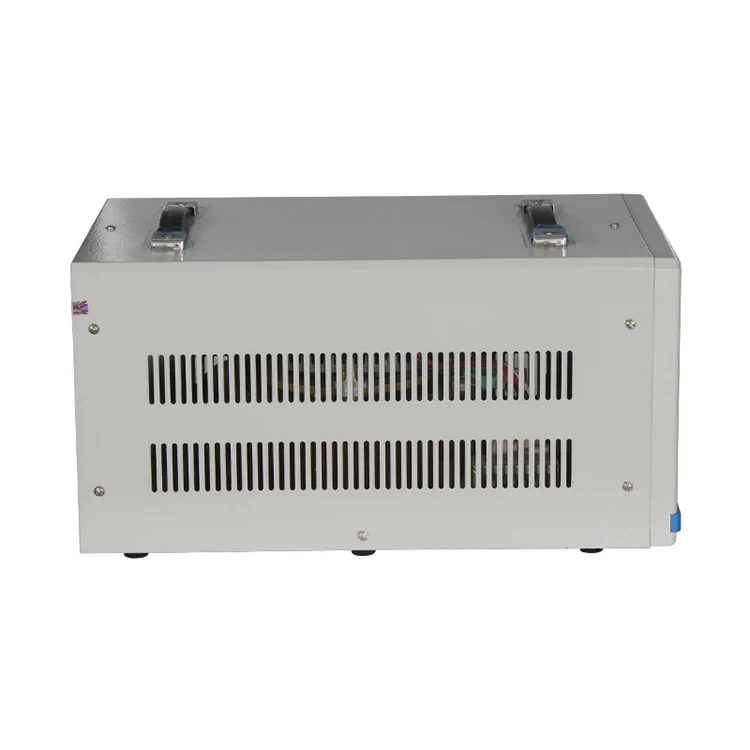
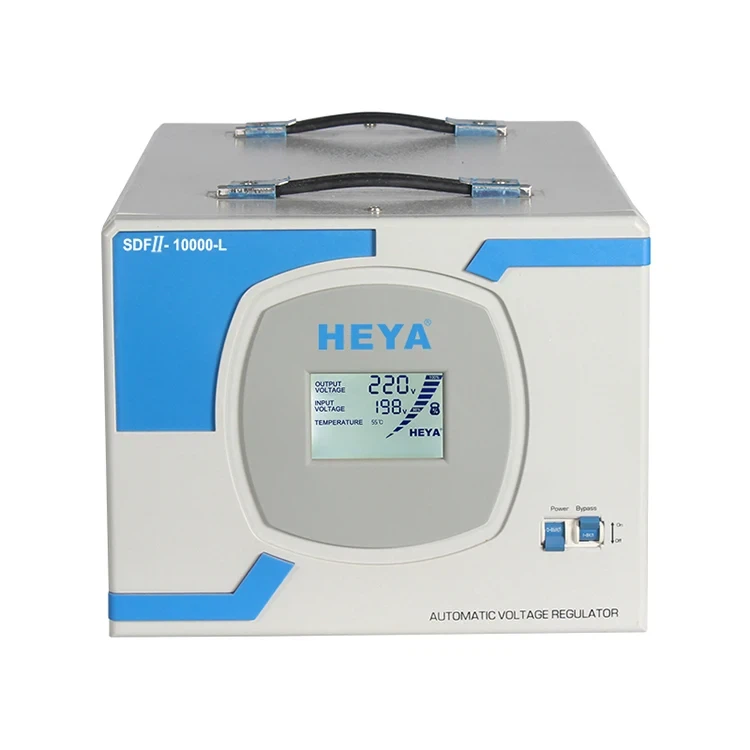
If you are facing challenges in reducing the output voltage noise of your voltage regulator or are interested in our products, such as Voltage Regulator 10000 Watt, please feel free to contact us for further discussion and procurement negotiation. We look forward to working with you to meet your specific requirements.
References
- Horowitz, P., & Hill, W. (1989). The Art of Electronics. Cambridge University Press.
- Pressman, A. I., & Mok, K. K. (2009). Switching Power Supply Design. McGraw - Hill.
- National Semiconductor Corporation. (2007). Linear Regulators and Voltage References Databook.