


Hey there! As a supplier of 10000 - watt voltage regulators, I often get asked about how to test these powerful devices. Testing a 10000 - watt voltage regulator is crucial to ensure it functions properly and provides stable power to your equipment. In this blog, I'll walk you through the steps to test a 10000 - watt voltage regulator like a pro.
Why Testing is Important
Before we dive into the testing process, let's talk about why it's so important. A 10000 - watt voltage regulator is designed to maintain a consistent voltage level, protecting your sensitive equipment from voltage fluctuations. If it's not working correctly, it could lead to damage to your appliances, reduced efficiency, or even safety hazards. By testing the voltage regulator regularly, you can catch any issues early and prevent costly repairs or replacements.
Pre - testing Preparations
First things first, you need to gather the necessary tools. You'll need a multimeter, which is a handy device for measuring voltage, current, and resistance. Make sure your multimeter is in good working condition and set to the appropriate range for voltage measurement. You'll also need safety gear like insulated gloves and safety glasses to protect yourself from electrical shocks.
Next, ensure that the voltage regulator is properly installed and connected. Check all the wiring connections to make sure they are tight and free of any damage. A loose or damaged connection can affect the performance of the voltage regulator and give inaccurate test results.
Visual Inspection
Start the testing process with a visual inspection. Look for any signs of physical damage, such as cracks, burns, or loose components. Check the cooling fans (if the regulator has them) to make sure they are spinning freely. A damaged or malfunctioning fan can cause the regulator to overheat, which can lead to premature failure.
Testing the Input Voltage
Once you've completed the visual inspection, it's time to test the input voltage. Use your multimeter to measure the voltage at the input terminals of the voltage regulator. Connect the positive probe of the multimeter to the positive input terminal and the negative probe to the negative input terminal.
The input voltage should be within the specified range for the voltage regulator. Most 10000 - watt voltage regulators are designed to work with a standard input voltage, such as 220V or 380V. If the input voltage is too high or too low, it could indicate a problem with the power supply or the wiring.
Testing the Output Voltage
After testing the input voltage, it's time to test the output voltage. Connect the multimeter to the output terminals of the voltage regulator in the same way you did for the input terminals. The output voltage should be stable and within the specified range.
A good 10000 - watt voltage regulator should be able to maintain a constant output voltage, even when the input voltage fluctuates. If the output voltage is unstable or outside the specified range, it could mean that the voltage regulator is not functioning properly.
Load Testing
Load testing is an important part of testing a 10000 - watt voltage regulator. This involves connecting a load to the output of the voltage regulator and measuring the voltage and current under load conditions.
You can use a resistive load, such as a bank of light bulbs or a heating element, for load testing. Start with a small load and gradually increase it to the maximum rated load of the voltage regulator. As you increase the load, monitor the output voltage and current using your multimeter.

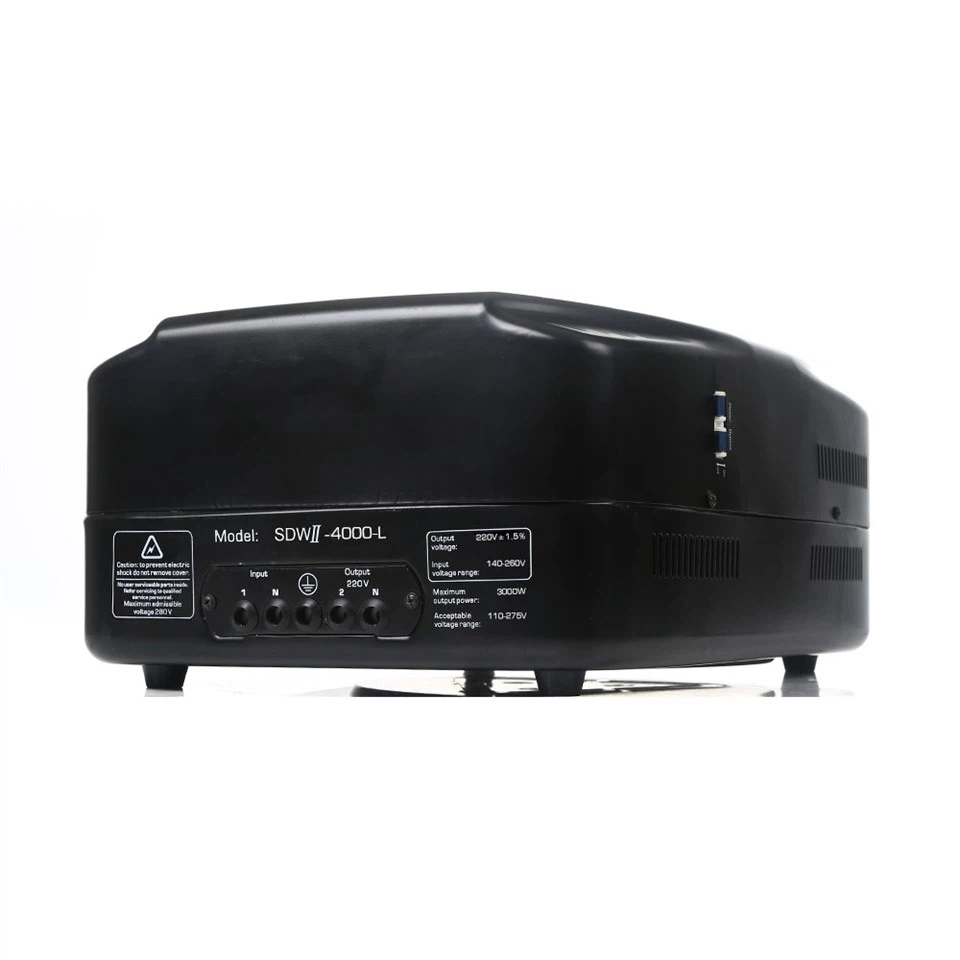
The output voltage should remain stable within the specified range, even under full load. If the output voltage drops significantly under load, it could indicate that the voltage regulator is not able to handle the load properly.
Testing the Regulation Accuracy
The regulation accuracy of a voltage regulator refers to its ability to maintain a constant output voltage within a specified tolerance. To test the regulation accuracy, measure the output voltage at different input voltages and loads.
Calculate the percentage difference between the measured output voltage and the rated output voltage. The regulation accuracy is usually specified as a percentage, such as ± 1% or ± 2%. A lower percentage indicates better regulation accuracy.
Testing the Overload and Short - Circuit Protection
Most 10000 - watt voltage regulators are equipped with overload and short - circuit protection features. To test the overload protection, gradually increase the load beyond the rated capacity of the voltage regulator. The regulator should automatically shut off or reduce the output voltage to protect itself and the connected equipment.
To test the short - circuit protection, briefly short - circuit the output terminals of the voltage regulator using a suitable shorting device. The regulator should immediately cut off the output to prevent damage.
Types of 10000 - Watt Voltage Regulators
There are different types of 10000 - watt voltage regulators available in the market. Some popular types include the TND Single Phase Voltage Regulator, Servo Motor Stabilizer, and Ac Motor Voltage Regulator.
Each type has its own unique features and advantages. For example, servo motor stabilizers are known for their high - speed response and precise voltage regulation, while AC motor voltage regulators are often used in industrial applications for their robustness and reliability.
Conclusion
Testing a 10000 - watt voltage regulator is a straightforward process if you follow the right steps. By performing regular tests, you can ensure that your voltage regulator is working properly and providing stable power to your equipment.
If you're in the market for a high - quality 10000 - watt voltage regulator, we're here to help. We offer a wide range of voltage regulators that are designed to meet your specific needs. Whether you need a single - phase regulator or a three - phase regulator, we've got you covered.
If you have any questions or would like to discuss your requirements further, feel free to reach out. We're always happy to assist you with your voltage regulator needs and guide you through the purchasing process.
References
- Electrical Engineering Handbook, Third Edition.
- Power Electronics: Converters, Applications, and Design, Third Edition.