


Hey there! As a supplier of Medical AC Stabilizers, I often get asked about the differences between a regular AC stabilizer and a medical one. So, I thought I'd take a few minutes to break it down for you.
Basic Functionality: The Similarities
First off, let's talk about what they have in common. Both regular AC stabilizers and medical AC stabilizers are designed to do one fundamental thing: regulate the voltage of an electrical supply. You know how sometimes the voltage in your area can fluctuate? It might go too high or too low, and that can be a real problem for your electrical appliances. That's where stabilizers come in. They ensure that the voltage reaching your equipment stays within a safe and stable range.

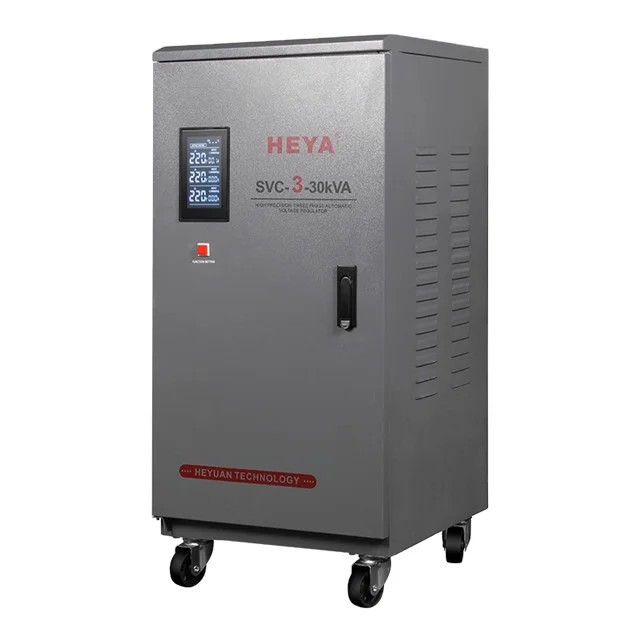
Whether it's a regular home appliance like a TV or a refrigerator, or a high - tech medical device, these stabilizers act as a buffer between the power source and the equipment. They protect the devices from damage caused by over - voltage (when the voltage is too high) or under - voltage (when the voltage is too low). So, in terms of the basic job of voltage regulation, they're on the same page.
Design and Build: Where the Differences Start
But here's where things get interesting. The design and build of a regular AC stabilizer and a medical AC stabilizer are quite different.
A regular AC stabilizer is usually built for general household or light - commercial use. It's made to handle the electrical loads of common appliances. These stabilizers are often more mass - produced, with a focus on affordability and basic functionality. They might have a simple design, with basic components that are sufficient for protecting things like fans, washing machines, and small electronics.
On the other hand, a Medical Ac Stabilizer is built like a tank. Medical equipment is extremely sensitive to voltage fluctuations. Think about it: a small voltage spike could disrupt the operation of a life - saving device like a heart monitor or an MRI machine. That's why medical stabilizers are designed with much higher precision and reliability in mind.
They are constructed using high - quality components that can withstand a wide range of voltage variations without compromising performance. The internal circuitry is more complex, with advanced control systems that can quickly and accurately adjust the voltage. Plus, they often have additional safety features, like over - current protection and short - circuit protection, to ensure the safety of the medical equipment and the patients using it.
Safety Standards: A Big Divide
Safety is a huge factor when it comes to the difference between these two types of stabilizers.
Regular AC stabilizers are typically designed to meet general electrical safety standards. These standards are focused on protecting the user from electrical shocks and preventing fires caused by electrical malfunctions. They are good enough for everyday use in a home or a small office.
However, medical AC stabilizers have to meet a whole different set of safety standards. The medical industry is highly regulated, and for good reason. The safety of patients depends on the proper functioning of medical equipment. Medical stabilizers must comply with strict international standards, such as IEC (International Electrotechnical Commission) standards. These standards ensure that the stabilizer is not only safe for the equipment but also for the patients and medical staff.
For example, medical stabilizers are required to have isolation transformers, which provide an extra layer of protection against electrical shocks. They also need to be tested rigorously for electromagnetic compatibility (EMC). This means that they won't interfere with other medical devices in the vicinity, and they won't be affected by external electromagnetic fields.
Performance and Reliability: Critical for Medical Use
When it comes to performance and reliability, medical AC stabilizers are in a league of their own.
A regular AC stabilizer might have a response time of a few milliseconds to adjust the voltage. This is usually sufficient for most household appliances, which can tolerate a small delay in voltage regulation.
But medical equipment can't afford that kind of delay. A medical AC stabilizer has a much faster response time, often in the microsecond range. This allows it to quickly correct any voltage fluctuations and keep the medical equipment running smoothly.
Reliability is also a key factor. In a medical setting, there's no room for error. A regular stabilizer might have a failure rate that's acceptable for a home environment, but in a hospital or a medical clinic, even a single failure could have serious consequences. Medical stabilizers are built to be highly reliable, with redundant systems and backup power options in case of a primary system failure.
Applications: Different Worlds
The applications of regular AC stabilizers and medical AC stabilizers are also very different.
Regular AC stabilizers are used in a wide range of household and light - commercial settings. You'll find them in homes, small shops, and offices, protecting everything from your microwave to your computer. They're also used in some industrial settings for non - critical equipment, like lighting systems or small motors.
Medical AC stabilizers, as the name suggests, are used exclusively in medical facilities. They are installed in hospitals, clinics, diagnostic centers, and research laboratories. They power a variety of medical equipment, including imaging devices (like X - ray machines and CT scanners), patient monitoring systems, and surgical equipment.
Cost: A Reflection of Quality
It's no surprise that the cost of these two types of stabilizers is different.
Regular AC stabilizers are generally more affordable. Since they are mass - produced and have a simpler design, the manufacturing cost is lower. This makes them accessible to a wide range of consumers, from homeowners to small business owners.
Medical AC stabilizers, on the other hand, are more expensive. The high - quality components, advanced technology, and strict compliance with safety standards all contribute to the higher cost. But when you consider the importance of protecting life - saving medical equipment, the investment is well worth it.
Other Related Products: Industrial Options
If you're in the industrial sector, you might also be interested in Industrial Voltage Regulator and Industrial 3 Phase Voltage Stabilizer. These are designed to handle the high - power requirements of industrial equipment. They have similar functions to regular and medical stabilizers in terms of voltage regulation, but they are built to handle much larger electrical loads and more severe voltage fluctuations.
Conclusion and Call to Action
So, there you have it - the key differences between a regular AC stabilizer and a medical AC stabilizer. As you can see, the medical ones are in a whole different class when it comes to design, safety, performance, and reliability.
If you're in the medical industry and need a reliable and high - quality Medical Ac Stabilizer, I'd love to talk to you. We have a range of medical stabilizers that are designed to meet the strictest industry standards and provide the best protection for your medical equipment. Whether you're setting up a new clinic or upgrading your existing equipment, we can help you find the right solution. Don't hesitate to reach out and start a conversation about your specific needs.
References
- International Electrotechnical Commission (IEC) standards documentation.
- Industry reports on electrical stabilizers for household and medical use.