



As a supplier of Variac Variable Regulators, I am well - versed in their functionality and applications. However, it's important to have an honest discussion about the disadvantages of these devices. This knowledge can help customers make more informed decisions when choosing a voltage regulation solution.
1. Limited Power Handling Capacity
One of the primary drawbacks of Variac Variable Regulators is their relatively limited power - handling capacity. These regulators are often designed for low to medium - power applications. For instance, in industrial settings where high - power machinery is used, the power requirements can easily exceed what a typical Variac can handle. A large manufacturing plant might have equipment that demands several kilowatts or even megawatts of power, while a standard Variac might be rated for only a few hundred watts to a couple of kilowatts.
This limitation can lead to overheating and premature failure of the regulator if it is forced to operate beyond its rated capacity. Overheating not only shortens the lifespan of the device but also poses a safety risk, such as the potential for electrical fires. When customers need to regulate the voltage of high - power systems, they may have to look for alternative voltage regulation solutions, like Variable Ac Regulator with higher power ratings or multi - unit configurations, which can be more complex and costly.
2. Maintenance Requirements
Variac Variable Regulators require regular maintenance to ensure their proper functioning. The carbon brushes used in these regulators, which make contact with the variable resistor element, wear out over time. As the brushes wear, the electrical contact can become poor, leading to voltage fluctuations and reduced efficiency.
Inspecting and replacing these brushes is a necessary part of maintenance. This process can be time - consuming and may require specialized knowledge and tools. Additionally, the internal components of the regulator, such as the winding and the insulation, need to be checked periodically for signs of damage or degradation. Any damage to these components can compromise the performance of the regulator and may even result in complete failure. For users who do not have the resources or expertise to perform this maintenance, they may need to rely on professional service providers, which adds to the overall cost of using the Variac.
3. Sensitivity to Load Changes
Variac Variable Regulators are quite sensitive to rapid load changes. When the load on the regulator changes suddenly, it may not be able to adjust the output voltage quickly enough. For example, in a laboratory setting where electronic devices are being tested, and the load can vary significantly during different test phases, the Variac may not maintain a stable output voltage.
This voltage instability can have a negative impact on the performance of the connected equipment. Sensitive electronic components, such as microprocessors and integrated circuits, can be damaged by voltage spikes or drops. In a manufacturing environment, inconsistent voltage can lead to product defects and production downtime. To address this issue, additional voltage - stabilizing components may need to be added to the system, increasing the complexity and cost of the overall setup.
4. High Cost of Ownership
Although the initial purchase price of a Variac Variable Regulator may seem reasonable, the long - term cost of ownership can be relatively high. As mentioned earlier, the maintenance requirements, including the replacement of carbon brushes and periodic inspections, add to the cost.
Moreover, due to their limited power - handling capacity, multiple units may be required to meet the power needs of larger systems. This not only increases the upfront cost but also the cost of installation and wiring. In comparison, some other types of voltage regulators, such as Single Phase Variac Voltage Regulator which may have a different design, might offer a more cost - effective solution in the long run, especially for high - power or large - scale applications.
5. Noise Generation
Variac Variable Regulators can generate electrical noise during operation. This noise is mainly due to the arcing that occurs at the carbon - brush contacts as they move along the variable resistor element. The electrical noise can interfere with the operation of sensitive electronic equipment connected to the regulator.
In a communication or audio system, this noise can manifest as static or interference, degrading the quality of the signal. In a medical or scientific research setting, where precise measurements are crucial, the electrical noise from the Variac can introduce errors in the data. To mitigate this problem, additional noise - filtering components may need to be installed, which adds to the cost and complexity of the system.
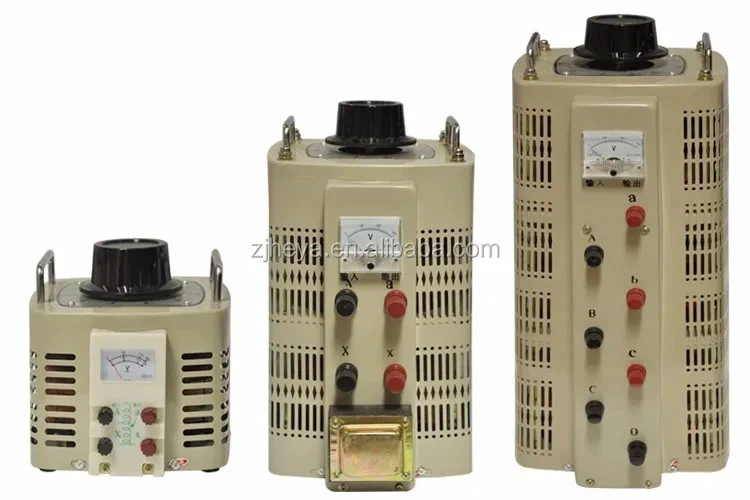

6. Limited Voltage Range
The voltage range that a Variac Variable Regulator can provide is often limited. Most Variacs are designed to provide a variable output voltage within a certain range, typically from 0 to a maximum value that is usually close to the input voltage. However, in some applications, a wider voltage range may be required.
For example, in some experimental setups or specialized industrial processes, the need for a very low or very high output voltage may exceed the capabilities of a standard Variac. In such cases, users may need to look for alternative voltage - regulation devices, such as Adjustable Voltage Stabilizer, which can offer a more extended voltage range.
Despite these disadvantages, Variac Variable Regulators still have their place in many applications. They are relatively simple to use, offer a high degree of voltage adjustability, and can be cost - effective for low - power and less - demanding applications. If you are considering using a Variac Variable Regulator for your specific needs, we are here to help. We can provide in - depth consultations to determine if a Variac is the right choice for you, or recommend alternative solutions if necessary. Contact us to start a discussion about your voltage - regulation requirements and explore the best options for your project.
References
- Electrical Engineering Handbook, Third Edition, CRC Press
- Power Electronics: Converters, Applications, and Design, Third Edition, John Wiley & Sons