



Hey there! As a supplier of Medical AC Stabilizers, I've seen my fair share of these devices in action. And let me tell you, it's crucial to keep an eye out for signs that your Medical AC Stabilizer might be malfunctioning. After all, these stabilizers play a vital role in ensuring the smooth operation of medical equipment, and any issues can have serious consequences.
So, what are the tell - tale signs that something's not right with your Medical AC Stabilizer? Let's dive in and find out.
1. Erratic Voltage Output
One of the most obvious signs that your Medical AC Stabilizer is malfunctioning is when it starts giving an erratic voltage output. You see, a good stabilizer is supposed to maintain a steady voltage supply to your medical equipment. But if you notice that the voltage readings on your equipment's display are fluctuating wildly, or if you can see the lights on the equipment dimming and brightening unexpectedly, that's a red flag.
Erratic voltage can damage sensitive medical devices. For example, in MRI machines or ultrasound devices, even a small voltage spike can cause data corruption or hardware failure. And let's not forget about life - saving equipment like defibrillators and ventilators. A sudden voltage drop could mean the difference between life and death.
If you're facing this issue, it might be time to consider replacing your stabilizer. You can check out our Industrial Voltage Regulator which is designed to provide a stable voltage output, even in challenging electrical environments.
2. Overheating
Another common sign of a malfunctioning Medical AC Stabilizer is overheating. Stabilizers generate some heat during normal operation, but if it's getting too hot to touch, that's a problem. Overheating can be caused by a variety of factors, such as a faulty cooling fan, a short - circuit inside the stabilizer, or simply overloading the device.
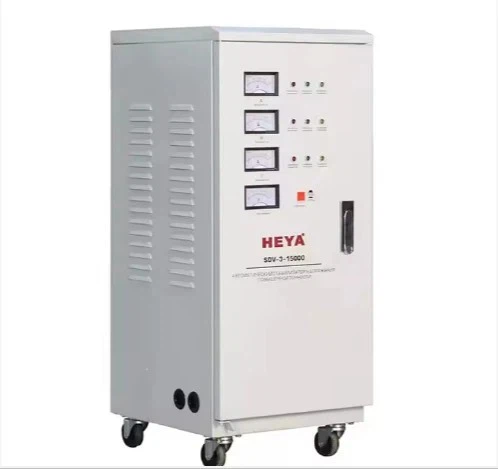

When a stabilizer overheats, it not only reduces its efficiency but also increases the risk of a fire hazard. Imagine having a medical facility where a fire breaks out due to an overheating stabilizer. It's a nightmare scenario.
If you feel that your stabilizer is overheating, immediately turn it off and let it cool down. Check if the cooling vents are blocked. If the problem persists, it's best to get in touch with a professional or consider upgrading to a more robust model like our TNS Three Phase Voltage Regulator, which has advanced cooling mechanisms to prevent overheating.
3. Strange Noises
Your Medical AC Stabilizer should operate relatively quietly. So, if you start hearing strange noises like buzzing, humming, or clicking, it's a sign that something's amiss. A buzzing noise could indicate a loose connection inside the stabilizer. A humming sound might be due to a problem with the transformer. And clicking noises could be a sign of a relay malfunction.
These noises are not just annoying; they can also be a precursor to a major breakdown. For instance, a loose connection can lead to arcing, which can damage the stabilizer and other connected equipment.
Don't ignore these noises. As soon as you hear them, have your stabilizer inspected. You might want to look into our Electric Power Stabilizer, which is engineered to operate silently and efficiently.
4. Frequent Tripping of Circuit Breakers
If your circuit breakers keep tripping when the Medical AC Stabilizer is in use, it's a clear indication of a problem. Circuit breakers are designed to protect your electrical system from overloads and short - circuits. When a stabilizer causes frequent tripping, it could mean that there's an internal fault in the stabilizer, such as a short - circuit or a ground fault.
Frequent tripping not only disrupts the operation of your medical equipment but also puts unnecessary stress on your electrical system. It's important to identify and fix the issue as soon as possible.
5. Inconsistent Performance of Connected Equipment
Sometimes, the signs of a malfunctioning stabilizer are not directly visible on the stabilizer itself but rather on the connected medical equipment. If you notice that your medical devices are not performing as they should, like slower processing times, inaccurate readings, or unexpected shutdowns, it could be due to an unstable power supply from the stabilizer.
Medical equipment is highly sensitive to power fluctuations. For example, a blood gas analyzer might give inaccurate results if it's not getting a stable voltage. This can lead to misdiagnosis and incorrect treatment.
If you're experiencing inconsistent performance of your medical equipment, it's worth checking the stabilizer. You can rely on our high - quality stabilizers to provide a consistent power supply and keep your equipment running smoothly.
6. Indicator Lights Malfunction
Most modern Medical AC Stabilizers come with indicator lights that show the status of the device. If these lights are not working correctly, or if they are showing incorrect information, it's a sign that the stabilizer is malfunctioning. For example, if the "normal operation" light is off when the stabilizer seems to be working fine, or if the "fault" light is constantly on, there's a problem.
Indicator lights are there to give you a quick and easy way to monitor the stabilizer's performance. Ignoring these lights can lead to undetected issues that can cause significant damage in the long run.
What to Do if You Notice These Signs
If you observe any of these signs, don't panic. First, turn off the stabilizer and disconnect it from the power source. This will prevent any further damage to the stabilizer and the connected medical equipment. Then, you can either try to troubleshoot the problem yourself if you have the technical know - how, or it's best to contact a professional technician.
At our company, we have a team of experts who can help you diagnose and fix the issue. We also offer a wide range of high - quality Medical AC Stabilizers that are designed to meet the strict requirements of the medical industry.
If you're in the market for a new stabilizer or need to replace your malfunctioning one, don't hesitate to reach out. We're here to help you ensure the safety and efficiency of your medical equipment. Whether you're a small clinic or a large hospital, we have the right solution for you. Contact us for a free consultation and let's discuss your specific needs. We can provide you with detailed product information, pricing, and help you make an informed decision.
References
- Electrical Safety Standards for Medical Equipment, International Electrotechnical Commission (IEC)
- Handbook of Power System Stability and Control, IEEE Press
So, keep an eye out for these signs and make sure your Medical AC Stabilizer is always in top - notch condition. Your medical equipment and, more importantly, your patients depend on it!