


What effect does a Variable AC Regulator have on the cooling capacity of an air conditioner?
As a supplier of Variable AC Regulators, I've had numerous inquiries about how these devices impact the cooling capacity of air conditioners. In this blog post, I'll delve into the scientific aspects of this relationship, exploring both the positive and negative effects based on real - world scenarios and technical knowledge.
Understanding the Basics of a Variable AC Regulator
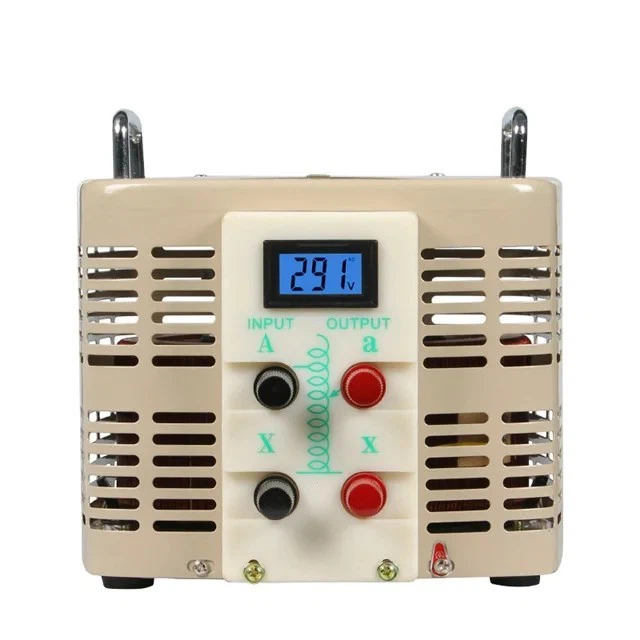
A Variable AC Regulator, also known as a Variac Variable Regulator, is a device that allows users to adjust the output voltage of an alternating current (AC) power supply. It provides a continuously variable output voltage within a certain range. You can learn more about Variac Variable Regulator on our website. This adjustability is crucial in many applications, especially when dealing with electrical appliances that may require different voltage levels for optimal performance.
One common type of Variable AC Regulator is the Single Phase Variac Voltage Regulator. It is widely used in single - phase electrical systems, and its ability to vary the voltage can have a significant impact on connected devices, such as air conditioners.
How Air Conditioners Work
Before discussing the effect of a Variable AC Regulator on an air conditioner's cooling capacity, it's essential to understand how air conditioners function. Air conditioners operate based on the principles of refrigeration. They use a refrigerant, which absorbs heat from the indoor air and releases it outside. The compressor, a key component of an air conditioner, is responsible for circulating the refrigerant through the system. The compressor requires a specific voltage to operate efficiently.
Positive Effects of a Variable AC Regulator on Cooling Capacity
- Voltage Optimization
- In some regions, the voltage supplied to homes or commercial buildings may fluctuate. If the voltage is too high, it can cause the compressor in the air conditioner to work harder than necessary, leading to increased wear and tear and potentially reduced efficiency. On the other hand, if the voltage is too low, the compressor may not operate at its full capacity, resulting in reduced cooling.
- A Variable AC Regulator can optimize the voltage supplied to the air conditioner. By adjusting the output voltage to the optimal level recommended by the air conditioner manufacturer, the compressor can operate more efficiently. This can lead to an improvement in the cooling capacity of the air conditioner, as the compressor can circulate the refrigerant at the appropriate rate.
- Adaptability to Different Power Sources
- Some air conditioners may be used in locations where the power supply is not stable, such as in remote areas or during power outages with the use of generators. A Variable AC Regulator can adapt the voltage from these non - standard power sources to a level that the air conditioner can handle. For example, a generator may produce a voltage that is slightly different from the standard grid voltage. The Variable AC Regulator can adjust this voltage to ensure that the air conditioner operates correctly and maintains its cooling capacity.
Negative Effects of a Variable AC Regulator on Cooling Capacity
- Incorrect Voltage Setting
- If the user sets the voltage on the Variable AC Regulator incorrectly, it can have a detrimental effect on the air conditioner's cooling capacity. For instance, if the voltage is set too low, the compressor may not be able to generate enough pressure to circulate the refrigerant effectively. This can result in a reduced flow of refrigerant through the system, leading to less heat being absorbed from the indoor air and thus a lower cooling capacity.
- Power Loss in the Regulator
- Variable AC Regulators are not 100% efficient. Some power is lost in the form of heat during the voltage - regulating process. This power loss means that the air conditioner may receive less power than expected, even if the voltage is set correctly. If the power loss is significant, it can affect the performance of the compressor and other components of the air conditioner, ultimately reducing its cooling capacity.
Case Studies
To illustrate the impact of a Variable AC Regulator on an air conditioner's cooling capacity, let's consider a few case studies.
Case Study 1: Voltage Optimization in a Residential Setting
In a residential area where the grid voltage fluctuated between 200V and 240V, an air conditioner was not cooling effectively. The manufacturer recommended an operating voltage of 220V. After installing a Variable Ac Regulator and setting the output voltage to 220V, the air conditioner's cooling capacity improved significantly. The indoor temperature dropped more quickly, and the energy consumption of the air conditioner also decreased slightly.
Case Study 2: Incorrect Voltage Setting in a Commercial Building
In a commercial building, a user set the Variable AC Regulator to a voltage that was too low for the air conditioner. As a result, the compressor was struggling to operate, and the cooling capacity of the air conditioner was reduced by approximately 30%. The indoor temperature remained higher than the desired level, and the occupants were uncomfortable. After correcting the voltage setting, the cooling capacity returned to normal.

Conclusion
In conclusion, a Variable AC Regulator can have both positive and negative effects on the cooling capacity of an air conditioner. When used correctly, it can optimize the voltage supplied to the air conditioner, leading to improved efficiency and cooling capacity. However, incorrect usage, such as setting the voltage incorrectly or experiencing significant power losses in the regulator, can reduce the cooling capacity.
If you are considering using a Variable AC Regulator with your air conditioner, it's important to understand the technical specifications of both the regulator and the air conditioner. Our company offers a wide range of high - quality Variable AC Regulators that are designed to provide reliable voltage regulation. If you have any questions or are interested in purchasing our products for your air conditioning needs, please feel free to contact us for further discussion and procurement negotiation.
References
- "Refrigeration and Air Conditioning Technology" by William C. Whitman, William M. Johnson, and John Tomczyk.
- Manufacturer's manuals of various air conditioners and Variable AC Regulators.