



In the field of electrical power management, voltage regulators play a crucial role in ensuring that electrical equipment receives a stable and consistent voltage supply. Among the various types of voltage regulators available, contact voltage regulators and non - contact voltage regulators are two prominent categories. As a supplier of Contact Voltage Regulators, I am well - versed in the characteristics of both types and would like to delve into the differences between them.
Working Principle
The fundamental difference between contact voltage regulators and non - contact voltage regulators lies in their working principles.
Contact voltage regulators operate based on the principle of physical contact. They typically use a movable contact that slides along a resistive element or a set of taps on a transformer. As the contact moves, it changes the number of turns in the circuit, thereby adjusting the output voltage. For example, in a Contact Voltage Regulator, the contact can be manually or automatically adjusted to connect to different taps on a transformer winding. When the input voltage fluctuates, the control system senses the change and moves the contact to a different position to maintain a relatively stable output voltage.
On the other hand, non - contact voltage regulators do not rely on physical contact for voltage adjustment. They use electronic components such as thyristors, transistors, and integrated circuits to control the voltage. These regulators work by rapidly switching the electrical current on and off at high frequencies. By controlling the duty cycle of these switches, the effective voltage applied to the load can be adjusted. For instance, a non - contact voltage regulator may use a pulse - width modulation (PWM) technique. The PWM controller generates a series of pulses, and by varying the width of these pulses, the average voltage across the load can be precisely regulated.
Response Time
Response time is an important factor when considering voltage regulators, especially in applications where rapid voltage changes need to be compensated for.
Contact voltage regulators generally have a slower response time compared to non - contact voltage regulators. This is because the physical movement of the contact takes time. When there is a sudden change in the input voltage, the contact needs to be mechanically moved to a new position. This mechanical movement involves inertia and friction, which can cause a delay in the voltage adjustment. In some cases, the response time of a contact voltage regulator can range from several milliseconds to seconds, depending on the design and the speed of the mechanical drive system.
Non - contact voltage regulators, due to their electronic nature, can respond much more quickly to voltage changes. Electronic components can switch states in microseconds or even nanoseconds. This allows non - contact voltage regulators to compensate for rapid voltage fluctuations almost instantaneously. For applications such as high - speed data centers or precision manufacturing equipment, where even small and brief voltage variations can cause malfunctions, the fast response time of non - contact voltage regulators is a significant advantage.
Efficiency
Efficiency is another key aspect to consider when choosing between contact and non - contact voltage regulators.
Contact voltage regulators can have relatively lower efficiency, especially when operating at partial loads. The resistive elements or the taps in a contact voltage regulator introduce some power losses. When the contact is moving along the resistive element, there is a voltage drop across the contact, which results in power dissipation in the form of heat. Additionally, the mechanical components in the regulator, such as the motor used to move the contact, also consume some power. These losses can reduce the overall efficiency of the regulator, especially when the load is not at its maximum capacity.
Non - contact voltage regulators, in general, have higher efficiency. Electronic components used in non - contact regulators have very low power losses when switching. For example, modern thyristors and transistors can operate with high efficiency, converting a large proportion of the input power into useful output power. The absence of mechanical components also eliminates the power losses associated with mechanical movement. As a result, non - contact voltage regulators can achieve efficiencies of over 90% in many applications, which is beneficial for reducing energy consumption and operating costs.
Maintenance Requirements
Maintenance is an important consideration for long - term operation of voltage regulators.
Contact voltage regulators require more maintenance compared to non - contact voltage regulators. The physical contact in a contact voltage regulator is subject to wear and tear over time. The sliding action of the contact on the resistive element or taps can cause the contact surface to erode, leading to increased contact resistance. This increased resistance can result in more power losses and a decrease in the performance of the regulator. Regular inspection and cleaning of the contact surface are necessary to ensure proper operation. In addition, the mechanical drive system that moves the contact may also require lubrication and occasional replacement of worn - out parts.
Non - contact voltage regulators have fewer maintenance requirements. Since they do not have physical contacts or moving mechanical parts, there is no wear and tear associated with these components. However, the electronic components in non - contact regulators may still need periodic inspection for signs of overheating, component failure, or damage due to electrical surges. But overall, the maintenance frequency and complexity are much lower compared to contact voltage regulators.
Cost
Cost is often a decisive factor in the selection of voltage regulators.
Contact voltage regulators are generally more cost - effective in terms of initial purchase price. The technology used in contact voltage regulators is relatively simple and well - established, and the components are less expensive. They are a popular choice for applications where the budget is limited and the requirements for voltage regulation are not extremely stringent. For example, in some small - scale industrial applications or residential use, a Contact Voltage Regulator can provide a reliable and affordable solution for voltage stabilization.
Non - contact voltage regulators, on the other hand, tend to be more expensive. The advanced electronic components and complex control circuits used in non - contact regulators increase the manufacturing cost. Additionally, the research and development costs associated with improving the performance and reliability of non - contact regulators are also reflected in the price. However, for applications where high - performance voltage regulation, fast response time, and high efficiency are essential, the higher cost of non - contact voltage regulators may be justified.
Applications
The differences in the characteristics of contact and non - contact voltage regulators make them suitable for different applications.

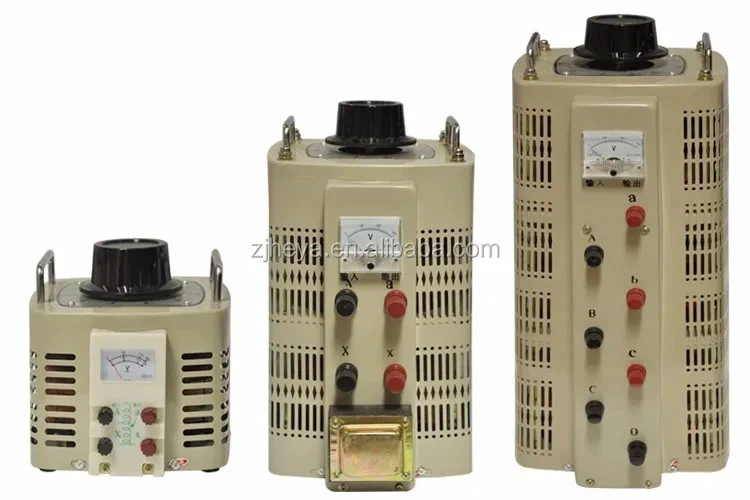
Contact voltage regulators are commonly used in applications where the load is relatively stable and the voltage fluctuations are not too severe. They are widely used in small - scale industrial equipment, such as small motors, heaters, and lighting systems. For example, in a small workshop where the electrical equipment operates at a relatively constant load, a Contact Voltage Regulator can provide a simple and cost - effective solution to maintain a stable voltage supply. Another application is in some agricultural equipment, where the power requirements are not very high, and the slow response time of contact voltage regulators is acceptable.
Non - contact voltage regulators are preferred in applications that require high - precision voltage regulation, fast response to voltage changes, and high efficiency. They are commonly used in high - tech industries such as semiconductor manufacturing, telecommunications, and medical equipment. In semiconductor manufacturing, even the slightest voltage variation can affect the quality of the chips being produced. Non - contact voltage regulators can ensure a stable and precise voltage supply, which is crucial for the production of high - quality semiconductor devices. In telecommunications, non - contact voltage regulators are used to protect sensitive communication equipment from voltage fluctuations and ensure reliable operation.
Conclusion
In conclusion, contact voltage regulators and non - contact voltage regulators have distinct differences in their working principles, response time, efficiency, maintenance requirements, cost, and applications. As a supplier of Contact Voltage Regulators, I understand that each type of regulator has its own advantages and disadvantages. Contact voltage regulators offer a cost - effective solution for applications with relatively stable loads and less demanding voltage regulation requirements. They are reliable and easy to understand, with a long - established technology.
On the other hand, non - contact voltage regulators are better suited for applications that demand high - performance voltage regulation, fast response times, and high efficiency. Their electronic nature allows for quick and precise voltage adjustment, making them ideal for high - tech and sensitive applications.
If you are in need of a voltage regulator for your specific application, I encourage you to contact me for more information. We can discuss your requirements in detail and determine whether a Contact Voltage Regulator, such as our Three Phase Variac Voltage Regulator or Variable Ac Regulator, is the right choice for you. We are committed to providing high - quality products and excellent customer service to meet your power management needs.
References
- Dorf, R. C., & Svoboda, J. A. (2016). Introduction to Electric Circuits. Wiley.
- Chapman, S. J. (2012). Electric Machinery Fundamentals. McGraw - Hill.
- Nasar, S. A., & Unnewehr, L. E. (1993). Electric Machines and Drives: A First Course. Prentice Hall.