


As a motor voltage regulator supplier deeply entrenched in the industry, I often encounter inquiries about the technical nuances of our products. One question that frequently surfaces is, "What is the dynamic response of a motor voltage regulator?" In this blog post, I aim to demystify this concept and shed light on its significance in the realm of motor control.
Understanding the Basics of a Motor Voltage Regulator
Before delving into the dynamic response, let's briefly recap what a motor voltage regulator does. A motor voltage regulator is a device designed to maintain a stable voltage supply to a motor, regardless of fluctuations in the input voltage or changes in the load. This stability is crucial for the efficient and reliable operation of motors, as it helps prevent damage caused by over - or under - voltage conditions and ensures consistent performance.
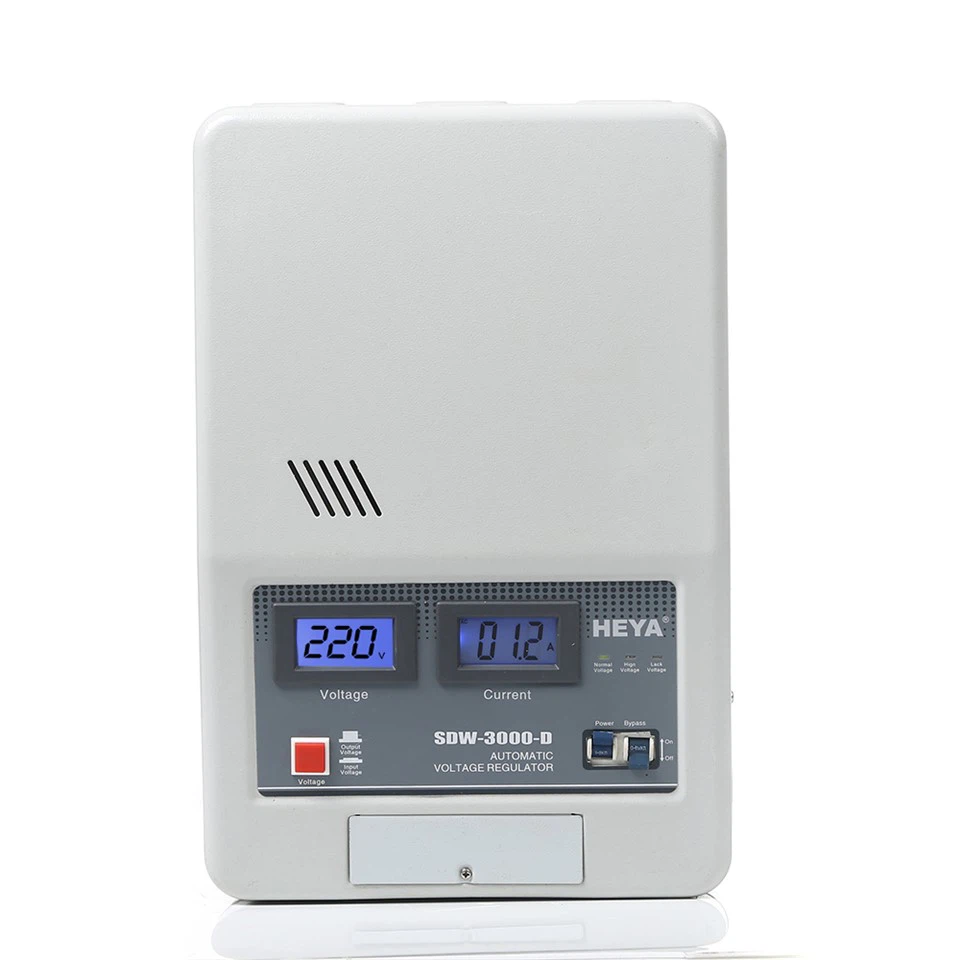
There are different types of motor voltage regulators available in the market. For example, the Servo Motor Stabilizer is specifically tailored to the needs of servo motors, which require precise control and high - speed response. The Servo Motor Voltage Regulator also plays a vital role in servo motor applications by adjusting the voltage to meet the motor's requirements. Additionally, the Single Phase Ac Regulator is suitable for single - phase AC motors, providing stable voltage regulation in a variety of industrial and commercial settings.
Defining Dynamic Response
The dynamic response of a motor voltage regulator refers to how quickly and accurately the regulator can adjust the output voltage in response to changes in the input voltage or load. In other words, it measures the regulator's ability to adapt to dynamic conditions and maintain a constant output voltage.
When a sudden change occurs, such as an increase in the load on the motor or a drop in the input voltage, the motor voltage regulator must react promptly. A regulator with a good dynamic response will be able to detect the change almost instantaneously and adjust the output voltage accordingly. This adjustment should be made without causing excessive overshoot (a temporary increase in voltage above the desired level) or undershoot (a temporary decrease in voltage below the desired level).
Factors Affecting Dynamic Response
Several factors can influence the dynamic response of a motor voltage regulator.
Control Algorithm
The control algorithm used in the regulator is one of the most critical factors. Advanced algorithms, such as proportional - integral - derivative (PID) control, are commonly employed to optimize the dynamic response. PID controllers continuously calculate an error value between the desired output voltage and the actual output voltage and then adjust the regulator's output based on this error. The proportional term provides an immediate response to the error, the integral term corrects for any steady - state errors, and the derivative term anticipates future changes in the error.
Component Characteristics
The characteristics of the components used in the regulator, such as capacitors, inductors, and transistors, also play a significant role. High - quality components with low resistance, low capacitance, and fast switching speeds can improve the regulator's dynamic response. For example, a transistor with a short switching time can quickly adjust the current flow, enabling the regulator to respond more rapidly to changes.
Load Characteristics
The type of load connected to the motor voltage regulator affects its dynamic response as well. Some loads, such as motors with high starting currents, can place sudden and significant demands on the regulator. The regulator must be able to handle these large current surges without compromising the output voltage stability.
Importance of Good Dynamic Response
A motor voltage regulator with a good dynamic response offers several benefits.

Motor Protection
By quickly adjusting the voltage in response to changes, the regulator can protect the motor from damage caused by over - or under - voltage conditions. For example, if the input voltage suddenly drops, a regulator with a fast dynamic response can increase the output voltage to maintain the motor's normal operation. This helps extend the motor's lifespan and reduces the likelihood of costly repairs or replacements.
Improved System Performance
In applications where precise control is required, such as robotics and automated manufacturing, a regulator with a good dynamic response ensures that the motor operates at the desired speed and torque. This leads to improved system performance, increased productivity, and higher quality products.
Measuring Dynamic Response
The dynamic response of a motor voltage regulator is typically measured using parameters such as settling time, overshoot, and undershoot.
The settling time is the time it takes for the output voltage to reach and remain within a specified percentage (usually ± 1% or ± 2%) of the desired voltage after a step change in the input voltage or load. A shorter settling time indicates a faster dynamic response.
Overshoot and undershoot are the temporary deviations of the output voltage above or below the desired voltage, respectively. Minimizing overshoot and undershoot is crucial for maintaining stable motor operation.
Our Company's Approach to Dynamic Response
As a motor voltage regulator supplier, we understand the importance of a good dynamic response. Our engineering team is constantly working on improving the control algorithms and selecting the best - in - class components for our products. We conduct rigorous testing on each regulator to ensure that it meets our high - standards of dynamic response.
For example, in our Servo Motor Voltage Regulator, we have implemented advanced PID control algorithms and used high - performance transistors to achieve a fast and accurate dynamic response. This allows the regulator to handle rapid changes in the servo motor's load and input voltage, providing stable and reliable operation.
Conclusion
In conclusion, the dynamic response of a motor voltage regulator is a critical aspect of its performance. A regulator with a fast and accurate dynamic response can protect the motor, improve system performance, and ensure stable operation. At our company, we are committed to providing high - quality motor voltage regulators that meet the diverse needs of our customers.
If you are in the market for a motor voltage regulator and want to learn more about our products' dynamic response or other features, we encourage you to contact us for a procurement consultation. Our team of experts will be happy to assist you in finding the right solution for your specific application.
References
- Dorf, R. C., & Bishop, R. H. (2016). Modern Control Systems. Pearson.
- Kuo, B. C. (2002). Automatic Control Systems. Wiley.