



As a supplier of AC regulators, I've witnessed firsthand the critical role these devices play in maintaining stable electrical power across various applications. One of the most significant factors that can affect the performance of an AC regulator is load variation. In this blog, I'll explore the impact of load variation on an AC regulator, discuss how it can influence system efficiency and reliability, and provide insights into how to mitigate these effects.
Understanding Load Variation
Load variation refers to the change in the amount of electrical power consumed by a device or a group of devices connected to an electrical system. In real - world scenarios, loads are rarely constant. For example, in a household, the power consumption varies throughout the day as different appliances are turned on and off. A refrigerator may cycle on and off, a washing machine will have different power requirements during its various cycles, and lighting may be used intermittently.
In an industrial setting, load variation can be even more pronounced. Manufacturing processes may involve the use of heavy machinery that consumes large amounts of power when in operation but very little when idle. These fluctuations in load can have a substantial impact on the operation of an AC regulator.
How Load Variation Affects AC Regulators
Output Voltage Stability
One of the primary functions of an AC regulator is to maintain a stable output voltage regardless of changes in the input voltage or load. When the load on an AC regulator changes, the internal impedance of the regulator and the load itself interact. A sudden increase in load can cause a drop in the output voltage. This is because the regulator has to supply more current to the load, and the internal resistance of the regulator causes a voltage drop according to Ohm's law (V = IR).
Conversely, a sudden decrease in load can lead to an increase in the output voltage. If the output voltage deviates too far from the desired level, it can damage sensitive electronic equipment connected to the regulator. For instance, a computer may malfunction or experience data loss if the voltage supplied to it is too high or too low.
Efficiency
Load variation also affects the efficiency of an AC regulator. Most AC regulators are designed to operate at peak efficiency within a certain load range. When the load is significantly below or above this optimal range, the efficiency of the regulator decreases.
At low loads, the power consumed by the internal components of the regulator, such as control circuits and transformers, becomes a larger proportion of the total power input. This means that a higher percentage of the input power is wasted as heat, reducing the overall efficiency. At high loads, the regulator may have to work harder to maintain the output voltage, leading to increased power losses due to higher currents flowing through the internal resistance of the regulator.
Thermal Stress
Load variations can subject an AC regulator to thermal stress. When the load increases, the current flowing through the regulator's components also increases. This leads to an increase in power dissipation, which in turn causes the temperature of the regulator to rise. If the load variation is frequent and large, the regulator may experience repeated cycles of heating and cooling.
These thermal cycles can cause mechanical stress on the components, leading to premature aging and potential failure. For example, solder joints may crack over time, and semiconductor devices may degrade due to the thermal stress.
Mitigating the Impact of Load Variation
Selecting the Right Regulator
The first step in mitigating the impact of load variation is to select an AC regulator that is suitable for the expected load range. When choosing a regulator, it's important to consider the maximum and minimum load requirements of the application. A regulator with a wider load - handling capacity will be better able to cope with load variations without significant degradation in performance.
For example, if you are looking for a regulator for a fridge, you can consider a Voltage Regulator for Fridge. These regulators are specifically designed to handle the load variations associated with the operation of a refrigerator, which typically has a cyclic load pattern.
Using Advanced Control Techniques
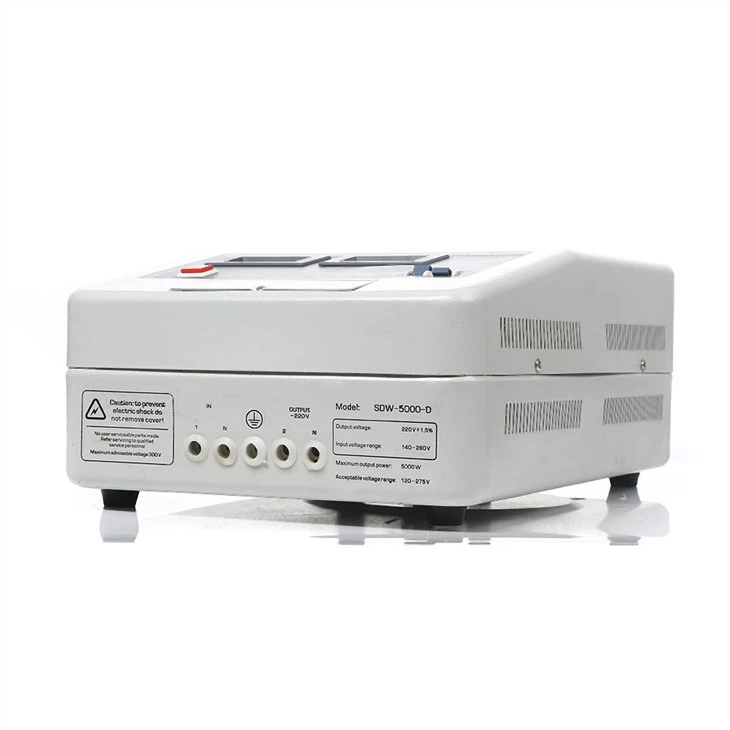
Modern AC regulators often incorporate advanced control techniques to improve their performance under load variation. For example, some regulators use feedback control systems that continuously monitor the output voltage and adjust the internal parameters of the regulator to maintain a stable output.
These control systems can respond quickly to changes in load, minimizing the voltage fluctuations. Additionally, some regulators use adaptive control algorithms that can adjust the operating mode of the regulator based on the load conditions, improving efficiency and reducing thermal stress.

Adding Energy Storage Devices
Another way to mitigate the impact of load variation is to add energy storage devices, such as capacitors or batteries, to the electrical system. These devices can store energy during periods of low load and release it during periods of high load, helping to smooth out the load variations.
For example, in a household electrical system, a capacitor can be connected in parallel with the load. When the load suddenly increases, the capacitor can supply some of the additional current required, reducing the burden on the AC regulator.
Case Studies
Let's take a look at a few real - world examples to illustrate the impact of load variation on AC regulators and the effectiveness of mitigation strategies.
Residential Application
In a typical household, the load on the electrical system varies throughout the day. In the morning, there may be a high demand for power as people turn on their coffee makers, toasters, and televisions. During the day, the load may decrease as people leave home. In the evening, the load increases again as lights are turned on and appliances such as washing machines and dryers are used.
A family installed a Wall Mounted Voltage Stabilizer to protect their electronic devices from voltage fluctuations. Before the installation, they noticed that their television would sometimes flicker or lose picture quality when multiple appliances were turned on at the same time. After installing the stabilizer, the output voltage remained stable, and the picture quality of the television improved significantly.
Industrial Application
In an industrial factory, a manufacturing process involves the use of a large number of motors. These motors have a high starting current, which can cause a significant load variation on the electrical system. The factory initially used a standard AC regulator that was not designed to handle such large load variations.
As a result, the output voltage of the regulator would drop significantly when the motors were started, causing the motors to run inefficiently and sometimes overheat. After replacing the regulator with a more robust model that was specifically designed for high - load applications, the output voltage remained stable, and the motors operated more reliably.
Conclusion
Load variation is an inevitable part of electrical systems, and it can have a significant impact on the performance of AC regulators. By understanding how load variation affects output voltage stability, efficiency, and thermal stress, and by implementing appropriate mitigation strategies, we can ensure that AC regulators operate effectively and reliably.
As a supplier of AC regulators, we offer a wide range of products, including Wall Mounted Voltage Stabilizer, Voltage Regulator for Fridge, and Portable Stabilizer, to meet the diverse needs of our customers. If you are facing issues related to load variation in your electrical system or are looking for a reliable AC regulator, we invite you to contact us for a detailed discussion on your requirements and how our products can help.
References
- Chapman, S. J. (2012). Electric Machinery Fundamentals. McGraw - Hill.
- Dorf, R. C., & Bishop, R. H. (2016). Modern Control Systems. Pearson.
- Grainger, J. J., & Stevenson, W. D. (1994). Power System Analysis. McGraw - Hill.