



What is the isolation of an electronic voltage regulator?
As a seasoned supplier of electronic voltage regulators, I've encountered numerous inquiries regarding the concept of isolation in these essential devices. Isolation is a critical aspect that plays a pivotal role in ensuring the safety, efficiency, and functionality of electronic voltage regulators. Let's delve into this topic to gain a comprehensive understanding.
Isolation in an electronic voltage regulator refers to the electrical separation between different parts of the regulator or between the regulator and external circuits. This separation serves multiple purposes, primarily to protect sensitive components, prevent electrical interference, and ensure user safety.
One of the key reasons for isolation is to protect the internal components of the voltage regulator from electrical disturbances in the external circuit. In many industrial and commercial settings, electrical systems can be prone to voltage spikes, surges, and noise. These disturbances can cause damage to the delicate electronic components within the voltage regulator, leading to malfunctions or even complete failure. By implementing isolation, the voltage regulator can prevent these external disturbances from reaching its internal circuitry, thereby safeguarding its operation.
Another important function of isolation is to prevent electrical interference between different circuits. In complex electrical systems, multiple circuits may be operating simultaneously, and without proper isolation, these circuits can interfere with each other, causing signal degradation and performance issues. For example, in a power distribution system, a voltage regulator may be used to control the voltage supplied to different loads. If the regulator is not isolated, the electrical noise generated by one load can be transmitted to other loads, affecting their performance. Isolation helps to minimize this interference, ensuring that each circuit operates independently and efficiently.
Isolation also plays a crucial role in ensuring user safety. In some applications, such as medical equipment and industrial machinery, the voltage regulator may be connected to high-voltage circuits. Without proper isolation, there is a risk of electric shock to users or operators. By providing electrical separation between the high-voltage circuit and the user interface, the voltage regulator can prevent the flow of dangerous electrical currents, reducing the risk of injury or damage.
There are several methods used to achieve isolation in electronic voltage regulators. One common method is the use of transformers. Transformers are electromagnetic devices that can transfer electrical energy between two or more circuits through electromagnetic induction. By using a transformer, the voltage regulator can isolate the input and output circuits, preventing the direct flow of electrical current between them. This not only provides electrical isolation but also allows for voltage transformation, which is often necessary in applications where the input and output voltages are different.
Another method of isolation is the use of optocouplers. Optocouplers, also known as optical isolators, are electronic devices that use light to transmit signals between two circuits. They consist of an LED and a photodetector, which are separated by an optical barrier. When an electrical signal is applied to the LED, it emits light, which is then detected by the photodetector. The photodetector converts the light signal back into an electrical signal, which is then used to control the output of the voltage regulator. Optocouplers provide excellent electrical isolation, as there is no direct electrical connection between the input and output circuits.
In addition to transformers and optocouplers, other isolation methods such as capacitive coupling and magnetic coupling may also be used in electronic voltage regulators. These methods offer different levels of isolation and performance, depending on the specific requirements of the application.
At our company, we offer a wide range of electronic voltage regulators with different levels of isolation to meet the diverse needs of our customers. Our Intelligent Automatic Voltage Regulator is designed with advanced isolation technology to provide reliable and stable voltage regulation in various applications. It uses high-quality transformers and optocouplers to ensure excellent electrical isolation, protecting the internal components from external disturbances and preventing electrical interference.

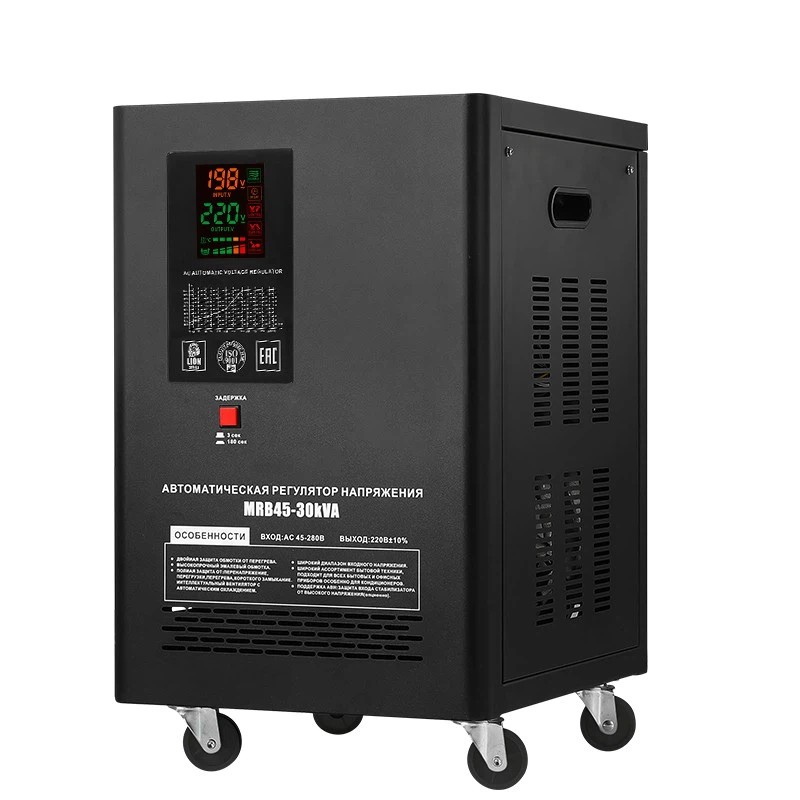
Our Ac AVR is another popular product that offers effective isolation. It is designed to regulate the voltage of alternating current (AC) power supplies, providing stable and accurate voltage output. The isolation feature of the Ac AVR helps to protect the connected equipment from voltage fluctuations and electrical noise, ensuring its reliable operation.
For applications in air conditioning systems, we offer the Aircon Voltage Regulator. This voltage regulator is specifically designed to meet the unique requirements of air conditioning units, providing stable voltage supply and protecting the compressor and other components from damage caused by voltage variations. The isolation in the Aircon Voltage Regulator also helps to reduce electrical interference, ensuring quiet and efficient operation of the air conditioning system.
In conclusion, isolation is an essential feature of electronic voltage regulators. It provides protection for internal components, prevents electrical interference, and ensures user safety. Understanding the concept of isolation and the different methods used to achieve it is crucial for selecting the right voltage regulator for your application. Whether you need a voltage regulator for industrial, commercial, or residential use, our company can provide you with high-quality products that offer excellent isolation and performance. If you are interested in our electronic voltage regulators or have any questions about isolation, please feel free to contact us for further discussion and procurement.
References
- Principles of Electronic Instrumentation and Measurement, by Albert D. Helfrick and William D. Cooper
- Electronic Devices and Circuit Theory, by Robert L. Boylestad and Louis Nashelsky