



As an AC AVR (Automatic Voltage Regulator) supplier, I often get asked about the power consumption of these devices. It's a crucial question, especially for those looking to manage their energy use effectively. In this blog, I'll break down what the power consumption of an AC AVR itself is and what factors can influence it.
Let's start with the basics. An AC AVR is a device that stabilizes the voltage supplied to electrical equipment. It ensures that the voltage remains within a safe and stable range, protecting your appliances from damage due to voltage fluctuations. Now, when it comes to its own power consumption, it's not a one - size - fits - all answer.
The power consumption of an AC AVR mainly depends on two things: its type and its capacity. There are various types of AC AVRs out there, such as ferro - resonant regulators, servo - motor regulators, and electronic regulators. Each type has its own power consumption characteristics.
Ferro - resonant regulators are known for their simplicity and reliability. They use a magnetic core and capacitors to regulate the voltage. These regulators usually have a relatively high standby power consumption. This is because they need to maintain a magnetic field in the core at all times, even when there's no significant load on the connected equipment. On average, a small - to - medium - sized ferro - resonant AC AVR might consume around 10 - 20 watts in standby mode. As the load increases, the power consumption also goes up, but it's generally in a linear fashion.
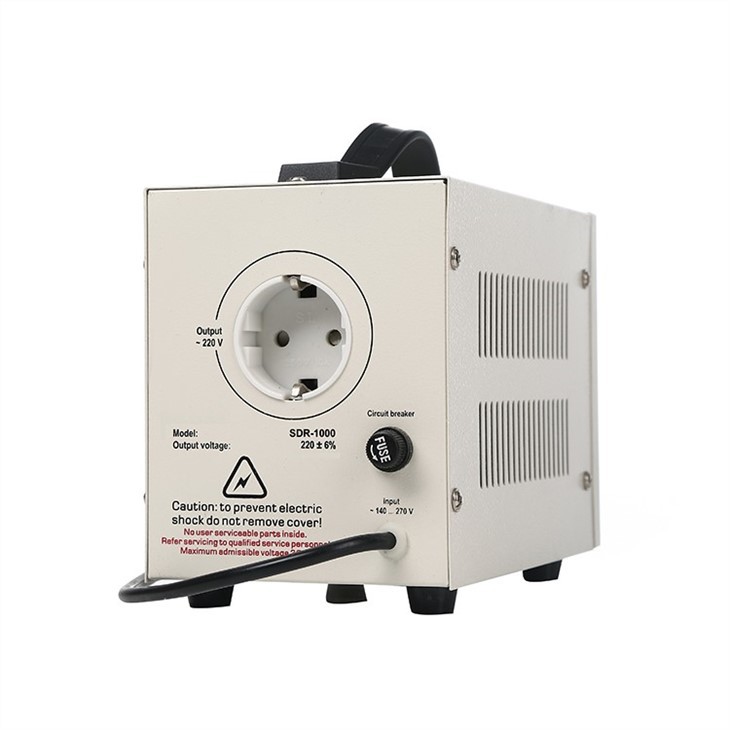
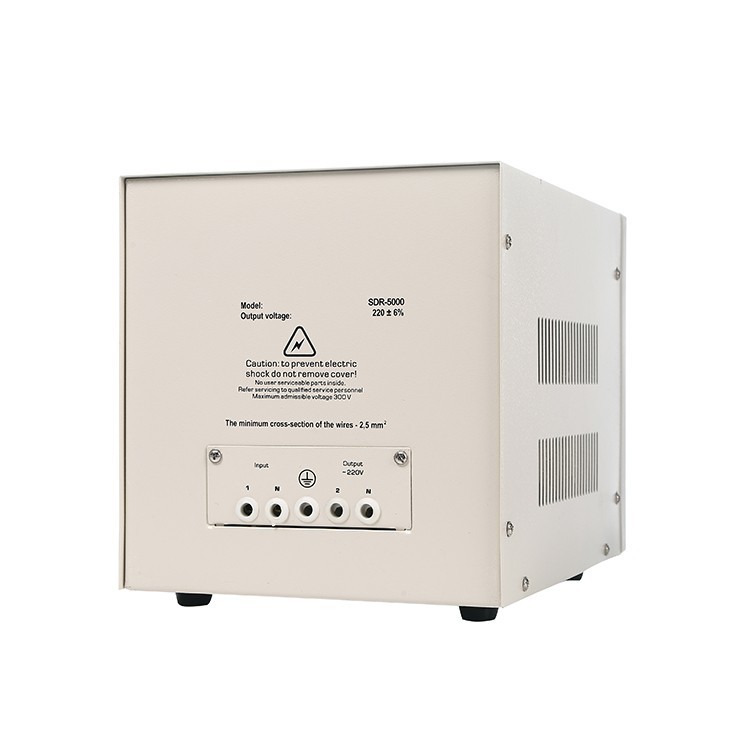
Servo - motor regulators, on the other hand, use a servo motor to adjust the output voltage. They're more energy - efficient in standby mode compared to ferro - resonant regulators. A typical servo - motor AC AVR might consume only 5 - 10 watts when it's just sitting there, waiting for a load. When the load changes and the servo motor needs to adjust the voltage, there's a short spike in power consumption, but it quickly returns to a normal level.
Electronic regulators are the most modern and energy - efficient type. They use solid - state components like transistors and integrated circuits to regulate the voltage. These regulators have very low standby power consumption, often less than 5 watts. They're also very responsive to load changes, and their power consumption doesn't increase significantly with small to medium - sized load variations.
The capacity of the AC AVR also plays a big role in its power consumption. Larger capacity AVRs are designed to handle more electrical load, and as a result, they consume more power. For example, a 1 kVA (kilovolt - ampere) AC AVR will consume less power than a 5 kVA one. A 1 kVA electronic AC AVR might have a standby power consumption of around 3 - 5 watts, while a 5 kVA one could consume 10 - 15 watts.
Another factor that affects the power consumption of an AC AVR is the quality of the input voltage. If the input voltage has a lot of fluctuations, the AVR has to work harder to stabilize it. This means more power consumption. For instance, in an area where the voltage can vary from 180V to 260V, the AVR will consume more power compared to an area where the voltage is relatively stable, say between 220V - 230V.
Let's talk about how the power consumption of an AC AVR impacts your overall energy bill. While the power consumption of an individual AVR might seem small, if you have multiple AVRs in your home or business, it can add up. For example, if you have three 1 kVA electronic AVRs, each consuming 5 watts in standby mode, that's 15 watts in total. Over a month (assuming 24 hours of operation per day), that's 15 x 24 x 30 = 10800 watt - hours or 10.8 kilowatt - hours. Depending on your electricity rate, this could cost you a few dollars.
Now, I know you're probably wondering how you can reduce the power consumption of your AC AVR. One way is to choose an energy - efficient model. As I mentioned earlier, electronic regulators are generally the most energy - efficient. You can also make sure that the capacity of the AVR matches your actual load. If you have a small appliance that only requires 500 watts, there's no need to use a 2 kVA AVR. Using an oversized AVR will result in higher power consumption.
If you're in the market for an AC AVR, we offer a wide range of options. You can check out our Home Appliances Voltage Regulator for home use, which are designed to be energy - efficient and reliable. For more advanced applications, our Variable Ac Regulator provides precise voltage control. And if you're looking for a general - purpose solution, our Ac Regulator is a great choice.
We understand that power consumption is an important factor for you, and we're committed to providing you with products that offer the best balance between performance and energy efficiency. Whether you're a homeowner looking to protect your appliances or a business owner in need of stable power for your equipment, we've got you covered.
If you're interested in learning more about our AC AVRs or have any questions regarding power consumption, feel free to reach out. We'd be more than happy to discuss your specific needs and help you choose the right product. Our team of experts is always on standby to assist you in making an informed decision. So, don't hesitate to get in touch and start the procurement process. We're here to make sure you get the best value for your money and the most energy - efficient solution for your power regulation needs.
References
- "Power Electronics: Converters, Applications, and Design" by Ned Mohan, Tore M. Undeland, and William P. Robbins
- Technical data sheets of various AC AVR manufacturers