



What is the response time of a contact voltage regulator?
As a seasoned supplier of Contact Voltage Regulators, I've encountered numerous inquiries regarding the response time of these essential devices. Understanding the response time of a contact voltage regulator is crucial for various applications, from industrial settings to sensitive electronic systems. In this blog, I'll delve into the concept of response time, its significance, and factors that influence it.
Defining Response Time
The response time of a contact voltage regulator refers to the time it takes for the regulator to detect a change in the input voltage and adjust the output voltage to the desired level. In simpler terms, it's the duration between the moment the input voltage deviates from the set point and when the output voltage reaches the new, stable value. This parameter is typically measured in milliseconds (ms) or seconds (s), depending on the type and design of the regulator.
Why Response Time Matters
Response time is a critical factor in many applications where a stable and consistent voltage supply is essential. For instance, in industrial automation systems, sudden voltage fluctuations can disrupt the operation of machinery, leading to production delays and potential equipment damage. A contact voltage regulator with a fast response time can quickly compensate for these fluctuations, ensuring that the connected equipment receives a stable voltage supply and operates smoothly.
In electronic devices such as computers, servers, and medical equipment, even minor voltage variations can cause malfunctions or data loss. A regulator with a rapid response time can safeguard these sensitive devices from the harmful effects of voltage instability, improving their reliability and longevity.
Factors Affecting Response Time
Several factors can influence the response time of a contact voltage regulator. Let's take a closer look at some of the most significant ones:
- Control Circuit Design: The design of the control circuit plays a crucial role in determining the response time of the regulator. Advanced control circuits with high-speed processors and sophisticated algorithms can detect voltage changes more quickly and adjust the output voltage accordingly. These circuits are often used in high-performance contact voltage regulators to achieve fast response times.
- Mechanical Components: Contact voltage regulators typically use mechanical components such as brushes and contacts to adjust the output voltage. The speed at which these components can move and make contact with the appropriate taps on the transformer affects the response time. Regulators with high-quality mechanical components and precise engineering can achieve faster response times.
- Load Characteristics: The characteristics of the load connected to the regulator can also impact its response time. Heavy loads with high inrush currents or rapid load changes can pose a challenge for the regulator, requiring it to respond more quickly to maintain a stable output voltage. In such cases, a regulator with a faster response time may be necessary to ensure proper operation.
- Input Voltage Variation: The magnitude and frequency of the input voltage variations can affect the response time of the regulator. Larger and more frequent voltage fluctuations require the regulator to work harder and respond more quickly to maintain the desired output voltage. Regulators designed to handle wide input voltage ranges may have longer response times compared to those designed for more stable input voltages.
Measuring Response Time
Measuring the response time of a contact voltage regulator typically involves applying a step change in the input voltage and monitoring the output voltage over time. The response time is then determined as the time it takes for the output voltage to reach a specified percentage (usually 90% or 95%) of its final value after the input voltage change.
This measurement can be performed using specialized test equipment such as oscilloscopes and power analyzers. By conducting these tests under different operating conditions, manufacturers can ensure that their contact voltage regulators meet the specified response time requirements and provide reliable performance in real-world applications.
Applications and Response Time Requirements
Different applications have varying response time requirements for contact voltage regulators. Here are some common examples:

- Industrial Applications: In industrial settings, where large motors, pumps, and other heavy equipment are used, a fast response time is often essential to prevent voltage sags and surges from causing equipment damage or production disruptions. Regulators with response times in the range of milliseconds are typically preferred for these applications.
- Commercial Buildings: In commercial buildings, contact voltage regulators are used to provide stable power to lighting systems, HVAC equipment, and other electrical loads. While the response time requirements may not be as stringent as in industrial applications, a regulator with a reasonable response time can still help improve the efficiency and reliability of the electrical system.
- Data Centers: Data centers house sensitive electronic equipment such as servers, storage systems, and networking devices. These devices require a stable and consistent voltage supply to operate properly and prevent data loss. Contact voltage regulators with extremely fast response times, often in the sub-millisecond range, are commonly used in data centers to protect against voltage fluctuations.
- Medical Equipment: Medical equipment such as MRI machines, CT scanners, and patient monitors are highly sensitive to voltage variations. A contact voltage regulator with a fast response time is crucial to ensure the accuracy and reliability of these devices, as even minor voltage changes can affect their performance and potentially compromise patient safety.
Our Contact Voltage Regulators and Response Time
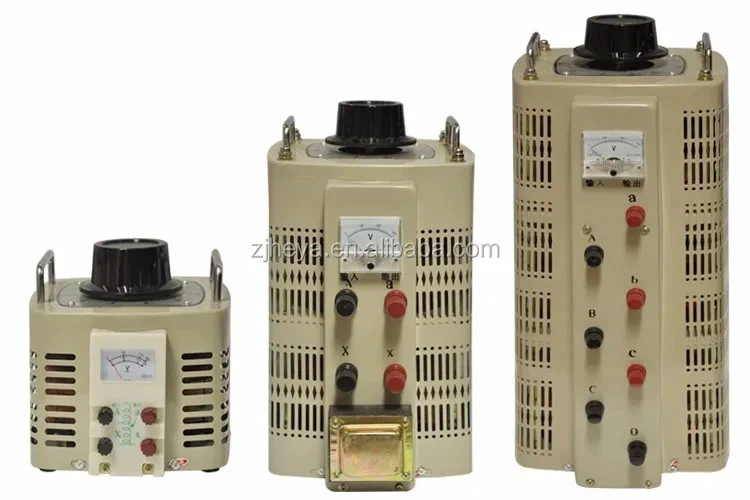
As a leading supplier of contact voltage regulators, we understand the importance of response time in various applications. Our range of products includes Variable Ac Regulator, Single Phase Variac Voltage Regulator, and Three Phase Variac Voltage Regulator, all of which are designed to provide fast and reliable voltage regulation.
Our contact voltage regulators feature advanced control circuits and high-quality mechanical components, ensuring rapid response times and precise voltage adjustment. Whether you need a regulator for industrial, commercial, or sensitive electronic applications, we have the expertise and products to meet your specific requirements.
Conclusion
In conclusion, the response time of a contact voltage regulator is a critical parameter that determines its ability to maintain a stable output voltage in the face of input voltage variations. Understanding the factors that influence response time and choosing a regulator with the appropriate specifications for your application is essential to ensure reliable performance and protect your valuable equipment.
If you're in the market for a contact voltage regulator and have questions about response time or any other aspect of our products, we encourage you to contact us. Our team of experts is ready to assist you in selecting the right regulator for your needs and providing you with the support and guidance you need to make an informed decision. Let's work together to ensure a stable and efficient power supply for your applications.
References
- "Voltage Regulators: Principles, Design, and Applications" by Robert A. Pease
- "Power Electronics: Converters, Applications, and Design" by Ned Mohan, Tore M. Undeland, and William P. Robbins
- Manufacturer datasheets and technical documentation for contact voltage regulators.