


Demand for power supply quality has reached near-exacting levels probe stations at semiconductor testing sites, laser calibration platforms at optical labs and testing stations for precision medical devices --even millivolt-level voltage jumps and tiny harmonic distortions can disable hundreds of thousands of dollars worth of test components or invalidate hours of experimental data. Contact voltage regulator was originally considered as a kind of traditional industrial equipment, but because of its core advantages of aberration and CVD, it is now a popular choice in the field of power supply for precision equipment.
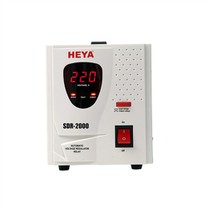
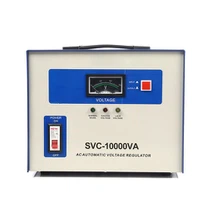
Unlike electronic voltage voltage regulators, which rely on chopping waves of semiconductor element for voltage regulation, the voltage voltage regulation logic of contact voltage regulators is based entirely on the physical characteristics of the autotransformer. A single layer of continuous winding is tightly wound around its toroidal core. High-purity carbon brush, compressed by spring, glides smoothly over polished exposed surfaces, adjusting voltage value by changing the number of spins in the output winding. The entire voltage regulation process does not involve electronic switching action, and the output voltage waveform follows the input sine wave completely, with little additional harmonic distortion. There is no phase shift between input and output, which avoids the waveform distortion problems common in electrical and electronic equipment.
This feature directly addresses the core pain points that power precision devices. At the calibration workshops of many precision sensor manufacturers in Wenzhou, engineers have long abandoned the electronic voltage regulators used in the past in favor of touching them to power calibration stations. In the past, when using electronic voltage regulators, the small amount of high order harmonics in the output waveform often results in slight deviation of calibration data of high-precision voltmeters, which requires repeated testing to obtain reliable results. This not only slowed down production, but also creates a risk of substandard calibration data. After switching to contact voltage regulator, the output voltage the waveform distortion rate controlled to less than 1%, and there is no additional harmonic interference in the process. The efficiency of one calibration increased by 40%, and the consistency of the data was recognized by industry testing body.
The stepless voltage regulation feature further makes it suitable for a variety of complex testing scenarios. voltage tests of many semiconductor discrete devices requires a gradual increase in voltage from zero at a extremely slow rate, without any voltage jump, otherwise the sample is prone to failure during test. The output voltage of the contact voltage regulator is continuously and smoothly adjusted from 0 to the rated maximum by moving carbon brushes along the winding surface in micron steps, either manually or by an electric shaft. This avoids the voltage mutations common in remote voltage regulators and completely satisfies the stringent requirements of this high-precision test. Even for analysis instruments with extremely high power supply stability requirements, its use as a pre-regulator can effectively filter out small voltage fluctuations on mains side, ensuring that the instrument always operates within its rated voltage range.
Many people wonder why contact voltage are back in vogue now that more advanced electronic ones are voltage regulators. The answer lies in their long-term reliability. In precision manufacturing lines, year-round continuous operation is the norm. The power element of electronic voltage regulators operates under high voltage and high frequency for a long time, so it is easy to age and fail, which leads to high maintenance cost. Contact voltage regulators have no fragile high-frequency electronic components and can operate steadily for many years as long as carbon brush are regularly worn and winding surfaces are cleaned. They are far more overload capacity than electronic voltage regulators of the same power and do not shut down even in the event of a short-term load surge.
However, as a source of power supply for sophisticated devices, it also has specific dos and don'ts. Reliable grounding is essential in installation process to avoid the unisolated safety risks associated with the self-coupling the autotransformer structure. Equipment should also be protected from corrosive gases and high dust levels to prevent contaminated exposure to winding surfaces and subsequent adverse exposure. Many manufacturers now offer optimized versions for precision applications, employing abrasion-resistant alloy carbon brushes and high-precision electric drive mechanisms to further improve the stability and longevity of voltage regulation stability, allowing this classic voltage regulator to find a new niche in high-end precision manufacturing.