


Hey there! As a supplier of household voltage regulators, I often get asked if a household voltage regulator can be used for computers. It's a great question, and in this blog, I'll break it down for you.
First off, let's talk about what a household voltage regulator does. Essentially, it's a device that helps maintain a stable voltage supply to your electrical appliances. Voltage fluctuations can happen for various reasons, like power grid issues, lightning strikes, or even the simultaneous use of multiple high - power appliances in your home. These fluctuations can be harmful to your electronics, causing malfunctions, reducing their lifespan, or even leading to permanent damage.
Now, computers are pretty sensitive pieces of equipment. They rely on a consistent and stable power supply to function properly. The internal components of a computer, such as the motherboard, CPU, and hard drive, are designed to work within a specific voltage range. Any deviation from this range can cause problems. For example, if the voltage is too high, it can overheat the components and potentially fry them. On the other hand, if the voltage is too low, the computer may shut down unexpectedly or experience glitches.
So, can a household voltage regulator work for computers? The answer is, it depends. There are different types of household voltage regulators available in the market, and not all of them are suitable for computers.
Let's start with the basic types of voltage regulators. There are relay - type voltage regulators, which are quite common and affordable. These regulators use relays to switch between different taps on a transformer to adjust the output voltage. They can handle large power loads and are great for general household use, like powering lights, fans, and small appliances. However, they may not be the best choice for computers. Relay - type regulators have a relatively slow response time when it comes to voltage changes. When there's a sudden voltage spike or drop, the relay takes a short time to switch, and during this interval, the computer may be exposed to an unstable voltage.
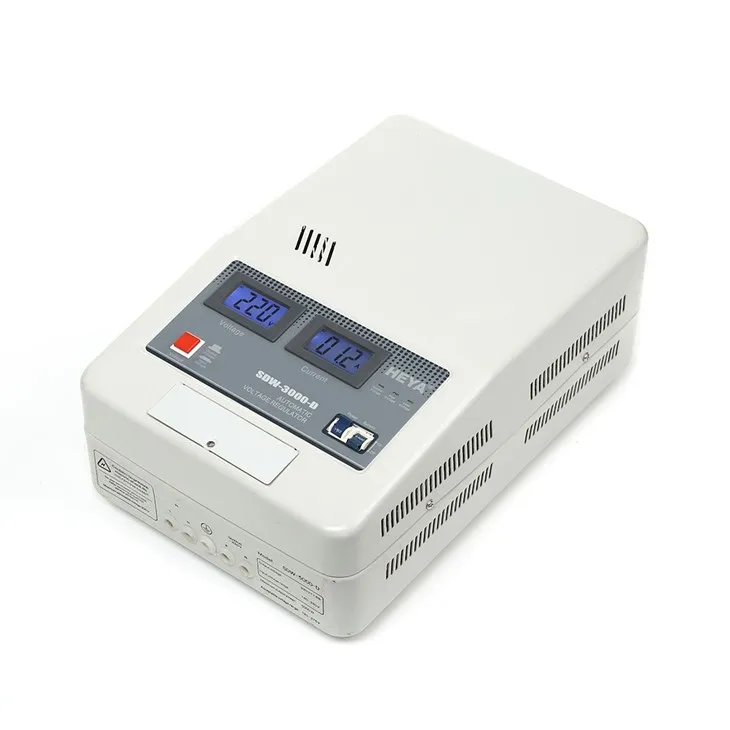
If you're considering using a voltage regulator for your computer, I'd recommend looking into a Digital Display Relay Type Voltage Regulator. These regulators are a step up from the basic relay - type ones. They come with a digital display that shows the input and output voltage, allowing you to monitor the power supply more closely. They also have a faster response time compared to traditional relay - type regulators, which means they can better protect your computer from voltage fluctuations.
Another option is an Aircon Voltage Regulator. While these are primarily designed for air conditioners, they can also be used for computers in some cases. Aircon voltage regulators are built to handle high - power loads and can provide a stable voltage supply. However, you need to make sure that the regulator's capacity is suitable for your computer's power requirements. If the regulator is too powerful, it may not regulate the voltage as precisely as needed for a computer.
There's also the Socket Stabilizer. These are smaller, more portable voltage regulators that can be plugged directly into a wall socket. They're convenient for protecting individual appliances, including computers. Socket stabilizers are usually more affordable and can provide basic voltage protection. However, they may have limited capacity, so if your computer has a high - power consumption, you may need to look for a more powerful regulator.
When choosing a voltage regulator for your computer, there are a few things you need to keep in mind. First, check the power rating of your computer. You can usually find this information on the power supply unit (PSU) of your computer. Make sure the voltage regulator you choose can handle the power requirements of your computer. Second, look for a regulator with a fast response time. As I mentioned earlier, computers are sensitive to voltage changes, so a regulator that can quickly adjust to voltage fluctuations is essential. Third, consider additional features like surge protection. A good voltage regulator should also be able to protect your computer from power surges, which can be caused by lightning or other electrical disturbances.
In addition to using a voltage regulator, it's also a good idea to use an uninterruptible power supply (UPS) for your computer. A UPS provides backup power in case of a power outage, giving you enough time to save your work and shut down your computer properly. It also helps filter out electrical noise and provides some level of voltage regulation.
To sum it up, a household voltage regulator can be used for computers, but you need to choose the right type. Don't just go for the cheapest option; invest in a quality regulator that can provide the protection your computer needs. If you're still not sure which voltage regulator is best for your computer, feel free to reach out to us. We're here to help you make the right choice and ensure that your computer stays safe and running smoothly.
Whether you're a home user or a small business owner, protecting your computer from voltage fluctuations is crucial. A damaged computer can cost you time and money, not to mention the loss of important data. So, take the necessary steps to safeguard your investment.
If you're interested in purchasing a voltage regulator for your computer or have any questions about our products, don't hesitate to get in touch. We can provide you with more detailed information and help you find the perfect voltage regulator for your needs.
References

- General knowledge about voltage regulators and computer power requirements.
- Industry standards and best practices for protecting electronic devices from voltage fluctuations.