


Can a motor voltage regulator be used in a three - phase motor?
As a supplier of motor voltage regulators, this is a question I often encounter from customers. In this blog post, I'll delve into the technical aspects to determine whether a motor voltage regulator can be used in a three - phase motor, exploring the principles, advantages, limitations, and considerations involved.
Understanding Motor Voltage Regulators
Before we discuss their application in three - phase motors, let's first understand what motor voltage regulators are. A motor voltage regulator is a device designed to maintain a stable output voltage, regardless of fluctuations in the input voltage. It is crucial for protecting motors from damage caused by over - voltage or under - voltage conditions, which can lead to reduced motor lifespan, inefficient operation, and even complete motor failure.
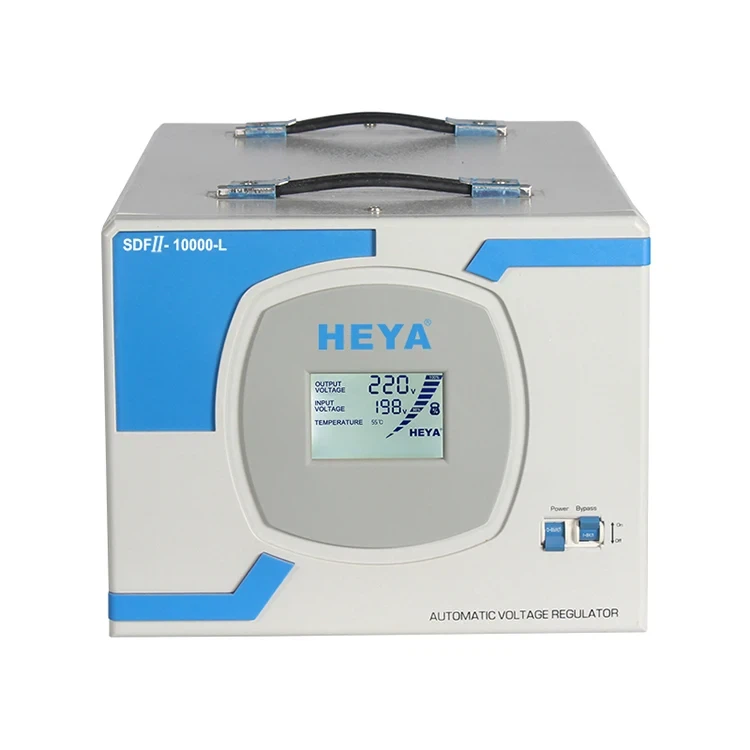
There are various types of motor voltage regulators available in the market, each with its own set of features and capabilities. For example, the TND Single Phase Voltage Regulator is specifically designed for single - phase applications, while the Ac Motor Voltage Regulator is suitable for AC motors in general. The Voltage Regulator 10000 Watt is a high - power option that can handle larger loads.
Three - Phase Motors: A Brief Overview
Three - phase motors are widely used in industrial and commercial applications due to their high efficiency, reliability, and power output. They operate on a three - phase power supply, which consists of three alternating currents that are out of phase with each other by 120 degrees. This design allows three - phase motors to produce a rotating magnetic field, which in turn drives the motor's rotor and produces mechanical power.
Using a Motor Voltage Regulator in a Three - Phase Motor
The short answer is yes, a motor voltage regulator can be used in a three - phase motor. However, there are several important factors to consider:
Compatibility
Not all motor voltage regulators are suitable for three - phase applications. When selecting a voltage regulator for a three - phase motor, it is essential to ensure that the regulator is specifically designed for three - phase power systems. Three - phase voltage regulators are typically more complex than their single - phase counterparts, as they need to regulate the voltage of all three phases simultaneously.
Power Rating
The power rating of the voltage regulator must match the power requirements of the three - phase motor. If the voltage regulator has a lower power rating than the motor, it may not be able to provide sufficient voltage regulation, leading to unstable operation and potential damage to the motor. On the other hand, if the power rating of the voltage regulator is too high, it may be more expensive and less efficient.
Regulation Accuracy
Three - phase motors require a high level of voltage regulation accuracy to operate efficiently. The voltage regulator should be able to maintain a stable output voltage within a narrow tolerance range, typically within ± 1% to ± 5% of the rated voltage. This ensures that the motor receives a consistent supply of power, which is essential for optimal performance and longevity.
Response Time
The response time of the voltage regulator is another important factor to consider. Three - phase motors can experience sudden changes in load, which can cause fluctuations in the input voltage. The voltage regulator should be able to respond quickly to these changes and adjust the output voltage accordingly. A slow - responding voltage regulator may not be able to keep up with the rapid changes in load, leading to voltage instability and potential damage to the motor.
Advantages of Using a Motor Voltage Regulator in a Three - Phase Motor
Using a motor voltage regulator in a three - phase motor offers several advantages:
Protection Against Voltage Fluctuations
Voltage fluctuations can have a significant impact on the performance and lifespan of three - phase motors. Over - voltage can cause insulation breakdown, overheating, and premature motor failure, while under - voltage can result in reduced torque, increased current draw, and inefficient operation. A motor voltage regulator helps to protect the motor from these voltage fluctuations by maintaining a stable output voltage.
Improved Motor Efficiency
By providing a stable supply of power, a motor voltage regulator can improve the efficiency of three - phase motors. When the motor operates at a constant voltage, it can run more smoothly and consume less energy, resulting in lower operating costs and reduced environmental impact.
Extended Motor Lifespan
Voltage fluctuations can cause wear and tear on the motor's components, leading to premature failure. A motor voltage regulator helps to reduce this stress by maintaining a stable voltage, which can extend the lifespan of the motor and reduce the need for costly repairs and replacements.
Limitations and Considerations
While using a motor voltage regulator in a three - phase motor offers many benefits, there are also some limitations and considerations to keep in mind:
Cost
Motor voltage regulators can be relatively expensive, especially those designed for high - power three - phase applications. The cost of the voltage regulator should be weighed against the potential benefits, such as improved motor efficiency and extended lifespan.

Maintenance
Like any electrical device, motor voltage regulators require regular maintenance to ensure optimal performance. This may include inspections, cleaning, and calibration. It is important to follow the manufacturer's recommended maintenance schedule to keep the voltage regulator in good working condition.
Installation
Proper installation of the motor voltage regulator is crucial for its safe and effective operation. The voltage regulator should be installed by a qualified electrician who is familiar with three - phase electrical systems. Incorrect installation can lead to voltage instability, electrical hazards, and damage to the motor and the voltage regulator.
Conclusion
In conclusion, a motor voltage regulator can be used in a three - phase motor, provided that the regulator is specifically designed for three - phase applications and meets the power requirements, regulation accuracy, and response time of the motor. Using a voltage regulator offers several advantages, including protection against voltage fluctuations, improved motor efficiency, and extended motor lifespan. However, it is important to consider the cost, maintenance, and installation requirements before making a decision.
If you are considering using a motor voltage regulator for your three - phase motor, I encourage you to contact us for more information. Our team of experts can help you select the right voltage regulator for your specific application and provide you with professional installation and maintenance services. We are committed to providing high - quality products and excellent customer service, and we look forward to working with you to ensure the optimal performance and longevity of your three - phase motor.
References
- Electrical Machinery Fundamentals, Stephen J. Chapman
- Electric Motors and Drives: Fundamentals, Types and Applications, Austin Hughes