


As a leading supplier of industrial voltage regulators, I've witnessed firsthand the critical role these devices play in maintaining stable power supply across various industries. In this blog, I'll delve into the calibration standards for industrial voltage regulators, shedding light on the key factors that ensure their optimal performance.
Understanding Industrial Voltage Regulators
Industrial voltage regulators are essential components in electrical systems, designed to automatically maintain a constant voltage level. They protect sensitive equipment from voltage fluctuations, which can cause malfunctions, damage, or even pose safety risks. Our Industrial Voltage Regulator is engineered to meet the diverse needs of industrial applications, offering reliable and efficient voltage regulation.
Importance of Calibration
Calibration is a crucial process that ensures the accuracy and reliability of industrial voltage regulators. By comparing the regulator's output voltage to a known standard, calibration helps identify any deviations and allows for adjustments to be made. This ensures that the regulator operates within the specified tolerance range, providing a stable and consistent voltage supply.
Calibration Standards
There are several international standards that govern the calibration of industrial voltage regulators. These standards provide guidelines for the calibration process, including the equipment, procedures, and tolerances. Some of the most widely recognized standards include:
- IEC 61010: This standard covers the safety requirements for electrical equipment used for measurement, control, and laboratory use. It includes specific requirements for voltage regulators, ensuring their safe operation during calibration.
- ANSI C84.1: The American National Standard for Electric Power Systems and Equipment - Voltage Ratings (60 Hertz) provides guidelines for the voltage ratings and tolerances of electrical power systems. It is often used as a reference for calibrating industrial voltage regulators to ensure compatibility with the power grid.
- IEEE 1159: The Institute of Electrical and Electronics Engineers (IEEE) standard for monitoring electric power quality focuses on the measurement and analysis of power quality parameters, including voltage regulation. It offers best practices for calibrating voltage regulators to maintain high power quality.
Calibration Procedures
The calibration process for industrial voltage regulators typically involves the following steps:
- Initial Inspection: Before calibration, the regulator is visually inspected for any signs of damage or wear. The electrical connections are checked to ensure they are secure and free of corrosion.
- Measurement Setup: A calibrated voltage source and a high - precision voltmeter are used to measure the input and output voltages of the regulator. The measurement equipment is connected to the regulator according to the manufacturer's instructions.
- Measurement at Different Loads: The regulator is tested at various load levels to evaluate its performance under different operating conditions. The input voltage is adjusted to simulate different power grid conditions, and the output voltage is measured at each load point.
- Adjustment: If the measured output voltage deviates from the specified tolerance range, adjustments are made to the regulator. This may involve adjusting the potentiometers or other control mechanisms to fine - tune the output voltage.
- Final Verification: After adjustment, the regulator is retested at all load points to ensure that the output voltage is within the specified tolerance. A final report is generated, documenting the calibration results, including the measured values, adjustments made, and the overall performance of the regulator.
Calibration Equipment
To perform accurate calibration, high - quality equipment is essential. Some of the key equipment used in the calibration of industrial voltage regulators includes:

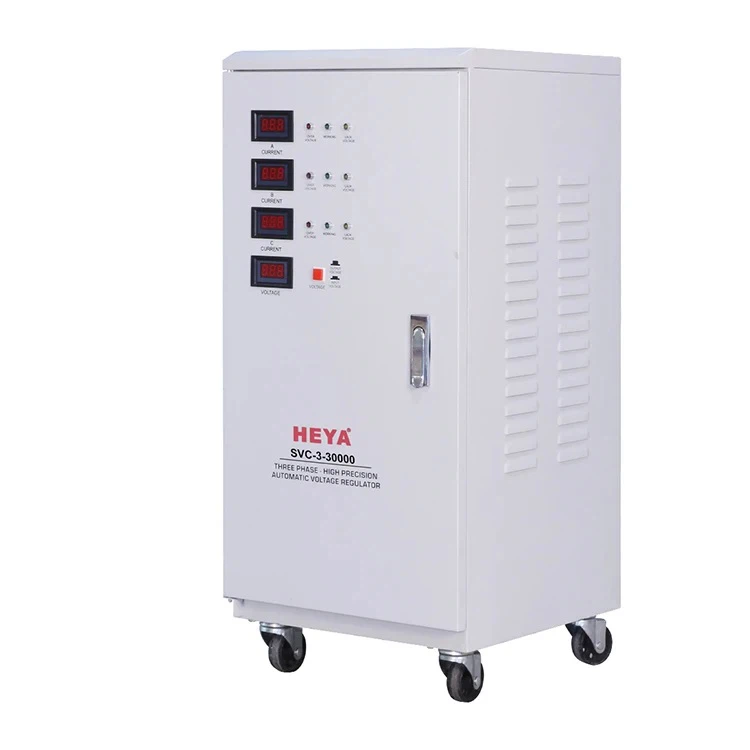
- Calibrated Voltage Source: A stable and accurate voltage source is used to provide the input voltage for the regulator. It should have a low output impedance and a high degree of stability to ensure reliable measurements.
- Precision Voltmeter: A high - precision voltmeter is used to measure the input and output voltages of the regulator. It should have a high resolution and low measurement uncertainty to accurately detect any voltage deviations.
- Load Bank: A load bank is used to simulate different load conditions on the regulator. It allows for testing the regulator's performance under various load levels, ensuring its stability and reliability in real - world applications.
Applications and Impact of Calibration
Properly calibrated industrial voltage regulators have a significant impact on various industries. In manufacturing, they ensure the consistent operation of production equipment, reducing downtime and improving product quality. In the Electric Power Stabilizer field, calibrated regulators help maintain the stability of the power grid, preventing power outages and voltage sags. In the medical sector, Medical Ac Stabilizer calibrated voltage regulators are crucial for the safe and reliable operation of sensitive medical equipment, such as MRI machines and patient monitors.
Ensuring Long - Term Performance
Regular calibration is essential for the long - term performance of industrial voltage regulators. Over time, the components of the regulator may drift or degrade, leading to changes in its output voltage. By calibrating the regulator at regular intervals, these changes can be detected and corrected, ensuring its continued accuracy and reliability.
Conclusion
Calibration standards are the cornerstone of ensuring the accuracy and reliability of industrial voltage regulators. By adhering to international standards and following proper calibration procedures, we can guarantee that our Industrial Voltage Regulator products provide stable and consistent voltage regulation. Whether you're in the manufacturing, power generation, or medical industry, a well - calibrated voltage regulator is essential for the smooth operation of your equipment.
If you're interested in learning more about our industrial voltage regulators or have any questions about calibration, we invite you to contact us for a detailed discussion. Our team of experts is ready to assist you in finding the right solution for your specific needs.
References
- International Electrotechnical Commission (IEC). IEC 61010 - Safety requirements for electrical equipment for measurement, control, and laboratory use.
- American National Standards Institute (ANSI). ANSI C84.1 - Electric Power Systems and Equipment - Voltage Ratings (60 Hertz).
- Institute of Electrical and Electronics Engineers (IEEE). IEEE 1159 - Recommended Practice for Monitoring Electric Power Quality.