



Hey there, tech enthusiasts! As a supplier of computer power regulators, I've seen firsthand how crucial these little components are, especially in computers equipped with high - end sound cards. So, let's dig into how a computer power regulator works in such a setup.
First off, let's talk about why high - end sound cards need special power handling. High - end sound cards are designed to deliver top - notch audio quality. They have advanced digital - to - analog converters (DACs), powerful amplifiers, and often multiple channels for surround sound. All these features require a stable and clean power supply. If the power is unstable, it can introduce noise, distortion, or even cause the sound card to malfunction.
A computer power regulator is like the traffic cop of your computer's power system. Its main job is to ensure that the voltage supplied to the sound card remains within a specific and stable range. In a computer, the power supply unit (PSU) usually provides multiple voltage levels, like +3.3V, +5V, and +12V. But these voltages can fluctuate due to various factors, such as changes in the overall power consumption of the computer, the quality of the PSU, or electrical interference from other components.
The power regulator steps in to smooth out these fluctuations. It uses a combination of electronic components, mainly transistors, capacitors, and resistors, to regulate the voltage. There are two main types of power regulators: linear regulators and switching regulators.
Linear regulators are relatively simple. They work by dissipating the excess voltage as heat. For example, if the input voltage is 5V and the sound card needs a stable 3.3V, the linear regulator will "burn off" the extra 1.7V. While they are simple and can provide very low - noise power, they are not very efficient, especially when there is a large difference between the input and output voltages.
On the other hand, switching regulators are more complex but much more efficient. They work by rapidly switching the input voltage on and off and then filtering the resulting pulsed voltage to get a stable output. This switching action is controlled by a feedback loop that constantly monitors the output voltage and adjusts the switching frequency or duty cycle to keep the voltage stable. Switching regulators are great for high - power applications, like powering high - end sound cards, because they can handle large voltage differences with less heat dissipation.
Now, let's look at how the power regulator interacts with the high - end sound card. When the computer is turned on, the power supply unit sends power to the power regulator. The power regulator then processes this power and sends a stable voltage to the sound card. The sound card has its own internal circuitry that uses this power to perform various audio processing tasks, such as decoding audio files, amplifying the audio signal, and driving the speakers.
The power regulator also plays a crucial role in protecting the sound card from over - voltage and under - voltage conditions. If the input voltage suddenly spikes or drops, the power regulator will try to maintain the output voltage within the safe range for the sound card. This helps to prevent damage to the sensitive electronic components on the sound card.
In addition to providing stable power, the power regulator can also reduce electrical noise. Electrical noise can be introduced into the power supply by other components in the computer, such as the CPU, GPU, or hard drives. This noise can then be picked up by the sound card and cause audible interference in the audio output. The power regulator uses filtering capacitors and other techniques to reduce this noise and ensure that the power supplied to the sound card is as clean as possible.
When choosing a power regulator for a computer with a high - end sound card, there are several factors to consider. First, you need to make sure that the regulator can provide the right voltage and current for the sound card. Different sound cards have different power requirements, so it's important to check the specifications of the sound card and choose a regulator that can meet those needs.
Second, you should consider the efficiency of the regulator. As mentioned earlier, switching regulators are generally more efficient than linear regulators, especially for high - power applications. A more efficient regulator will generate less heat, which can help to improve the overall reliability and lifespan of the sound card and the computer.
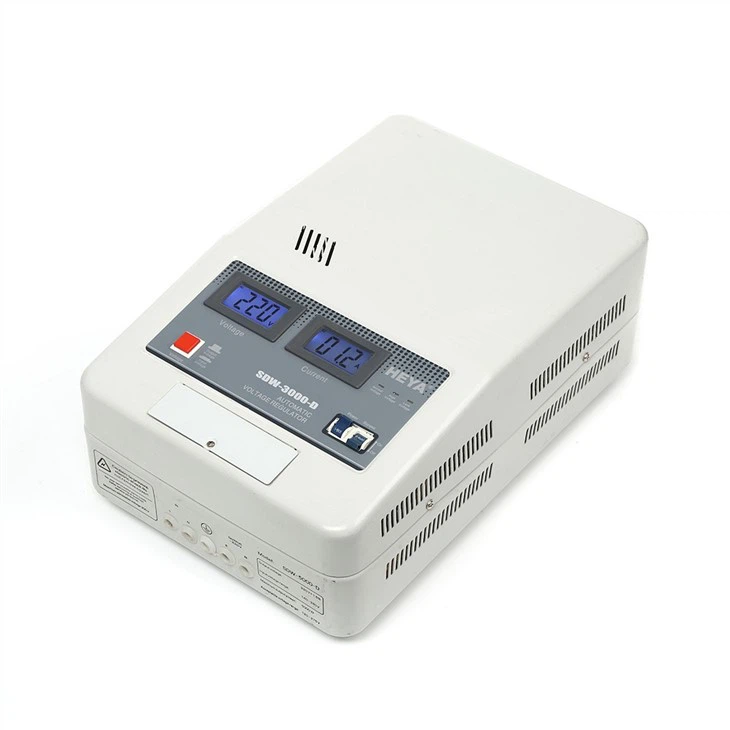
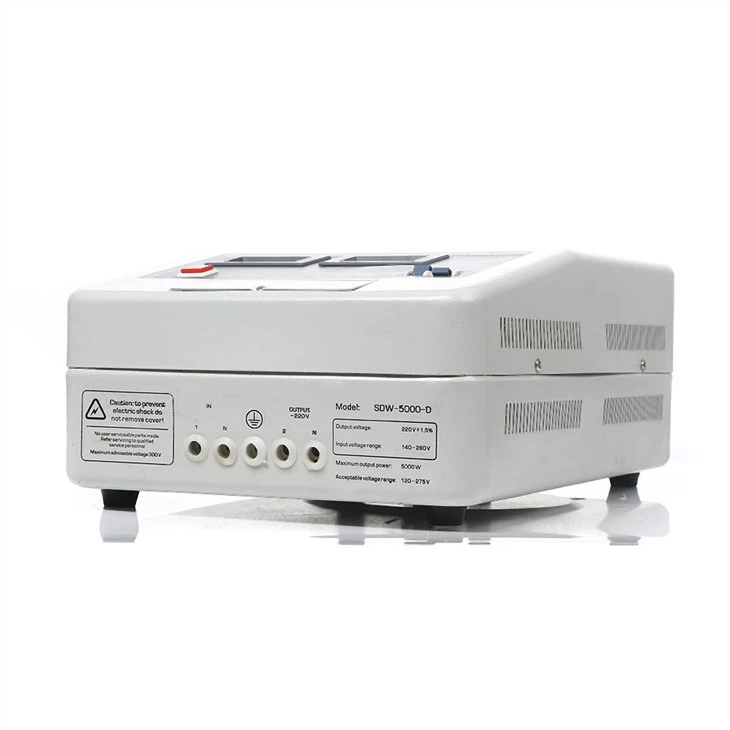
Third, the noise level of the regulator is also important. A low - noise regulator will help to ensure that the audio output from the sound card is clean and free of interference. Look for regulators that have good noise - filtering capabilities.
If you're in the market for a voltage stabilizer for other applications, we also have some great options. Check out our Voltage Stabilizer for Generator, which is designed to provide stable power for generators. We also offer a Voltage Regulator for Fridge to protect your fridge from voltage fluctuations. And if you need a wall - mountable option, our Wall Mount Voltage Regulator is a great choice.
In conclusion, a computer power regulator is an essential component for a computer with a high - end sound card. It ensures that the sound card receives a stable and clean power supply, which is crucial for delivering high - quality audio. Whether you're a professional audio engineer or just a music lover who wants the best sound from your computer, a good power regulator can make a big difference.
If you're interested in purchasing our computer power regulators or have any questions about how they work, feel free to reach out. We're always happy to help you find the right solution for your needs.
References
- Horowitz, P., & Hill, W. (1989). The Art of Electronics. Cambridge University Press.
- Sedra, A. S., & Smith, K. C. (2015). Microelectronic Circuits. Oxford University Press.