



Yo, folks! As a supplier of Portable Voltage Regulators, I've been getting a ton of questions lately about how the anti - interference thing works in these little gadgets. So, I thought I'd sit down and write this blog to clear things up.
First off, let's talk about why anti - interference is such a big deal in a portable voltage regulator. You see, our portable voltage regulators are used in all sorts of places, from homes to industrial sites. And in these environments, there are all kinds of electrical noises and interferences. These can come from things like other electrical appliances, power lines, or even radio frequency sources. If the voltage regulator can't handle these interferences, it won't be able to provide a stable voltage output. And that's a huge problem because unstable voltage can damage the devices connected to it.
One of the main ways anti - interference works in our portable voltage regulators is through filtering. We use a combination of passive and active filters to block out unwanted electrical signals. Passive filters, like capacitors and inductors, are the first line of defense. Capacitors can store and release electrical energy, which helps to smooth out the voltage fluctuations caused by high - frequency interferences. Inductors, on the other hand, resist changes in current, which can also reduce the impact of sudden electrical spikes.
For example, if there's a sudden surge in voltage due to a nearby lightning strike or a power grid glitch, the capacitor in the voltage regulator will quickly absorb the excess energy. This prevents the high - voltage spike from reaching the connected device. Similarly, the inductor will oppose the rapid change in current, further protecting the system.
But passive filters have their limitations. They're not very effective against low - frequency interferences or complex electrical noises. That's where active filters come in. Active filters use operational amplifiers and other electronic components to actively detect and cancel out unwanted signals. They can be programmed to target specific frequencies or types of interferences, making them much more versatile than passive filters.
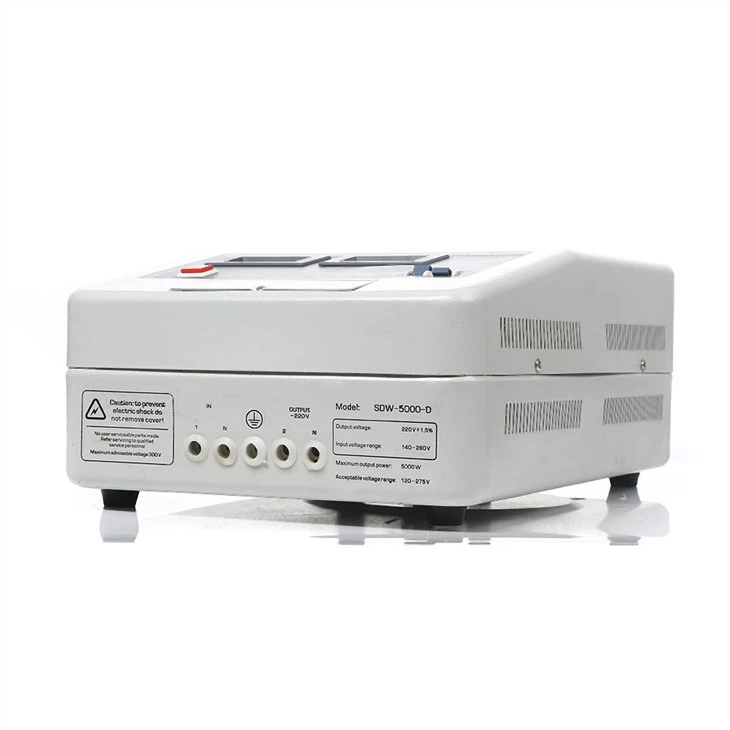

Another important aspect of anti - interference in portable voltage regulators is shielding. We use special materials to create a physical barrier around the sensitive electronic components inside the regulator. This shielding helps to block out electromagnetic fields (EMFs) that can cause interference. For instance, a thin layer of metal foil can be wrapped around the circuit board to prevent external EMFs from reaching the components.
In addition to filtering and shielding, we also design our portable voltage regulators with isolation techniques. Isolation means separating different parts of the electrical circuit to prevent the transfer of interferences. One common method is to use transformers. A transformer can transfer electrical energy from one circuit to another without a direct electrical connection. This helps to isolate the input and output sides of the voltage regulator, reducing the chances of interference being passed along.
Now, let's talk about some real - world applications of our portable voltage regulators and how anti - interference plays a crucial role. Take a look at the Voltage Regulator for Fridge. A fridge is a sensitive electrical appliance that requires a stable voltage to operate properly. If there are voltage fluctuations due to electrical interferences in the home's power supply, it can damage the fridge's compressor or other components. Our voltage regulator with its advanced anti - interference features ensures that the fridge gets a consistent voltage, protecting it from potential damage.
Similarly, the Appliance Voltage Regulator is designed to work with a wide range of household appliances. From TVs to washing machines, these appliances are all vulnerable to voltage variations caused by interferences. Our regulator can filter out the unwanted signals and provide a clean and stable voltage, extending the lifespan of the appliances.
The Aircon Voltage Regulator is another great example. An air conditioner is a high - power device that can be affected by electrical interferences. These interferences can cause the aircon to malfunction, leading to poor cooling performance or even breakdowns. Our voltage regulator's anti - interference capabilities help to keep the aircon running smoothly, even in a noisy electrical environment.
So, if you're in the market for a reliable portable voltage regulator, you know that anti - interference is a key factor to consider. Our products are designed with the latest technology to provide the best possible protection against electrical interferences. Whether you need a voltage regulator for your home appliances, industrial equipment, or any other application, we've got you covered.
If you're interested in learning more about our portable voltage regulators or want to discuss a potential purchase, don't hesitate to reach out. We're always happy to have a chat and help you find the right solution for your needs.
References
- Horowitz, P., & Hill, W. (1989). The Art of Electronics. Cambridge University Press.
- Sedra, A. S., & Smith, K. C. (2010). Microelectronic Circuits. Oxford University Press.