


When it comes to ensuring the smooth and safe operation of household electrical appliances, choosing a suitable household voltage regulator is of paramount importance. As a well - established household voltage regulator supplier, I have witnessed firsthand the significant impact that a quality voltage regulator can have on a home's electrical system. In this blog post, I will share some key factors to consider when selecting a household voltage regulator.
Understanding the Basics of Voltage Regulators
Before delving into the selection process, it's essential to understand what a voltage regulator does. A voltage regulator is a device that maintains a constant voltage level, which is crucial as many household electrical appliances are designed to operate within a specific voltage range. Fluctuations in voltage can cause damage to appliances, reduce their lifespan, and even pose a safety hazard.
There are different types of voltage regulators available in the market, each with its own set of features and applications. For instance, a Portable Voltage Regulator is ideal for situations where you need to regulate voltage in different locations. It offers flexibility and can be used for small appliances, making it a great choice for camping trips or in areas where power supply is unstable.
On the other hand, an Intelligent Automatic Voltage Regulator is equipped with advanced technology that can automatically adjust the output voltage according to the input voltage fluctuations. This type of regulator is suitable for households with a wide range of electrical appliances, as it can provide stable power supply without manual intervention.

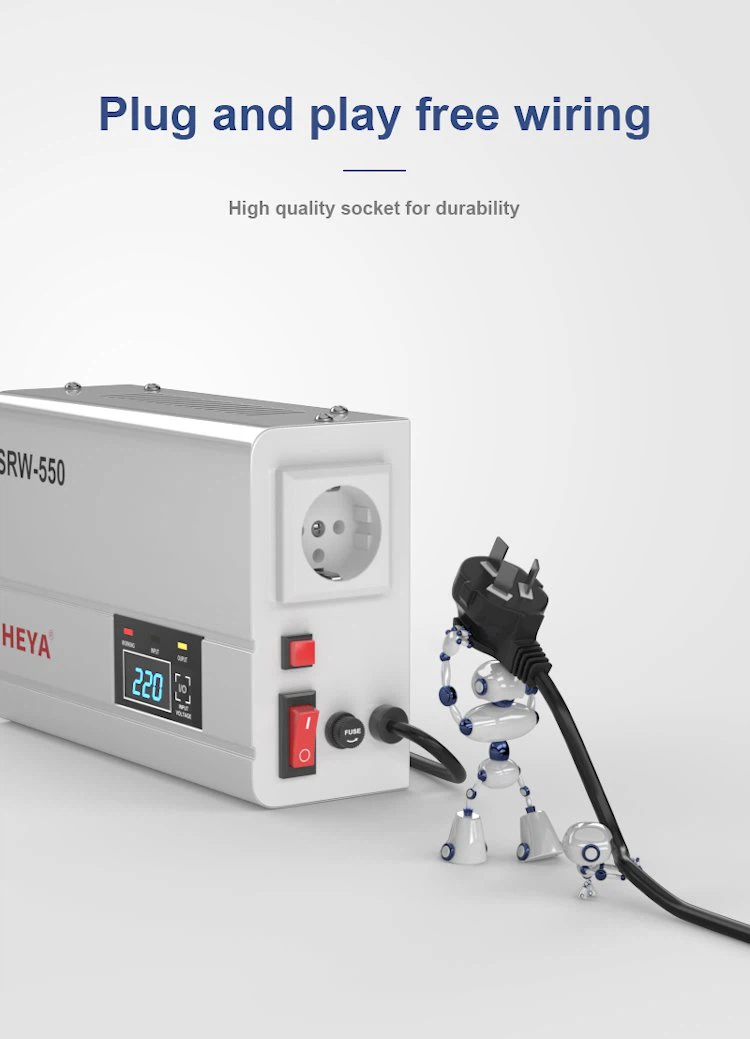
Factors to Consider When Choosing a Household Voltage Regulator
1. Power Rating
The power rating of a voltage regulator is one of the most critical factors to consider. It is measured in volt - amperes (VA) or kilovolt - amperes (kVA). To determine the appropriate power rating, you need to calculate the total power consumption of all the electrical appliances that will be connected to the voltage regulator.
For example, if you have a refrigerator that consumes 500 watts, a television that uses 100 watts, and a few light bulbs that consume a total of 200 watts, the total power consumption is 800 watts. However, it's advisable to choose a voltage regulator with a power rating that is at least 20% higher than the total power consumption of your appliances. This ensures that the regulator can handle any sudden power surges and operate efficiently over an extended period.
2. Input and Output Voltage Range
The input and output voltage ranges of a voltage regulator are also important considerations. The input voltage range indicates the minimum and maximum voltage levels that the regulator can accept from the power source. The output voltage range, on the other hand, is the range of voltages that the regulator can provide to the connected appliances.
Most household electrical systems in different regions have standard voltage levels. For example, in the United States, the standard household voltage is 120 volts, while in many other countries, it is 220 - 240 volts. You need to choose a voltage regulator that can handle the input voltage of your local power supply and provide a stable output voltage suitable for your appliances.
3. Regulation Accuracy
Regulation accuracy refers to how closely the output voltage of the regulator matches the desired voltage level. A higher regulation accuracy means that the output voltage will remain more stable, even when the input voltage fluctuates. For sensitive electronic appliances such as computers, audio systems, and medical equipment, a voltage regulator with high regulation accuracy is essential to prevent damage and ensure proper operation.
4. Response Time
The response time of a voltage regulator is the time it takes to adjust the output voltage when there is a change in the input voltage. A fast - responding voltage regulator can quickly adapt to voltage fluctuations, providing a stable power supply to the connected appliances. This is especially important in areas where power outages or voltage spikes are common.
5. Safety Features
Safety should always be a top priority when choosing a voltage regulator. Look for regulators that are equipped with safety features such as over - voltage protection, under - voltage protection, short - circuit protection, and over - temperature protection. These features can prevent damage to the regulator and the connected appliances in case of electrical faults.
6. Brand and Reputation
When purchasing a household voltage regulator, it's important to choose a well - known and reputable brand. A reliable brand is more likely to produce high - quality products that undergo strict quality control. You can research customer reviews and ratings online to get an idea of the brand's reputation and the performance of their voltage regulators.
Specialized Voltage Regulators for Specific Needs
In addition to the general - purpose voltage regulators, there are also specialized regulators designed for specific applications. For example, a Voltage Stabilizer for Generator is specifically designed to work with generators. Generators often produce fluctuating voltage levels, and a voltage stabilizer can ensure that the output voltage is stable, making it suitable for powering household appliances.
Conclusion
Choosing a suitable household voltage regulator requires careful consideration of several factors, including power rating, input and output voltage range, regulation accuracy, response time, safety features, and brand reputation. By taking the time to evaluate these factors, you can select a voltage regulator that meets the needs of your household and provides reliable protection for your electrical appliances.
As a household voltage regulator supplier, we are committed to providing high - quality voltage regulators that are designed to meet the diverse needs of our customers. If you are interested in learning more about our products or are looking to make a purchase, we encourage you to reach out to us for further discussions. We look forward to the opportunity to assist you in finding the perfect voltage regulator for your home.
References
- Electrical Engineering Handbook, Third Edition, by Richard C. Dorf
- Principles of Electric Circuits: Conventional Current Version, by Thomas L. Floyd