


Hey there! As a supplier of electronic voltage regulators, I often get asked about the power consumption of these nifty devices. So, I thought I'd take a deep dive into this topic and share some insights with you.
First off, let's understand what an electronic voltage regulator is. In simple terms, it's a device that maintains a constant voltage level, regardless of the fluctuations in the input voltage or changes in the load. It's like a traffic cop for your electrical circuits, making sure everything runs smoothly.
Now, onto the big question - what's the power consumption of an electronic voltage regulator? Well, it's not a one - size - fits - all answer. The power consumption depends on several factors.
One of the main factors is the type of voltage regulator. There are linear voltage regulators and switching voltage regulators, and they have different power consumption characteristics.
Linear voltage regulators are pretty straightforward. They work by dissipating the excess voltage as heat. The power consumption of a linear voltage regulator can be calculated using the formula (P = (V_{in}-V_{out})\times I_{out}), where (V_{in}) is the input voltage, (V_{out}) is the output voltage, and (I_{out}) is the output current. For example, if you have an input voltage of 12V, an output voltage of 5V, and an output current of 1A, the power dissipated by the regulator is ((12 - 5)\times1=7W). This means that a significant amount of power is wasted as heat, especially when there's a large difference between the input and output voltages.
On the other hand, switching voltage regulators are more efficient. They work by rapidly switching the input voltage on and off and then filtering the output to get a stable voltage. The power consumption of a switching regulator is much lower compared to a linear regulator, especially when the input - output voltage difference is large. The efficiency of a switching regulator can be as high as 90% or more. So, if you have the same input and output conditions as above, a well - designed switching regulator might only consume a fraction of the power that a linear regulator would.
Another factor that affects power consumption is the load current. As the load current increases, the power consumption of the voltage regulator also goes up. This is because the regulator has to work harder to maintain the constant output voltage. For instance, if you have a voltage regulator powering a small LED, the power consumption will be very low. But if you're using it to power a high - power device like a laptop charger, the power consumption will be significantly higher.
The efficiency of the voltage regulator also plays a crucial role. A more efficient regulator will consume less power. When choosing a voltage regulator, it's important to look at the efficiency ratings provided by the manufacturer. These ratings are usually given as a percentage, and the higher the percentage, the more efficient the regulator.
Now, let's talk about some of the specific types of electronic voltage regulators and their power consumption.
A Portable Voltage Regulator is designed for use on the go. These regulators are often used in mobile devices, and they need to be as power - efficient as possible. They usually have a relatively low power consumption because they're designed to run on battery power. Portable voltage regulators are typically switching regulators to maximize efficiency and extend battery life.
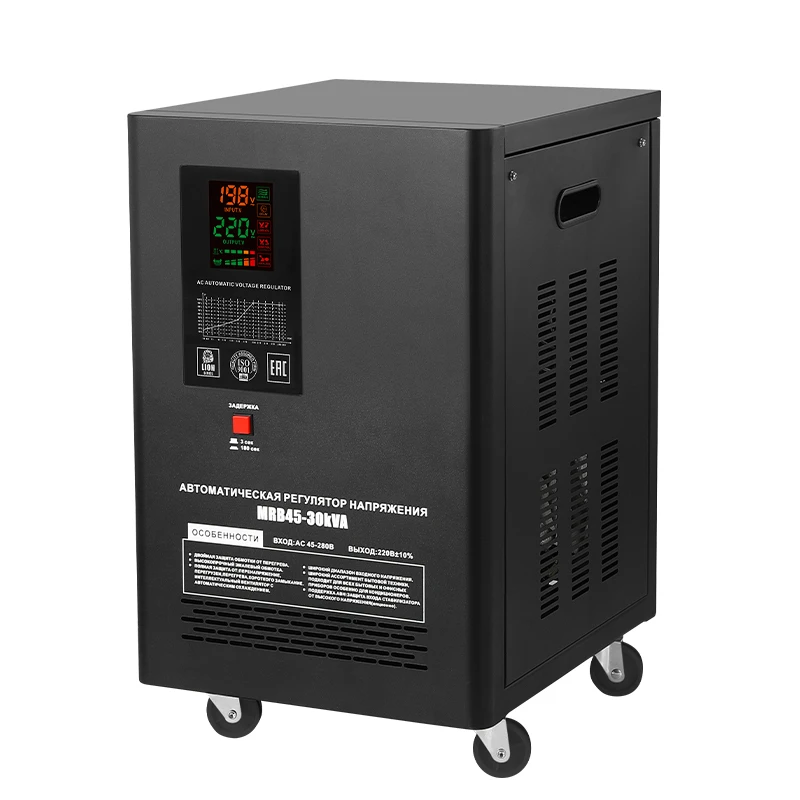
An Ac Regulator is used to regulate the alternating current voltage. The power consumption of an AC regulator can vary depending on the design and the application. Some AC regulators are designed for high - power applications, such as industrial equipment, and they may consume more power. Others are used for smaller applications, like home appliances, and have lower power consumption.
An Appliance Voltage Regulator is specifically designed to protect and regulate the voltage for household appliances. These regulators are usually optimized for low - power consumption while still providing reliable voltage regulation. They help to prevent damage to appliances from voltage fluctuations and can also save energy in the long run by ensuring that the appliances operate at their optimal voltage levels.
So, why does power consumption matter? Well, for one, it affects the overall energy efficiency of your system. If you're using a voltage regulator that consumes a lot of power, it means you're wasting energy. This not only increases your electricity bills but also has a negative impact on the environment.
In addition, high power consumption can lead to overheating. When a voltage regulator dissipates a large amount of power as heat, it can cause the temperature of the device to rise. This can reduce the lifespan of the regulator and other components in the system and may even lead to system failures.
As a supplier of electronic voltage regulators, we understand the importance of power consumption. That's why we offer a wide range of regulators with different power consumption characteristics to meet the needs of various applications. Whether you're looking for a low - power regulator for a portable device or a high - power regulator for an industrial application, we've got you covered.
If you're in the market for an electronic voltage regulator and want to learn more about power consumption or other features, we'd love to hear from you. We can help you choose the right regulator for your specific needs and provide you with all the technical information you need. Don't hesitate to reach out to us for a consultation and start the procurement process. Let's work together to find the perfect voltage regulator solution for your project.

References
- "Power Electronics: Converters, Applications, and Design" by Ned Mohan, Tore M. Undeland, and William P. Robbins
- Manufacturer datasheets for various electronic voltage regulators