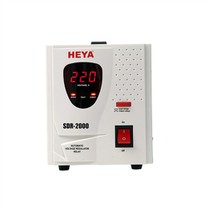



voltage regulator is an electronic device used to maintain output voltage stability. Its core purpose is to guarantee the constant pressure supply of load equipment by automatically adjusting the fluctuation of input voltage. Its specific uses and application scenarios are as follows:
1.Protect precision equipment
Protection against damage caused by voltage fluctuations: Precision equipment (e.g. medical devices, laboratory instruments, industrial controllers, etc.) requires high voltage stability. Voltage fluctuations can lead to data errors, equipment malfunctions and even permanent damage. Voltage regulators can stabilize voltage and extend the service life of equipment, thus reducing maintenance costs.
CT scanners and MRI machines, for example, require a strictly stable voltage that could otherwise affect diagnostic or damage equipment.
2.Ensuring continuity of industrial production
Avoid production interruptions: Voltage fluctuations in automated production lines can lead to motor downtime, sensor malfunction or PLC (Programmable Logic Controllers) reboot, leading to production accidents or product defects. Voltage regulators ensures the continuous and stable operation of key equipment.
For example, robotic welding equipment in the automotive industry and photovoltaic equipment in semiconductor production lines depend on voltage regulators.
3.Keep Household Appliances running
Protect Sensitive Appliances: Due to voltage instability, appliances such as TVs, refrigerators and air conditioners may experience lower performance (e.g., screen flickering, cooling efficiency) or shorter lifespan. Voltage regulators can prevent damage caused by high or low voltage.
For example, when voltage is unstable, voltage regulators can prevent refrigerator compressors from starting and stopping cycles frequently due to insufficient voltage.
4.Support Communication and Data Equipment
Signal stability: Communication base stations, servers, network switches and other equipment are voltage sensitive. Voltage fluctuations can lead to data loss, communication interruptions or hardware failures. Voltage regulators provide clean and stable power to these devices.
5G base stations, for example, require 24/7 uninterrupted operation, and voltage regulators can prevent signal coverage interruptions due to voltage problems.
V. Meeting special environmental needs
Outdoor or mobile scenarios: voltage regulators can provide steady electricity to portable equipment such as drones and test instruments in low-quality, unstable environments such as construction sites, ships and vehicles.
Life support systems for emergency rescue vehicles, for example, rely on voltage regulators to ensure proper operation in harsh environments.
6.Energy Saving and Efficiency Optimization
Reduce energy waste: Unstable voltage can lead to lower equipment efficiency (for example, increased motor current when operating at voltage). Voltage regulators reduces energy consumption and electricity costs by optimizing voltage input.
Industrial motors, for example, operate at stable voltages, reducing energy consumption by 5% -10%.
7. Compatibility with Different Regional Voltage Standards
International Equipment Adaptation: Some equipment is not designed at a voltage compatible with the local power grid (e.g. imported equipment requires 110 volts but local voltage is 220 volts). Voltage regulators can achieve compatibility through transformer function to prevent equipment damage.
For example, precision instruments imported from Japan require voltage regulator to be adapted to China's 220V power grid.
8.Emergency Backup Power Supplement
Use with UPS: Voltage regulators can be used with uninterruptible power supplies to stabilize voltage and switch UPS to battery power, extending running times when critical equipment is off.
For example, during a data center outage, voltage regulator ensures that the server is not affected by voltage fluctuations during UPS switching.
Abstract: the core value of voltage regulator lies in eliminating the influence of voltage fluctuations on equipment and adapting to high demand of power quality. Load power, voltage range and response speed must be considered when selecting a voltage regulator to ensure safe and stable operation of the device.