


AVR and AVS are two different concepts. Their core differences are application scenarios, technical functions and industry affiliations, as follows:
1.Definition and Industry AVR: Full name: Automatic Voltage Regulator or AVR microcontroller (developed by Atmel).
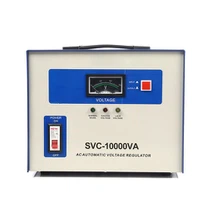
Domain: If it refers to an automatic voltage regulator, it belongs to electrical and electronic equipment used to stabilize generator output voltage of a generator.
If it refers to an AVR microcontroller, it belongs to the field of embedded systems, is an 8-bit RISC architecture microcontroller.
AVS: Full name: China's independently developed audio and video coding standards.
Domain: Digital audio and video compression and transmission, information technology standards.
2.Core Functions and Technologies AVR
Function: Stabilizes generator output voltage by adjusting the excitation current to prevent equipment overvoltage or undervoltage damage.
Technical features: Voltage setting, stability adjustment, low frequency protection.
Adapt to load change and provide stable power supply.
AVR (Microcontroller Virtual Machine)
Function: As a microcontroller, it executes programs to control external equipment (such as home appliances and industrial instrumentation).
Technical features:
High-speed RISC architecture, high instruction execution efficiency.
Built-in Flash, EEPROM and SRAM support in-system programming.
Low power consumption, strong anti-jamming ability, suitable for embedded system.
AVS (Audio/Video Codec Standard)
Features: Compresses digital audio and video data, reduces storage and transmission costs, and supports high-definition and ultra-high-definition video encoding.
Technical features:
Efficient compression: The coding efficiency is 2-3 times that of MPEG-2 Employs intra-frame prediction, motion compensation and transformation quantization.
Complete standard system: including system, video, audio and digital rights management (DRM) modules.
Independent intellectual property rights: break international patent monopolies and reduce industry costs.
Application Scenarios: Digital, 4K/8K Ultra HD Video, Online streaming media, Mobile Communications, etc.
3. Application Scenarios
AVR (Automatic Voltage Regulator)
Diesel generator, power system to ensure voltage stability.
Automatic Voltage Regulator/Microcontroller: Smart, Industrial Control, Medical Equipment, Automotive Electronics, etc.
AVS: Digital playback, HD video storage, internet streaming media, 5G Ultra HD live streaming and more.
For example, CCTV Spring Festival Gala and the Beijing Winter Olympics are broadcast live in 8K Ultra HD using the the AVS3 standard.
4.Summary of variances
Dimensions: AVR (Automatic Voltage Regulator/Microcontroller) AVS (Audio/Video Codec Standard)
Areas: Power electronics/Embedded systems, digital audio/video technology
Core Functions: stable voltage/control of external devices, compression of audio/video data, support for efficient transmission and storage
Technical features: Voltage regulation, low frequency protection/high-speed RISC architecture, low power consumption, high efficiency compression algorithm, standard system integrity, autonomous intellectual property.
Application Scenarios: Generator, industrial control, home appliances, digital television, ultra-high definition video, network streaming, etc.
Industry Significance: ensure stable operation of power equipment/promote the development of embedded systems, reduce the cost of audio andvideo industry, enhance international competitiveness.