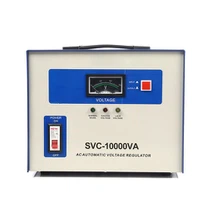



Voltage regulators and voltage controllers differ in function and application:
Functional highlights: Voltage controllers typically use feedback circuits to sample the output voltage, generate error signals when compared with reference voltage, and regulate the conduction of power devices through PWM to stabilize the output voltage. The main focus is to maintain voltage stability through control mechanisms, voltage regulators by automatically adjusting the generator excitation current to control output voltage, to ensure the stability of power supply, and more attention to regulating generator output voltage.
Application scenarios: Voltage controllers are commonly used in switching power supplies and other circuits that require stable power supply voltage. In Buck converters, for example, feedback control is used to achieve stable voltage output, and voltage regulators are used primarily in generator systems to maintain generator voltage at a certain level, protect electrical equipment, improve the efficiency of the power system, and play a key role in generator operation.