


I. Introduction
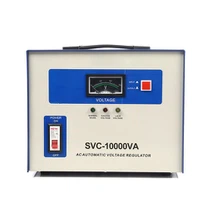
Voltage fluctuations is a common problem in the process of electricity consumption. They can cause damage to various electrical equipment, affecting the normal operation and service life of the equipment. As a kind of equipment that can stabilize voltage effectively, contact voltage regulator plays an important role in numerous fields such as industrial production and household electricity usage. In this paper, the working principle of contact-type voltage stabilizers will be discussed in detail, and practical guidance will be provided.
ii. Working Principle of Contact Voltage Stabilizer
(1) Core Structure composition
The contact-type voltage stabilizer consists of several core components, including an autotransformer, a servo motor and carbon brush device. The autotransformer is responsible for the basic voltage regulation. voltage transformation is achieved by changing the number of turn ratio of winding. The servo motor is the "power source"of the whole adjustment process, it can receive the signal of the control circuit. The carbon brush device is in direct contact with the transformer coil and changes the position of the contact point by sliding, thus adjusting output voltage.
(II) Working Processes
The working process of contact stabilizer is a closed-loop feedback system. First, the control circuit will continuously monitor output voltage situation. Once the output voltage is detected to be too high or too low, the control system will issue an immediate command. The the servo motor is instructed to start operating, drive the carbon brush to slide on the transformer winding, change the transformer tap position, that is, alter the coil turns ratio, so as to adjust the output voltage. When the voltage returns to the set range, the servo motor shuts down and the system is put on standby for the next voltage monitoring and adjustment. For example, in an industrial workshop, when the voltage of the power grid suddenly rises, the control circuit of the contact voltage stabilizer detects output voltage in excess of the normal range and guides the the servo motor to drive the carbon brush in time to reduce the output voltage and ensure that the workshop production equipment is operating at a stable voltage.
(3) Comparison versus other types of regulator.
Compared with electronic voltage stabilizers, contact voltage stabilizers can be voltage regulation by a servo motor which drives carbon brushes to slide on transformer winding. This method has the advantages of fast response speed and high adjustment accuracy. The response time is usually in the tens of milliseconds and the output voltage accuracy is ± 1-3%. However, it has some drawbacks. Due to the presence of mechanical components, mechanical wear may occur and slight noise may be produced during use. However, electronic voltage regulators has no mechanical wear and tear but is relatively expensive. Relay-type voltage regulators changes voltage by switching relay contacts. They are inexpensive but poorly regulated and have a short lifespan.
Iii. Practical Guide to Contact Voltage Stabilizers
(1) Key Points.
Determination of electricity demand
Calculate the total load: the rated power of all the equipment to be protected needs to be added. Of particular note is that the motor's starting current is usually 3 to 5 times higher than the rated current. In a small factory, for example, there is an electric motor with a rated power of 5kW and several other devices with a total power of 3kW. Therefore, the total load cannot simply be considered 5 + 3 = 8kW. Current impacts also need to be taken into account during motor start-up.
Reserve space: It is recommended to choose a regulator that is 20-30% larger than the total load. This can prevent long-term full load operation and prolong the service life of the regulator. For example, if the total load is calculated at 10kW, it is more appropriate to select a a voltage stabilizer with a capacity of 12-13kW.
Distinguish active power from apparent power: For inductive loads such as electric motors, power factor need to be considered. Since inductive loads consumes reactive power during operation, the actual capacity of the voltage stabilizer should be larger.
Pay attention to key performance parameters.
Input voltage range: Choose the appropriate product according to local power grid conditions. Common large scale models include ±20%, ±30%, even ±50%. If the voltage fluctuation of local grid is large, choosing voltage regulator with wide input voltage range can be better adapted to voltage variation.
Output voltage accuracy: The output voltage accuracy of high quality products should be ± 1-3%. Only in this way can electrical equipment operate at a stable voltage and reduce the damage caused to the equipment by unstable voltage.
Response time: usually between 20-50ms. The shorter the response time, the better the protection of the device. When the voltage suddenly fluctuates, the output voltage can be adjusted quickly to prevent the device from being hit by the voltage.
Efficiency: Good design can reach more than 95%. High-efficiency voltage stabilizers can reduce energy loss and cost of use.
Waveform distortion: should be less than 3%. If the waveform distortion is too large, it will affect the normal operation of sensitive electronic equipment, resulting in equipment failure or performance degradation.
Mechanical structural considerations
Carbon brush material: highquality graphite alloy is more abrasive, can reduce the abrasion rate of carbon brush, prolong the service life of carbon brushes, reduce maintenance cost.
Winding process: the purity and smoothness of copper wire will affect contact stability. High-purity,flat copper wire windings can ensure good contact between carbon brush and windings, reduce contact resistance and improve the accuracy of voltage regulation.
Motor quality: The quality of motor determines the speed and accuracy of speed regulation. High-quality motor can quickly and accurately respond to the command of the control system, drive the carbon brushes to the appropriate position and achieve accurate voltage regulation.
Heat dissipation design: heat dissipation design is particularly important for high power voltage regulators. Pay attention to the fan and heat sink configuration, ensure that in the course of operation the voltage stabilizer timely heat dissipation, avoid excessive temperature and affect the performance and service life of the regulator.
Protective function inspection
Overvoltage/undervoltage protection: When input voltage exceeds or is below the set range, the voltage regulator can automatically cut off the output, protecting the electrical equipment from damage.
Overload and short circuit protection: the voltage stabilizer from being damaged by overload or short-circuit. When the load exceeds the rated capacity of the voltage regulator or a short circuit occurs, the circuit can be cut off in time.
Delayed start: Delayed start is important for equipment such as air conditioners. It can prevent the device from being affected by sudden voltage changes during the start-up process and prolong the service life of the device.
Bypass function: when the voltage stabilizer malfunctions, can directly output and input power, ensure that the electrical equipment can continue to use, reduce the voltage regulator failure caused by the power outage time.
Lightning protection: At a minimum, MOV protection should be provided to prevent the voltage stabilizer and electrical equipment from being damaged by overvoltages such as thunder and lightning.
Use environmental adaptability
Temperature range: Standard products are generally between 0 and 40°C. For special conditions, a wide-temperature model should be selected. If the ambient temperature is too high or too low, it may affect the performance and service life of the regulator.
Height: Thin air, reduced heat dissipation and insulation at high altitudes. Therefore, it is necessary to select a voltage stabilizer suitable for use at high altitudes.
Humidity conditions: the humid environment tends to dampen the internal components of the voltage stabilizer, affecting its insulation performance and normal operation. Therefore, attention should be paid to moisture-proof design.
Installation method: choose the appropriate installation method, such as wall mount or rack, according to the size and requirements of the installation space.
Accreditation and safety standards
Ensure that products comply with relevant certification, such as China's CCC certification. Also, pay attention to insulation grade (at least B rating), protection rating (based on IP20), electromagnetic compatibility certification, etc. These certifications and standards ensure the safety and reliability of the regulator.
(II) Usage Method
Pre-use inspection
Before using a contact-type voltage stabilizer, check carefully for any signs of damage to the exterior, such as cracks or deformation of the housing and bending or damage to the heat sink. These problems may affect the normal operation of the regulator, or even lead to safety hazards. Contact a professional repairman for assessment and repair in case of appearance abnormality. At the same time, check the the voltage stabilizer nameplate to clearly understand its rated input voltage, rated output voltage, rated power, etc., to ensure that these parameters match the electrical equipment and the actual supply voltage. For example, if the electrical equipment requires a stable voltage of 220V, but the rated output voltage of the voltage stabilizer is not 220V, it cannot be used properly and may cause damage to the equipment. It is also necessary to check that the input and output cables of the voltage stabilizer are in good condition and that the plugs are loose or damaged. If the cable is damaged, it can lead to safety problems such as leakage of electricity. Loose plugs can lead to poor contact and affect stable voltage output. Replace any cables or plugs found to be faulty in a timely manner.
Correct connection
Insert the voltage stabilizer input plug into the appropriate mains socket. During insertion, ensure that the socket provides a stable power supply at the input voltage allowed by the voltage regulator. If it is in an industrial environment or a large electricity use site, it may be necessary to use a special distribution cabinet to connect the voltage regulator to the input line. At this time, the operation must be strictly in accordance with the electrical installation specifications to ensure a strong and safe connection. Plug electrical equipment requiring stable voltage into the output socket of the voltage stabilizer. It is important to note that the total power of the connecting device should not exceed the rated power of the regulator. If the rated power is exceeded, the voltage stabilizer may operate under overload conditions, leading to serious heat, voltage output instability, and even damage to the voltage the voltage stabilizer and electrical equipment. For example, if the voltage stabilizer is rated at 1000W but the combined power of the connected device is 1200W, an overload can occur.
Start and operation observation
After connecting the input and output, first turn on the power switch of the voltage regulator. At this point, the voltage regulator will start self-checking and initialization. In the startup process, pay attention to the indicator lights and instrument of the regulator. Generally speaking, the regulator is equipped with power indicator lights, working status indicator lights, etc.. If power indicator light is not on, it may be due to an input power problem or an internal fault with voltage regulator. Further examination is required. Check the regulator the voltage stabilizer troubleshooting information if a working status indicator light appears out of the ordinary, such as flashing or remaining red (usually green). During the normal operation of the voltage regulator, the output voltage situation needs to be observed regularly. If output voltage is found to fluctuate too much beyond the normal range, it may be a fault in the the voltage stabilizer or an anomaly in the electrical equipment. Timely inspection is necessary. Also, pay attention to the temperature of the voltage stabilizer, as the contact-type voltage stabilizer generate heat during use. Most voltage regulators are equipped with heat dissipation devices, such as cooling fans or heat sinks. It is necessary to ensure that these heat dissipation components function properly. If the temperature of the regulator housing is found to be abnormally high, it should be checked whether its the heat dissipation is blocked, whether there are problems such as overload.
Shutdown operations
When it is necessary to turn off the voltage stabilizer, the power supply of the electrical equipment should be turned off first, then the power switch of the voltage stabilizer should be turned off. This can prevent the reverse voltage the voltage stabilizer impact caused by the sudden power outage of electrical equipment and protect the internal circuit of the voltage stabilizer.
(3) Maintenance.
Contact stabilizers require regular maintenance. Regularly dust the surface of the voltage stabilizer, especially heat sink and vents. Excessive dust accumulation can affect heat dissipation. You can gently wipe with a clean soft cloth or brush. In addition, professional electrical repairers may be invited on a regular basis (for example, six months or one year) to carry out a thorough inspection and maintenance of the voltage stabilizer, including checking the connection of internal circuits, contact with relays, the capacitors performance, etc., to ensure that the voltage stabilizer is in good working condition. As a vulnerable part contact voltage stabilizers, Carbon brushes usually have a service life of 3 to 5 years and wear and tear needs to be inspected regularly. If the carbon brushes is found to be badly worn, it should be replaced in time to avoid affecting the accuracy and stability of voltage regulation. Carbon deposits may form on the surface of the winding, which requires professional cleaning to ensure good electrical conductivity. Mechanical components need to be lubricated regularly to reduce wear and noise and extend service life.
IV. Common Faults and Solutions
(1) Unstable output voltage or has no output at all.
The reason: may be voltage regulation circuit malfunction, such as carbon brush wear or servo motor blockage (usually in mechanical voltage stabilizers). Relay damage, oxidation, or adhesion contacts (relay-type voltage stabilizer); Abnormal input voltage is too high or too low for voltage regulation range; internal fuse is blown due to overload or short circuit.
Solution: Check that the input voltage is within the the voltage stabilizer range (e.g. 220V±20%) and replace the fuse of the same specification (power cut required). Wash or replace worn carbon brushes (mechanical voltage stabilizers need to be removed during repair); sanding relay contacts or replacing relays (professional operation required).
(2) Overheating of The voltage stabilizer.
Reasons: Overload operation, load power exceeding rated capacity of voltage regulator; poor heat dissipation, fan failure or vent plug; aging of internal components, such as transformer winding short circuit, capacitor leakage, etc..
Solution: reduce load power, avoid using high power appliances at the same time, clean the dust vent, check the fan is operating properly. Turn off the power, wait for it to cool, then restart. If it's still hot, check the internal components.
(3) The voltage stabilizer does not start.
Why: The fuse blew. Wire connection is not strict, power supply is not normal, internal circuit failure.
Solution: Check fuses and replace them if necessary. Check if the wiring is loose and make sure the power supply is on. If possible, conduct internal circuit inspection and replace any damaged components.
(4) Emitting abnormal noises
Reason: mechanical parts wear and tear, poor brush contact, the servo motor (mechanical) oil shortage, relay switch frequently, input voltage fluctuation, leading to relay action repetition. Transformer iron core loose, inner thread or silicon steel sheets loose.
Solution: Lubricate mechanical transmission components (such as servo motors gears), check stability of input voltage and install surge protectors if necessary. Tighten internal screws or reinstall transformer core (power shutoff required).
V) Frequent tripping
Reasons: input voltage exceeding voltage regulation range (e.g. above 270V or below 150V); short circuit or load leakage; incorrect triggering of The internal protection circuit (e.g. ageing of components).
Solution: Measure the input voltage with a multimeter to make sure the input voltage is in the normal range. Disconnect all loads and gradually check the equipment for short circuits. Reset protection switch (some models have reset buttons) that require to be inspected and repaired by a professional if they still cannot be reset.
V. Conclusion
Contact-type voltage stabilizers plays an important role in stabilizing voltage because of its unique working principle. By understanding how it works, we can better comprehend its mechanism of action in voltage regulation process. In the selection, use and maintenance process, follow the following practical guidelines to ensure the normal operation of contact voltage stabilizers, extend their service life and provide stable voltage guarantees for our electrical equipment. At the same time, understanding common faults and their solutions can be used to troubleshoot and repair problems in time to reduce damage caused to electrical equipment by unstable voltage. Therefore, it is of great significance to understand and use contact-type voltage stabilizers correctly to ensure the safety and stability of power usage.