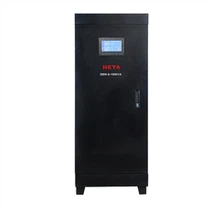




Voltage regulators (AVRs) are not the same as surge protectors (SPDs). They differ significantly in function, purpose, and working principle.
1. Functional differences
Voltage regulators (AVRs)
The main function is to automatically adjust the output voltage of the generator to keep it within the set range.
The voltage is stabilized by controlling the excitation current of the generator.
Surge protectors (SPDs)
The main function is to protect electrical equipment from instantaneous surges.
When a spike current or voltage suddenly occurs in an electrical circuit or communication line due to external interference, the SPD can conduct the shunt in a very short time, thereby avoiding damage to other equipment in the circuit caused by the surge.
2. Differences in use
Voltage regulators (AVRs)
Widely used in various generators to ensure the stability of power supply.
Equipped with fundamental wave, harmonic compound excitation or AC brushless generators equipped with permanent magnet generator excitation (PGM system).
Surge protectors (SPDs)
Mainly used to protect electrical equipment from instantaneous surges caused by lightning strikes, equipment switching operations, power system failures, etc.
Widely used in power equipment protection of substations, distribution stations, power lines, end users, as well as in the communications industry, petrochemical industry, data centers and other fields.
3. Differences in working principles
AVR
Adjusts the output voltage by controlling the excitation current of the generator.
When the generator speed increases or decreases, the AVR automatically adjusts the excitation current to keep the voltage stable.
Surge protector (SPD)
Turns on quickly when the voltage exceeds its limit value through its internal nonlinear elements (such as varistors, gas discharge tubes or semiconductor devices).
Converts overvoltage into current and discharges it to the ground, thereby limiting the voltage peak at the device end.