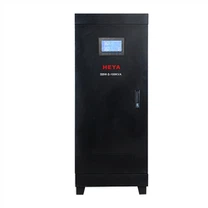



The general purpose of a voltage regulator (AVR) is to maintain the output voltage of a generator or other power supply device at a given or predetermined level to ensure the stability and quality of power supply.
Stable voltage output
The voltage regulator automatically adjusts the excitation current or other control parameters to keep the output voltage of the generator or power supply device within a set range to prevent voltage fluctuations from causing damage to the power system and power-consuming equipment.
Protect electrical equipment
Stable voltage output helps protect electrical equipment from damage caused by excessively high or low voltage and prolongs the service life of the equipment.
Improve power system efficiency
By maintaining voltage stability, voltage regulators help reduce power losses in power systems and improve the overall efficiency of power systems.
Adapt to load changes
When the power load changes, the voltage regulator can respond quickly and adjust the output voltage to maintain the stable operation of the power system.
Widely used in various fields
Voltage regulators are not only used in generators in power systems, but also widely used in power systems of vehicles such as cars, trains, and airplanes, as well as high-tech fields such as aerospace satellites, communication equipment, and data centers. In these fields, voltage regulators play an important role in ensuring the stability of power supply and improving equipment performance.